Industry · municipality
Toy Shops in Sarpsborg
An analytical article on the industry, companies, and outlooks
Executive Summary
Industry Overview
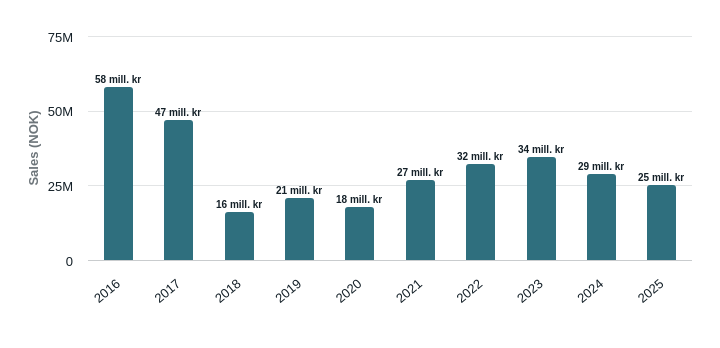
The toy shop industry in Sarpsborg municipality has a complex history with both rising and falling trends. In 2025, there are 12 registered companies in the industry, but only two of these have employees (totaling 22 employees). This is a significant decline in the number of employees compared to 2016 (56 employees). Sales have also been unstable, with a 13% decline in 2025 compared to 2024. The only company-driven business with positive figures is Superkul.no in Greåker, which reports a sales volume of NOK 25.3 million in 2025, despite an annual negative growth of -13%.
The industry has weak development in recent years, with an average annual decline of 11.5% in the number of employees and 13% in sales. This indicates that there are challenges related to competition, customers, and economic conditions in the industry. Nevertheless, there are opportunities for new players who want to establish themselves in the municipality, especially in areas with high customer density and good infrastructure.
Economic Overview
The toy shop industry in Sarpsborg has experienced very unstable development in recent years. Sales have varied between NOK 16 million and NOK 57.8 million from 2016 to 2025, with an average annual decline of 13%. There was a significant decline in 2018 (NOK 16 million) and an increase in 2021 (NOK 26.9 million) before a new decline in 2024 (NOK 28.8 million).
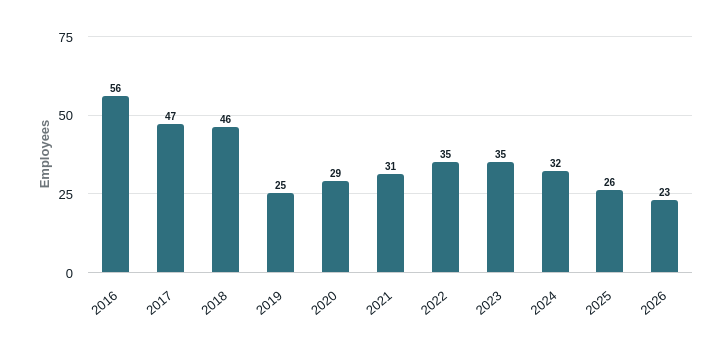
The number of employees has also been unstable, declining from 56 employees in 2016 to 23 employees in 2026. The most significant decline occurred in 2019 (a decline of 45.7%). There is weak economic development in the industry, with an average annual decline of 11.5% in the number of employees.
There is a clear connection between sales and the number of employees, with an average annual decline of 11.5% in the number of employees and 13% in sales. This indicates that the industry has challenges in maintaining both economic activity and jobs.
Companies in the Industry
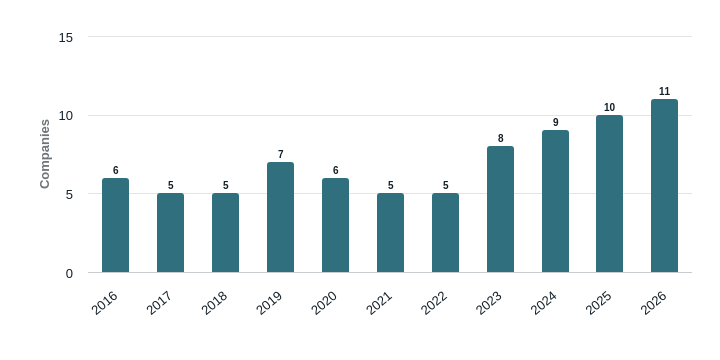
There are 12 companies registered in the toy shop industry in Sarpsborg municipality. The most important company forms are AS (2 companies) and ENK (10 companies). The most well-known companies in the industry are:
- Extra Leker Butikker As Avd Sarpsborg (Klokkergårdveien 32, Sarpsborg) – AS, established 1996, 15 employees
- Superkul.no As (Grålumveien 4-6, Greåker) – AS, established 2006, 7 employees
- Alt Av Spill As (Pellygata 57, Sarpsborg) – AS, established 2025, 0 employees
- Altavspill.no Av Piekut (Klevers vei 10A, Borgenhaugen) – ENK, established 2023, 0 employees
- Lille Kompis As (Ullerøyveien 526, Skjeberg) – AS, established 2024, 0 employees
- Pokelageret As (H. Halvorsens vei 5, Hafslundsøy) – AS, established 2024, 0 employees
- Siempre Vital Chrupalla (Sverdrups gate 16, Sarpsborg) – ENK, established 2024, 0 employees
- Tusenting/ Breesth (Hasliveien 12, Skjeberg) – ENK, established 2019, 0 employees
- Helgesen Holding As (Grålumveien 238, Grålum) – AS, established 2023, 0 employees
Most companies have 0 employees, which indicates that many are in the start-up phase or have a small business. Superkul.no is the only business with positive economic figures, with a sales volume of NOK 25.3 million in 2025.
Business Geography
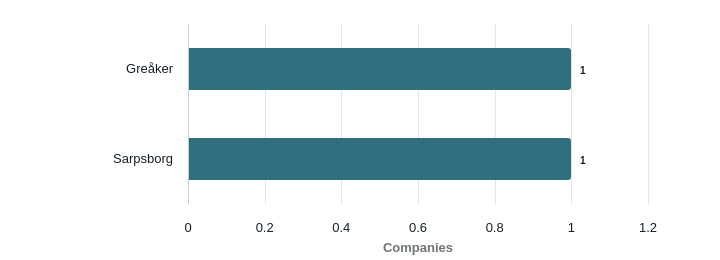
The toy shop industry in Sarpsborg is divided into two main areas: Sarpsborg and Greåker. In Sarpsborg, there is 1 company with 15 employees, while in Greåker, there is 1 company with 7 employees. There is a significant difference in economic figures between the two areas:
- Sarpsborg: 1 company, 15 employees, 0 sales, 0 operating profit, 0 EBITDA, 0 operating profit, 0 gross profit, 0 equity, 0 debt, 0% sales growth, 0% EBITDA margin, 0% gross profit margin, 0% operating profit margin
- Greåker: 1 company, 7 employees, NOK 25.3 million sales, NOK 25.3 million operating profit, NOK 124,000 EBITDA, NOK 11.6 million gross profit, NOK 2.7 million equity, NOK 4.4 million debt, -13% sales growth, 0% EBITDA margin, 45% gross profit margin, 0% operating profit margin
There is a clear difference in economic figures between the two areas, with very low economic activity in Sarpsborg and relatively high activity in Greåker. This indicates that there are opportunities to develop business in Greåker, while Sarpsborg has weaker economic activity.
Business Dynamism
The toy shop industry in Sarpsborg has experienced very unstable development in recent years, with an average annual decline of 11.5% in the number of employees and 13% in sales. There are no registered bankruptcies in the industry, which indicates that there is a certain degree of stability in the industry. Nevertheless, there are challenges related to competition, customers, and economic conditions in the industry.
Superkul.no is the only business with positive economic figures, with a sales volume of NOK 25.3 million in 2025, despite an annual negative growth of -13%. This indicates that there are challenges related to maintaining economic activity in the industry. There is also a significant decline in the number of employees, from 56 employees in 2016 to 23 employees in 2026, which indicates that there are challenges related to maintaining jobs in the industry.
Outlook
For founders considering establishing themselves in the toy shop industry in Sarpsborg municipality, it is important to be aware of the challenges the industry has experienced in recent years. There is very unstable development in the industry, with an average annual decline of 11.5% in the number of employees and 13% in sales. This indicates that there are challenges related to competition, customers, and economic conditions in the industry.
Nevertheless, there are opportunities for new players who want to establish themselves in the municipality, especially in areas with high customer density and good infrastructure. Superkul.no in Greåker is an example of a business that has succeeded in the industry, despite an annual negative growth of -13%. This indicates that there are opportunities to establish oneself in the industry, even though there are challenges related to maintaining economic activity and jobs.
It is also important to be aware of the economic conditions in the industry, with an average annual decline of 11.5% in the number of employees and 13% in sales. This indicates that there are challenges related to maintaining economic activity and jobs in the industry. Nevertheless, there are opportunities for new players who want to establish themselves in the municipality, especially in areas with high customer density and good infrastructure.
Conclusion
The toy shop industry in Sarpsborg municipality has experienced very unstable development in recent years, with an average annual decline of 11.5% in the number of employees and 13% in sales. There are no registered bankruptcies in the industry, which indicates that there is a certain degree of stability in the industry. Nevertheless, there are challenges related to competition, customers, and economic conditions in the industry.
Superkul.no is the only business with positive economic figures, with a sales volume of NOK 25.3 million in 2025, despite an annual negative growth of -13%. This indicates that there are challenges related to maintaining economic activity in the industry. There is also a significant decline in the number of employees, from 56 employees in 2016 to 23 employees in 2026, which indicates that there are challenges related to maintaining jobs in the industry.
For founders considering establishing themselves in the industry, it is important to be aware of the challenges the industry has experienced in recent years. Nevertheless, there are opportunities for new players who want to establish themselves in the municipality, especially in areas with high customer density and good infrastructure.