Industry · municipality
The Restaurant Industry in Meløy: Current Situation and Future Outlook
Analysis of Companies, Statistics, and Opportunities for Entrepreneurs and Local Decision-Makers in Meløy Municipality (Nordland).
Executive Summary
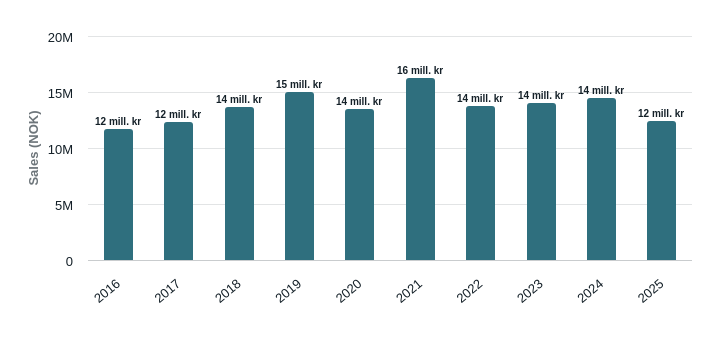
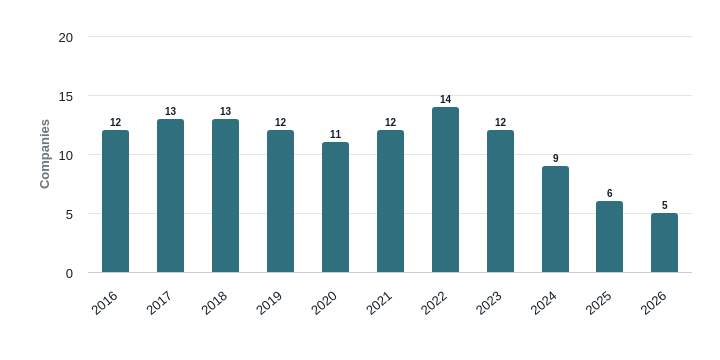
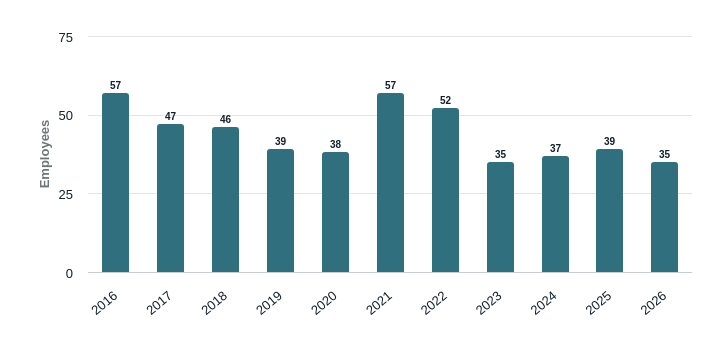
The restaurant industry in Meløy consists of a mix of stable and dynamic businesses with varying financial results. In 2025, there are 6 companies registered in the municipality, distributed across three key areas: Ørnes, Bolga, and Støtt. The average number of employees has varied between 35 and 57 over the past ten years, with a decline of 10.3% from 2025 to 2026. Sales figures have shown a more stable development, with a decline of 14.4% from 2024 to 2025. The industry exhibits both positive and negative development trends, with some businesses achieving high margins while others report losses.
Economic Overview
Economic Trends
| Year | Sales (NOK) | Number of Employees |
|---|---|---|
| 2016 | 11.7M | 57 |
| 2021 | 16.2M | 57 |
| 2025 | 12.4M | 39 |
Sales figures showed an increase of 20.3% from 2020 to 2021, but have since experienced a decline of 15.5% from 2021 to 2022 and 14.4% from 2024 to 2025. Employee numbers have been more volatile, with an increase of 50.0% from 2020 to 2021 and a decline of 32.7% from 2022 to 2023. The average annual sales growth has been +2.8%, while employee growth has been -1.7% over the same period.
Companies in the Industry
Registered Companies
- Bolga Brygge AS (Bolga) – 13 employees, EBITDA -4.6M, operating income 3.2M
- Bella Napoli Ørnes AS (Ørnes) – 12 employees, EBITDA 203K, operating income 5.5M
- Støtt Brygge AS (Støtt) – 10 employees, EBITDA 599K, operating income 4.6M
- Lille Café AS (Ørnes) – 4 employees, no income or operating result reported
- Kafe Koppen DA (Meløy) – 0 employees, no income or operating result reported
- Prestegårdsfjøsen V/kjetil Fagervik (Meløy) – 0 employees, no income or operating result reported
The organizational forms are dominated by AS (4 companies), with an average operating income per employee of 434.1K. Some companies have negative EBITDA values, such as Bolga Brygge AS with a -146% EBITDA margin.
Business Geography
Geographic Distribution
| Location | Number of Companies | Number of Employees | Sales (NOK) | EBITDA (NOK) |
|---|---|---|---|---|
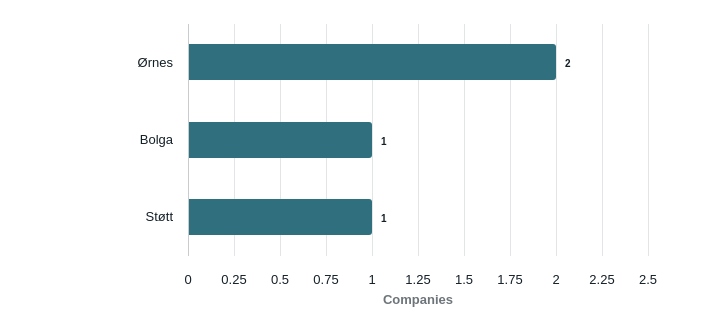
| Ørnes | 2 | 16 | 5.5M | 203K |
| Bolga | 1 | 13 | 2.7M | -4.6M |
| Støtt | 1 | 10 | 4.3M | 599K |
Ørnes is the most active area with 2 companies and 16 employees, while Bolga has a company with a negative EBITDA of -4.6M. Støtt has a company with a high EBITDA margin of 12%.
Business Dynamics
Operational Dynamics
The industry has experienced a mix of stable and unstable businesses. Bolga Brygge AS has a negative EBITDA of -4.6M and an operating margin of -201%, while Støtt Brygge AS has a positive EBITDA of 599K and an operating margin of 2%. No companies in the industry have reported bankruptcy, but a decline in operating results has been recorded for some businesses. Ørnes has a company with a positive operating result, while Bolga has a company with significant losses.
Outlook
Future Outlook
For entrepreneurs in the industry, the following may be relevant:
- Ørnes shows potential with a company (Bella Napoli) with a positive EBITDA and 20% sales growth from 2023 to 2024.
- Støtt has a company with a high EBITDA margin (12%) and stable sales volume.
- Bolga has a company with significant financial challenges (negative EBITDA of -4.6M), which could serve as a warning.
It is important to consider local tourism and culture, as well as ensure good financial management. SmartGrunder can help identify potential locations in Meløy with positive development and good infrastructure for restaurant operations.
Conclusion
The restaurant industry in Meløy has both opportunities and challenges. With a mix of stable businesses and companies facing significant financial challenges, it is important to evaluate location choices and financial models. Ørnes and Støtt show potential, while Bolga requires careful economic analysis. Entrepreneurs should also be aware of fluctuating sales figures and employee trends over time.