Municipality
Ål Municipal Economy: Industrial Analysis and Commercial Landscape
An in-depth evaluation of employment trends, sector activity, key employers, and strategic opportunities for founders in Ål municipality.
Executive Summary
Ål municipality, located in the Hallingdal valley within Buskerud (formerly Viken county), functions as a pivotal regional hub combining strong public administration, healthcare, specialised infrastructure construction, and local enterprise. The local economy demonstrates a resilient workforce base of over 4,200 employees, supported by a mix of municipal anchor institutions, inter-municipal service entities, and robust private sectors.
Key economic characteristics include:
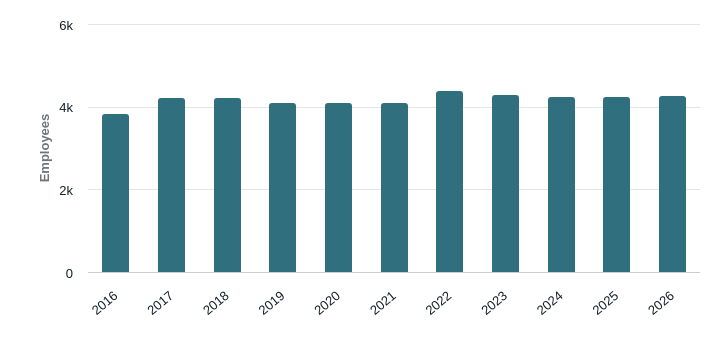
- Employment Base: Total employment remains firm at around 4,230 to 4,250 personnel across public and private sectors.
- Commercial Core: The main urban center of Ål handles over 85% of commercial revenue and host 3,909 active positions.
- Dominant Sectors: Public administration, health services, specialised construction, road freight transport, and financial intermediation form the economic spine.
- Entrepreneurial Environment: A healthy ratio of limited liability companies (AS) and inter-municipal utilities provides operational stability for new business entrants.
Economic Overview
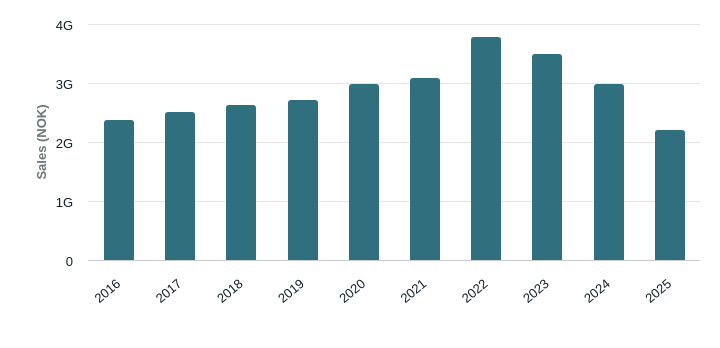
The macro-economic data for Ål shows a pronounced growth cycle peaking in 2022, followed by post-peak consolidation in gross corporate revenues alongside steady, resilient overall employment.
Revenue and Employment Trajectory
Corporate sales revenue in Ål grew consistently from NOK 2.37B in 2016 to a high of NOK 3.78B in 2022. Subsequent years reflect broader national construction and real estate market recalibrations, bringing revenues to NOK 2.99B in 2024 and NOK 2.21B in 2025. Meanwhile, total employment has remained remarkably stable, fluctuating between 4,200 and 4,370 staff over the past decade.
| Year | Corporate Sales (NOK) | YoY Sales Change | Local Employment | YoY Employment Change |
|---|---|---|---|---|
| 2016 | 2,371.9M | - | 3,812 | - |
| 2017 | 2,501.2M | +5.5% | 4,204 | +10.3% |
| 2018 | 2,629.2M | +5.1% | 4,217 | +0.3% |
| 2019 | 2,705.0M | +2.9% | 4,088 | -3.1% |
| 2020 | 2,975.6M | +10.0% | 4,097 | +0.2% |
| 2021 | 3,089.0M | +3.8% | 4,097 | +0.0% |
| 2022 | 3,775.4M | +22.2% | 4,374 | +6.8% |
| 2023 | 3,490.0M | -7.6% | 4,286 | -2.0% |
| 2024 | 2,991.4M | -14.3% | 4,231 | -1.3% |
| 2025 | 2,207.2M | -26.2% | 4,245 | +0.3% |
| 2026 | N/A | N/A | 4,256 | +0.3% |
This sustained baseline of employees despite revenue normalization underscores strong employer retention and a large public/quasi-public service footprint.
Industry Structure & Legal Forms
Ål's economy is characterized by a high volume of civic services coupled with specialized industrial, logistics, and infrastructure capabilities.
Primary Industry Clusters
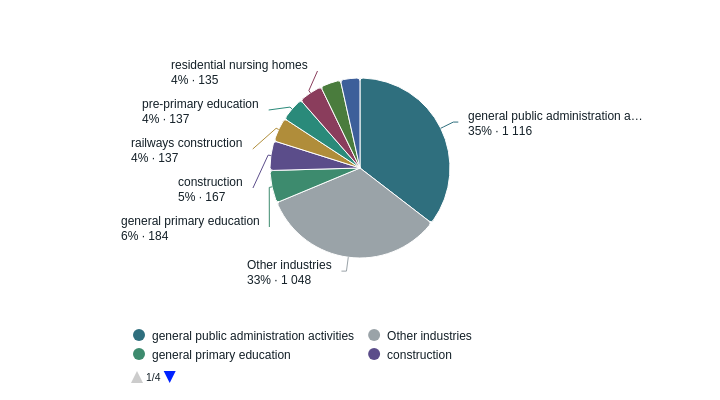
- Public Administration & Civic Services: General public administration accounts for 1,116 employees across 2 municipal entities. Primary education (184 employees) and pre-primary education (137 employees) further solidify public sector employment.
- Healthcare & Special Care: General hospital operations through Vestre Viken HF (96 employees, NOK 122.5M operating income) and residential/mental health care facilities provide significant employment.
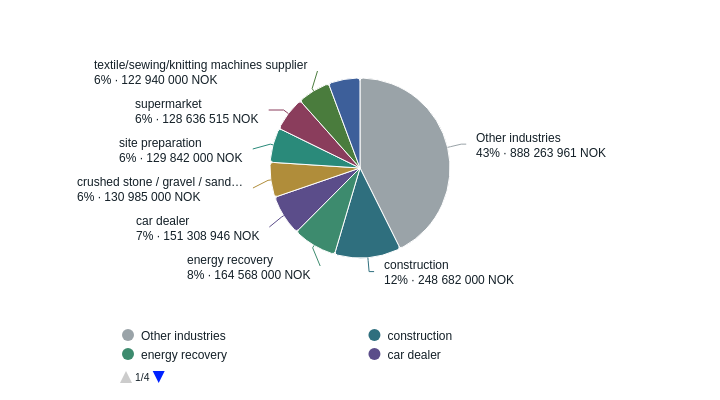
- Construction & Infrastructure: Standard construction (25 companies, 167 employees, NOK 253.2M income), railway construction (137 employees across 2 firms), site preparation (12 companies, 69 employees, NOK 131.6M income), and specialised ground works represent a strong physical trade sector.
- Logistics, Utilities & Financial Services: Energy recovery via Hallingdal Renovasjon IKS (84 employees, NOK 166.9M operating income), road freight transport (63 employees, NOK 121.0M income), and local banking (2 companies, 50 employees, NOK 173.7M income with 60% EBITDA margin) anchor the high-value commercial services.
Legal Form Breakdown
Private limited companies (Aaksjeselskap - AS) generate the vast majority of commercial revenue, while municipal and organizational structures hold the majority of employment.
| Legal Form | Companies | Employees | Operating Income (NOK) | Operating Margin |
|---|---|---|---|---|
| AS (Limited Liability) | 188 | 1,607 | 2,286.5M | 5% |
| KOMM (Municipality) | 1 | 1,065 | 0.0M | 0% |
| ORGL (Other Org) | 38 | 1,059 | 0.0M | 0% |
| IKS (Inter-Municipal) | 2 | 199 | 170.9M | -4% |
| SÆR (State Special Enterprise) | 3 | 132 | 168.5M | 0% |
| SPA (Savings Bank) | 2 | 50 | 173.7M | 56% |
| ENK (Sole Proprietorship) | 22 | 72 | 0.0M | 0% |
Business Geography
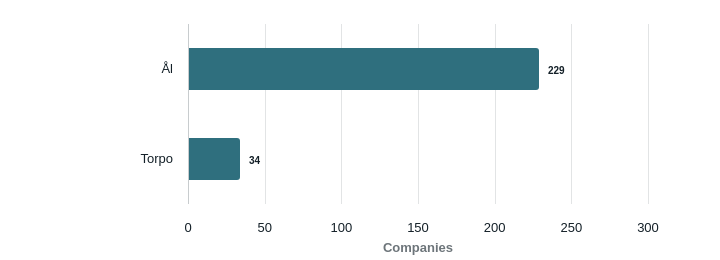
Economic activity within Ål municipality is concentrated primarily in two key geographic settlements: the municipal center of Ål (Sundre) and the eastern valley district of Torpo.
Area Comparison
| Area | Active Companies | Employees | Operating Income (NOK) | Sales Revenue (NOK) | EBITDA Margin |
|---|---|---|---|---|---|
| Ål | 229 | 3,909 | 2,494.8M | 2,100.8M | 13% |
| Torpo | 34 | 479 | 368.7M | 343.1M | 7% |
Key Geographic Characteristics
- Ål (Sundre Center & Kleivi Industrial Area): Serves as the administrative, retail, and primary service core. Kleivi industrial estate on the border of Ål and Gol houses major regional utility and recycling facilities such as Hallingdal Renovasjon IKS.
- Torpo: Acts as a specialized transport, rail construction, and emergency services site. Key operations including Hallingdal Brann og Redningsteneste IKS at Torpmoen and railway contracting units (Orion JBT AS) are based here.
Largest Employers
Employment in Ål is anchored by large civic bodies, healthcare institutions, and regional infrastructure companies.
Top Employers in Ål Municipality
- Ål Kommune: The principal local employer with 1,065 employees based at Torget 1, managing municipal services and infrastructure.
- Ål Stugu: Residential nursing and care home facility employing 120 staff members.
- Hallingdal Brann Og Redningsteneste IKS: Regional fire and rescue service based at Torpmoen in Torpo, employing 115 staff.
- Ål Kommune Miljøterapitenesta: Specialized municipal care unit with 110 employees.
- Vestre Viken HF Hallingdal Sjukestugu: Regional hospital unit employing 96 staff with NOK 122.5M in operating income.
- Nedre Ål Skule: Primary school employing 85 staff members.
- Hallingdal Renovasjon IKS: Inter-municipal waste management and energy recovery company located at Kleivi with 84 employees and NOK 166.9M in operating income.
- Orion JBT AS (Avd Torpo): Rail infrastructure contractor based in Torpo with 84 employees.
- Geo Fundamentering & Bergboring AS (Avd Ål): Foundation and rock drilling specialist employing 65 workers.
- Vy Buss AS (Avd Ål I Hallingdal): Regional passenger transport provider employing 55 people with NOK 48.4M in operating income.
Business Dynamism & Market Stability
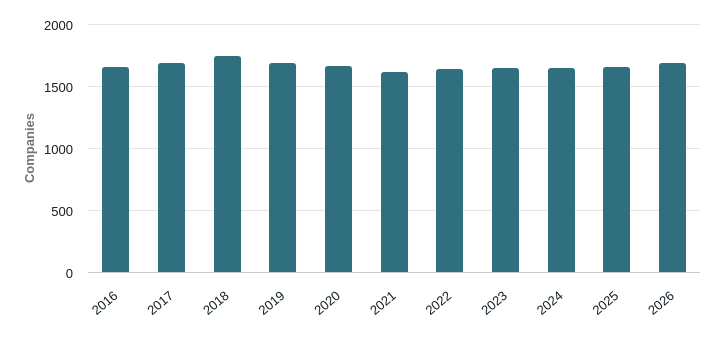
Ål maintains a stable economic climate with low corporate churn. Bankruptcy figures remain modest relative to the total population of over 1,700 registered corporate entity numbers and 225+ active employer enterprises.
Recent Insolvency Profile
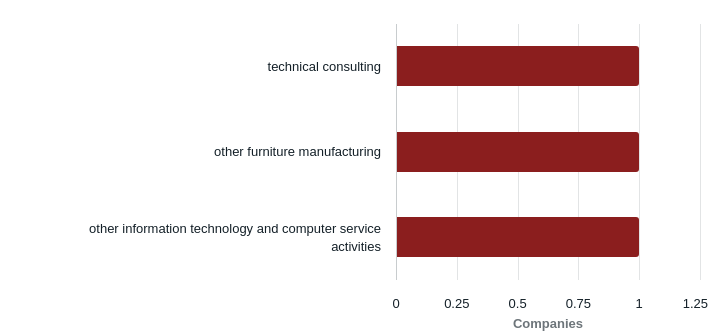
Over the recent reporting period, insolvency statistics record 3 bankruptcies in the municipality:
- Information Technology Services: Dybedahl IT Service AS (Operating Revenue NOK 9.5M, EBITDA NOK 130.0K).
- Furniture Manufacturing & Installation: Martins Møbler Og Montasje AS.
- Sanitary & Heating Contracting: Viken Varme Og Sanitær AS.
These bankruptcies represent isolated events rather than a systemic trend. The overall business climate displays strong resilience, particularly among ground engineering, transport, timber construction, and financial services companies.
Opportunities for Founders
Ål offers attractive conditions for founders seeking a stable regional market with high purchasing power and strong municipal infrastructure.
Key Growth Sectors for Entrepreneurs
- Specialised Construction & Technical Services: With large-scale civil works and railway infrastructure ongoing, sub-contracting support in ground preparation, electrical installation, and HVAC services remains in demand.
- Green Tech & Circular Economy: Positioned near Kleivi, opportunities exist around energy recovery, waste stream utilization, and environmental services.
- B2B IT & Professional Support: Following recent turnover in local IT services, local companies require ongoing cybersecurity, network support, and digital transformation consulting.
- Tourism & Experience Economy: Capitalizing on Hallingdal's year-round cabin tourism, specialized trade, leisure, and property management services present scalable business models.
Founders evaluating location options, available commercial addresses, or market density in Ål can utilize tools like SmartGrunder to analyze regional data and plan their market entry.
Conclusion
Ål municipality stands out as a reliable regional hub in the Hallingdal valley. Its balanced economic foundation—supported by robust public health institutions, strong inter-municipal utility companies, and experienced infrastructure contractors—provides high employment stability.
For investors, decision-makers, and entrepreneurs, Ål offers an established commercial environment with solid purchasing power, low business volatility, and clear market openings in specialized services, green utilities, and regional trade.