Municipality
Arendal Municipal Economy: Strategic Analysis for Founders and Decision-Makers
An in-depth evaluation of economic trends, industry structure, geographic distribution, and market dynamics in Arendal
Executive Summary
Arendal serves as a major economic hub in Agder county, characterized by a diverse commercial foundation that blends public health and administrative institutions with high-tech manufacturing, maritime services, and specialized construction. With an employment base of over 27,000 workers across public and private entities, the municipality provides a robust regional ecosystem for business development and employment stability.
Key economic highlights include:
- Strong Industrial Pillars: High-value electronics manufacturing (e.g., Kitron AS) and specialized marine insurance and technology services (e.g., Gard AS, APL Norway AS) anchor the municipality's private sector revenue.
- Public Sector Anchors: Regional healthcare facilities, represented by Sørlandet Sykehus HF, alongside regional educational and municipal operations, ensure steady baseline employment and local demand.
- Dynamic Geographic Hubs: Commercial volume is concentrated in the central Arendal area, complemented by productive industrial pockets in Staubø, Færvik, and Nedenes.
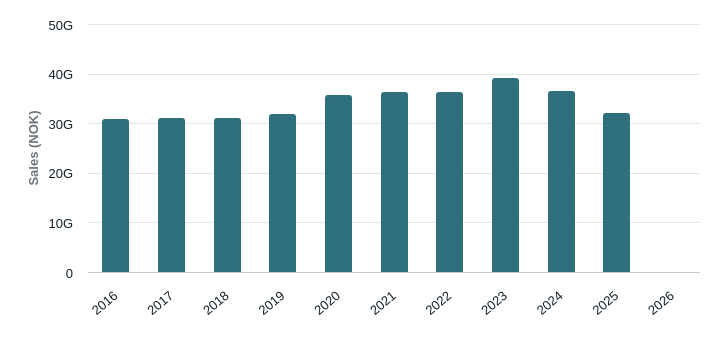
- Market Transitions: While corporate sales expanded rapidly to a peak of NOK 39.13 billion in 2023, macroeconomic recalibrations in construction and wholesale sectors highlight the necessity for targeted startup strategy and risk management.
Economic Overview & Historical Trajectory
Arendal's aggregate corporate sales and employment figures demonstrate steady multi-year resilience with periodic cyclical adjustments. Corporate sales grew from NOK 30.88 billion in 2016 to a peak of NOK 39.13 billion in 2023, driven by strength in technology, retail, and installation services, before leveling off to NOK 36.51 billion in 2024 and NOK 32.09 billion in 2025 (note: 2026 figures represent partial-year reporting).
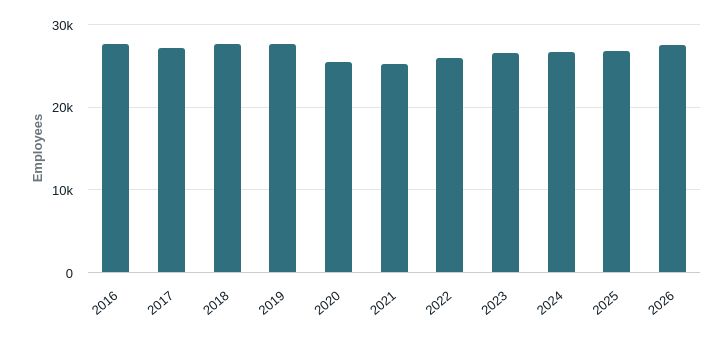
Employment levels have maintained a consistent upward recovery following post-2019 shifts, expanding from 25,123 employees in 2021 to 26,649 in 2024, with projections reaching 27,453 by 2026.
Historical Employment & Sales Trajectory
| Year | Corporate Sales (NOK) | Sales YoY Change | Total Employment | Employment YoY Change |
|---|---|---|---|---|
| 2016 | 30.88B | — | 27,570 | — |
| 2017 | 31.10B | +0.7% | 27,141 | -1.6% |
| 2018 | 30.95B | -0.5% | 27,529 | +1.4% |
| 2019 | 31.84B | +2.9% | 27,528 | -0.0% |
| 2020 | 35.77B | +12.3% | 25,370 | -7.8% |
| 2021 | 36.33B | +1.6% | 25,123 | -1.0% |
| 2022 | 36.36B | +0.1% | 25,937 | +3.2% |
| 2023 | 39.13B | +7.6% | 26,500 | +2.2% |
| 2024 | 36.51B | -6.7% | 26,649 | +0.6% |
| 2025 | 32.09B | -12.1% | 26,711 | +0.2% |
| 2026 | 17.7M (partial) | -99.9% (partial) | 27,453 | +2.8% |
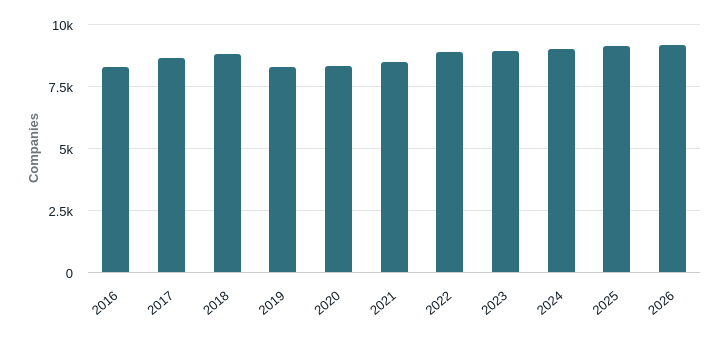
The data indicates that while topline commercial revenue has experienced tightening in recent periods due to national macroeconomic headwinds, underlying labor capacity has remained firmly supported by core public and industrial employer demand.
Industry Structure & Legal Corporate Forms
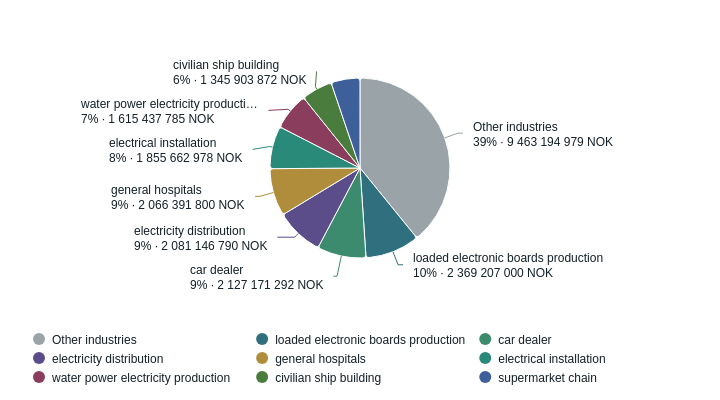
Arendal's industrial landscape is highly multi-faceted. In terms of private revenue and specialized manufacturing, loaded electronic boards production represents a standalone flagship industry in the area, generating NOK 2.37 billion in operating income across 586 employees. Key supporting sub-sectors include electrical installation (NOK 1.86 billion operating income; 605 employees), car sales and repair (combining for over NOK 3.38 billion in revenue), and specialised construction activities (NOK 693.9 million operating income; 611 employees).
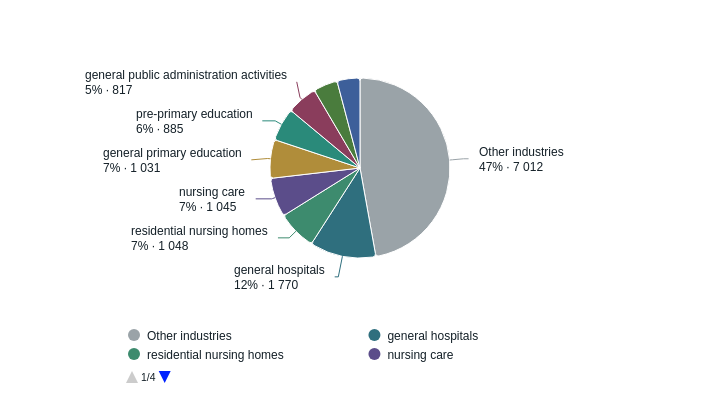
Public health and care services represent the largest labor volume. General hospital operations alone employ 1,770 personnel generating NOK 2.15 billion in operating income, while residential nursing homes and nursing care facilities account for over 2,000 additional municipal positions.
Key Industry Sector Statistics
| Industry Sector | Operating Income (NOK) | Employees | Revenue Growth YoY | EBITDA Margin |
|---|---|---|---|---|
| Loaded Electronic Boards Production | 2,369.2M | 586 | +14% | 10% |
| General Hospitals | 2,151.5M | 1,770 | +15% | 2% |
| Car Dealer | 2,148.2M | 336 | +13% | 4% |
| Electrical Installation | 1,858.7M | 605 | +29% | 4% |
| Supermarket Chains | 1,291.0M | 571 | +6% | 3% |
| Car Repair | 1,238.4M | 266 | +25% | 5% |
| Insurance Agents & Brokers | 1,063.6M | 447 | +7% | 7% |
| Construction | 847.6M | 555 | 0% | 1% |
| Other Specialised Construction | 693.9M | 611 | +139% | 11% |
Corporate Legal Forms
Standard limited liability companies (Aksjeselskap - AS) constitute the vast majority of commercial activity, comprising 1,221 active firms employing 15,663 workers and generating NOK 33.58 billion in operating income with an aggregate EBITDA margin of 11%. Municipal (Komm) and state/regional health trust forms (Sær) comprise the second-largest bloc of structured employment, delivering over 8,500 stable public sector jobs.
Business Geography & Commercial Nodes
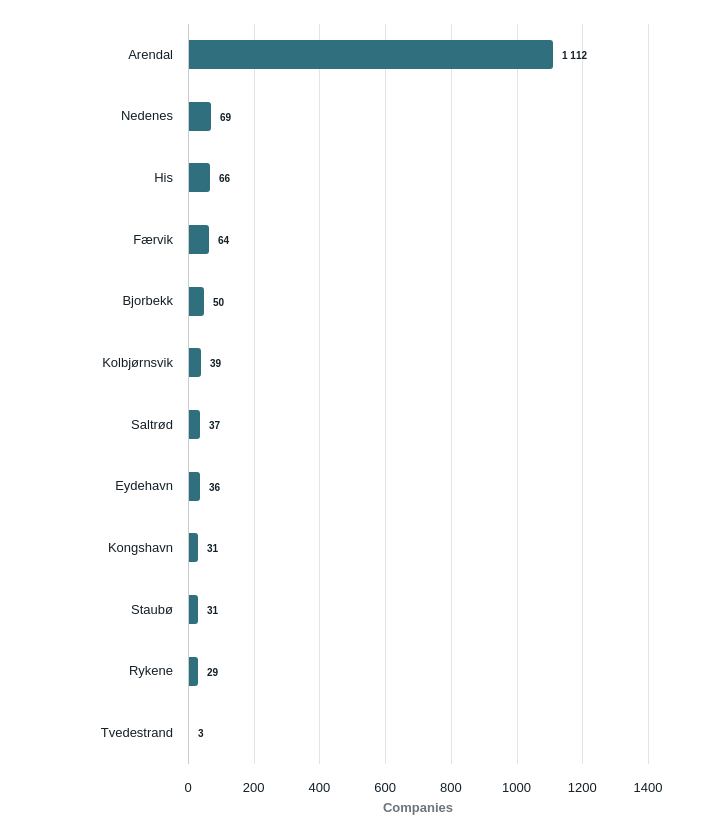
Economic activity in Arendal is distributed across several key urban centers, coastal ports, and industrial zones. The main city center of Arendal acts as the commercial core, hosting 1,112 businesses and over 21,000 employees.
However, significant high-value manufacturing and maritime operations are distributed across surrounding places such as Staubø, Færvik, and Nedenes.
Geographical Performance Overview
| Location / City | Active Companies | Total Employees | Operating Income (NOK) | EBITDA Margin | Operating Profit Margin |
|---|---|---|---|---|---|
| Arendal (Center) | 1,112 | 21,689 | 31,921.9M | 10% | 7% |
| Staubø | 31 | 916 | 2,473.5M | 10% | 9% |
| Færvik | 64 | 995 | 1,617.0M | 15% | 14% |
| Nedenes | 69 | 1,152 | 1,186.9M | 9% | 6% |
| Bjorbekk | 50 | 923 | 620.0M | 6% | 4% |
| His | 66 | 854 | 541.5M | 7% | 0% |
| Rykene | 29 | 230 | 417.5M | 21% | 18% |
| Kolbjørnsvik | 39 | 440 | 268.1M | 10% | 9% |
| Eydehavn | 36 | 362 | 248.0M | 10% | 5% |
| Saltrød | 37 | 366 | 220.6M | 9% | 7% |
| Kongshavn | 31 | 207 | 69.1M | 11% | 7% |
Staubø stands out for high productivity per employee (NOK 3.9 million operating income per employee), largely driven by advanced electronics manufacturing. Rykene demonstrates high operational profitability with a 21% EBITDA margin, while places like Eydehavn and Nedenes maintain established roles in industrial services and trade.
Largest Local Employers
Arendal's market is anchored by major regional employers across healthcare, high-tech manufacturing, specialized industrial construction, and maritime services.
Leading Registered Employers
- Sørlandet Sykehus HF Somatikk Arendal
- Industry: General Hospitals
- Employees: 1,398
- Operating Income: NOK 1,699.7M
- Role: The primary regional medical center and largest single site employer in the municipality.
- Kitron AS (Staubø)
- Industry: Loaded Electronic Boards Production
- Employees: 586
- Operating Income: NOK 2,369.2M
- Role: A key player in global contract electronics manufacturing, achieving strong EBITDA growth (+14% revenue growth).
- NSE Fagstillas AS
- Industry: Specialised Construction Activities / Scaffolding
- Employees: 535
- Operating Income: NOK 629.7M
- Role: Rapidly expanding industrial construction and scaffolding partner, registering 179% YoY revenue growth.
- Gard AS Hovedkontor
- Industry: Insurance Agents and Brokers (Marine P&I Insurance)
- Employees: 411
- Operating Income: NOK 1,052.2M
- Role: International marine insurance headquarters bringing high-value professional service jobs to the local economy.
- Sam Eyde Videregående Skole
- Industry: Technical & Vocational Secondary Education
- Employees: 401
- Role: Essential vocational education hub, preparing the local industrial workforce.
- Norse Atlantic Airways AS
- Industry: Passenger Air Transport (Headquarters / Support)
- Employees: 318
- Role: Corporate headquarters and administrative operational support for long-haul aviation.
- APL Norway AS (Kolbjørnsvik)
- Industry: Offshore & Marine Oil Services
- Employees: 199
- Operating Income: NOK 84.1M
- Role: Specialized offshore loading and mooring tech developer.
- Match Rekruttering & Bemanning AS
- Industry: Business Consulting & Staffing
- Employees: 195
- Role: Supporting industrial labor flexibility across Agder.
Business Dynamism & Market Stress
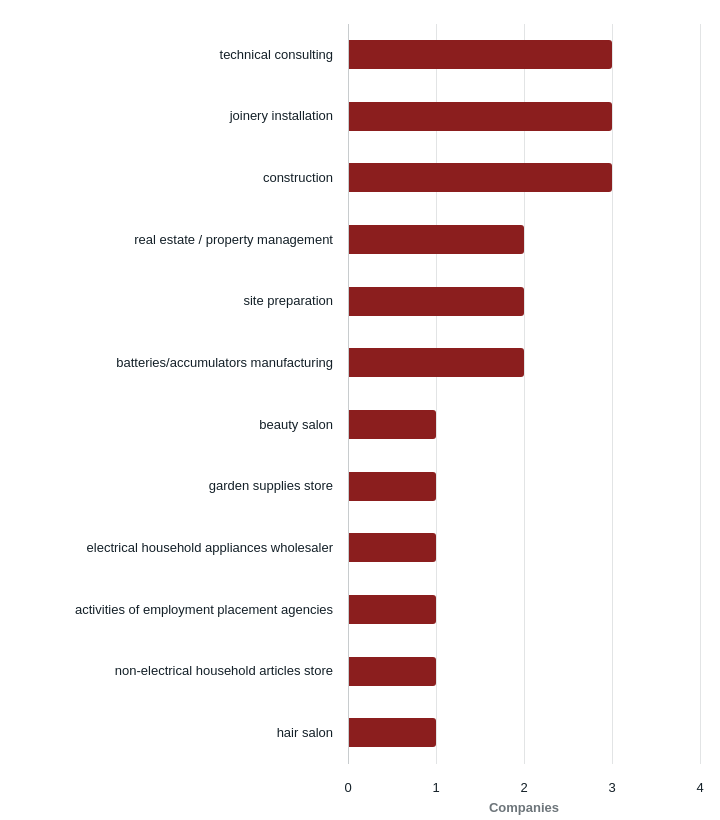
Market turbulence in recent reporting cycles has affected specific capital-intensive and consumer-facing sectors in Arendal. Across the municipality, 28 total bankruptcies were recorded, with detailed industry data available for key insolvency cases.
Sectoral Insolvency Analysis
- Construction & Real Estate Development: Traditional residential building and joinery businesses faced margin compression. General construction bankruptcies accounted for 3 companies with NOK 39.9 million in aggregate operating income and an overall net operating loss of NOK -14.7 million. Joinery installation saw 3 insolvencies, while site preparation registered 2 smaller bankruptcy cases.
- Wholesale & Retail Trade: Tightened consumer spending impacted non-essential retail and trade. A building materials wholesaler recorded insolvency on NOK 111.3 million in revenue under heavy debt obligations (NOK 96.7M debt). Smaller cases occurred in boat equipment retailing (NOK 6.7M sales), plumbing/heating equipment wholesaling (NOK 4.8M sales), and clothing retail.
- Early-Stage Capital Intensive Ventures: Reflecting high capital outlay risks in modern manufacturing, 2 companies in the battery/accumulator manufacturing category registered insolvencies with combined revenue of NOK 103.6 million against heavy operational cash burn (EBITDA NOK -155.4 million).
Despite localized sector pressures, core business indicators in specialized technical services, electrical installation, and healthcare remain stable, illustrating market rebalancing rather than broad economic decline.
Opportunities for Founders & Entrepreneurs
Arendal presents a compelling landscape for founders capable of supplying specialized services to established industrial giants or tapping into regional infrastructure needs.
High-Potential Opportunity Areas
- B2B Engineering & Technical Consultancy: With large-scale electronics (Kitron AS), marine technology (APL Norway AS), and maritime finance (Gard AS) anchored locally, specialized software, automation, and engineering consultancies have strong enterprise client potential.
- Subcontracting in Specialized Installation & Maintenance: Highly active electrical installation (NOK 1.86B operating income) and scaffolding sectors demonstrate demand for reliable trade subcontractors and logistics partners.
- Healthcare Supply Chain & Senior Care Solutions: A major regional hospital combined with widespread nursing home infrastructure creates long-term demand for health tech, specialized staffing, and institutional maintenance services.
- Green Industrial Ecosystem Services: As Agder continues its green transition, supply chain support, environmental testing, and circular logistics present viable avenues for new entrants.
When evaluating commercial premises and industry niches in Arendal, early-stage founders can leverage tools from SmartGrunder to analyze real estate nodes, industry density, and market trends across local sub-areas.
Conclusion
Arendal represents one of Agder's most balanced municipal economies. It balances a sturdy foundation of public health and educational institutions with export-driven electronics manufacturing, maritime risk management, and specialized construction services.
While macroeconomic fluctuations have created pressures in residential building and consumer trade, expanding employment figures—projected toward 27,453 workers—and strong corporate revenues demonstrate long-term economic durability. For prospective business founders and commercial investors, Arendal offers an established industrial ecosystem, skilled workforce pipelines, and diverse regional markets.