Municipality
Drammen Municipal Economy Analysis: Commercial Structure, Geographic Hubs, and Growth Horizons
An in-depth data review for founders, investors, and local planning leadership
Executive Summary
Drammen stands as one of Viken's premier urban and commercial hubs, combining a substantial public healthcare infrastructure with a robust regional enterprise economy. Total business revenue in the municipality approached NOK 100 billion in 2024, supported by an active workforce of over 63,000 employees. The local economic matrix is anchored by large-scale healthcare and social service organizations, a major regional automotive trading cluster, heavy construction and trade, and growing professional service sectors.
For founders and business decision-makers, Drammen offers a highly concentrated market across distinct geographic sub-centers. While the main urban core of Drammen city dominates commercial activity, suburban and industrial sub-nodes such as Mjøndalen, Krokstadelva, Solbergelva, and Svelvik present strong localized demand and lower overhead structures. Recent dynamic shifts reveal strong expansion in technical installation, logistics, and IT services, alongside structural realignments in real estate development and consumer retail.
Economic Overview
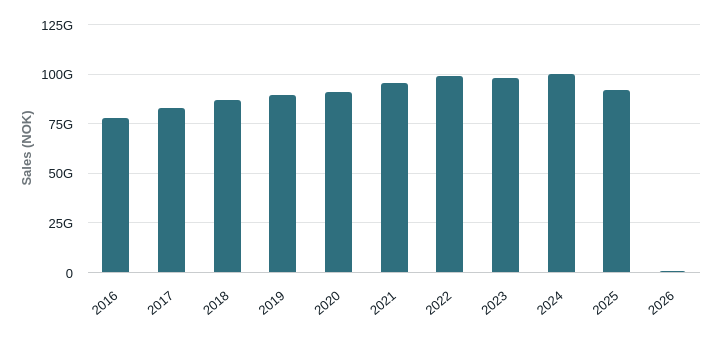
Drammen's macro-economic trajectory over the past decade reflects consistent scale expansion, rebounding strongly from pandemic disruptions and stabilizing at high overall output levels.
Revenue Trend (2016–2024)
Commercial turnover grew steadily from NOK 77.7 billion in 2016 to reach a peak of NOK 99.9 billion in 2024. Growth was particularly pronounced between 2020 and 2022 (+5.1% and +3.3% respectively). Note: Values reported for 2025–2026 reflect preliminary or trailing reporting windows rather than completed fiscal annual totals.
Workforce Dynamics
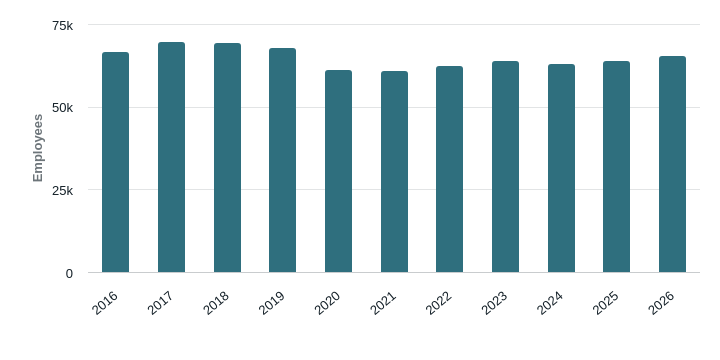
Employment in Drammen reached 69,679 workers in 2017 before restructuring down to a post-2020 baseline around 60,800. Since 2021, job creation has trended upward again, climbing to 63,743 in 2023 and 63,006 in 2024, with projections indicating further consolidation toward 65,000+ employees.
| Indicator | Baseline (2016) | Peak Pre-2024 | Recent Level (2024) |
|---|---|---|---|
| Total Revenue | NOK 77.7B | NOK 98.6B (2022) | NOK 99.9B |
| Active Workforce | 66,432 | 69,679 (2017) | 63,006 |
| Revenue YoY Growth | +6.0% (2017) | +3.3% (2022) | +2.0% |
Industry Structure
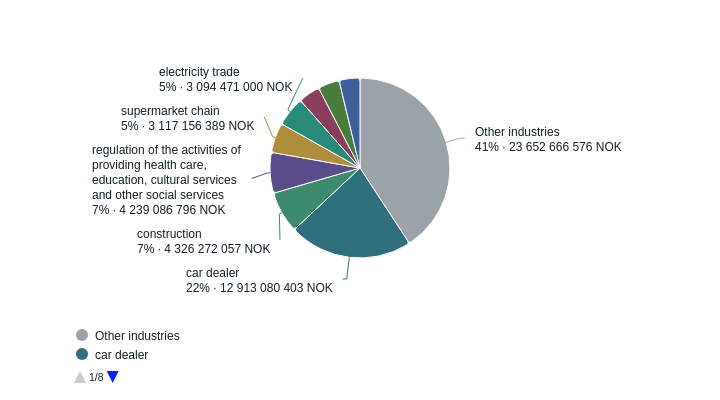
Drammen's industry landscape is characterized by a high volume of specialized healthcare services, heavy automotive trade, construction, and corporate business services.
Primary Industry Sectors
- Automotive Commerce: Car dealerships generate the highest commercial revenue in the municipality, exceeding NOK 13.0 billion across 47 registered companies with 602 employees.
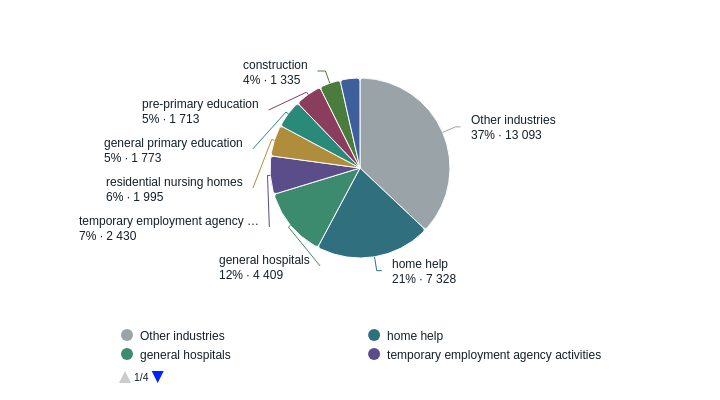
- Healthcare and Social Work: Home help services (7,328 employees across 7 firms, led by large cooperative structures) and general hospital operations (4,409 employees across 7 entities, NOK 6.06 billion operating income) form the largest employment foundation.
- Construction & Contracting: Specialized building construction (123 companies, 1,335 employees, NOK 4.36B operating income) and electrical installation (48 companies, 928 employees, NOK 1.61B operating income) reflect strong ongoing regional infrastructure work.
- Technology & Technical Consulting: Technical engineering consulting (127 firms, 880 employees, NOK 1.96B income) and IT services (54 firms, 589 employees, NOK 1.62B income) provide high-value corporate knowledge capabilities.
Legal Forms Matrix
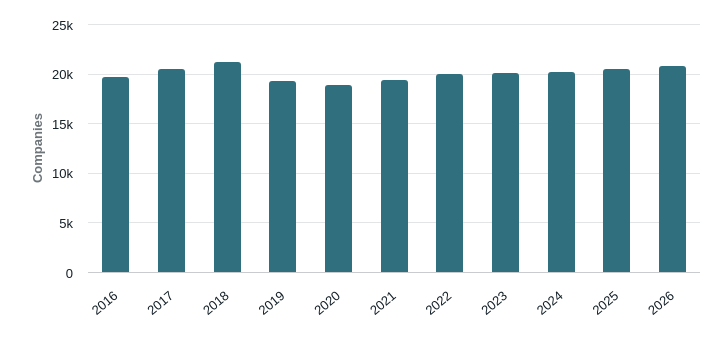
Limited liability companies (AS) constitute the backbone of private enterprise, accounting for 2,737 entities, 33,553 employees, and NOK 88.9 billion in annual operating income. Cooperative structures (SA) and state/health enterprise forms (SÆR) represent major public-welfare employment forces.
Business Geography
Economic activity in Drammen is distributed across several urban centers and industrial corridors along the Drammenselva river and fjord axis.
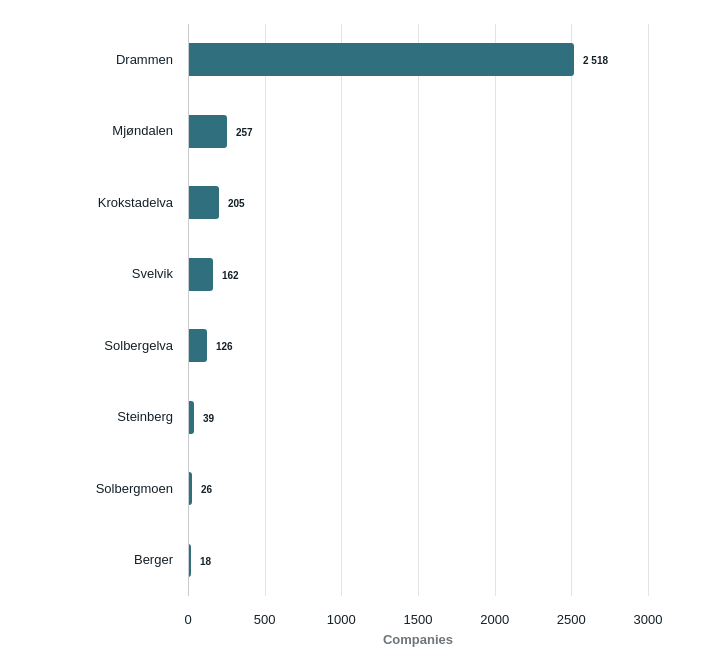
| Area / City | Companies | Employees | Operating Income (NOK) | Operating Margin |
|---|---|---|---|---|
| Drammen | 2,518 | 55,837 | NOK 95,138.5M | 5% |
| Mjøndalen | 257 | 3,737 | NOK 4,854.0M | 3% |
| Krokstadelva | 205 | 2,530 | NOK 4,134.3M | 10% |
| Solbergelva | 126 | 1,671 | NOK 4,061.6M | 1% |
| Svelvik | 162 | 1,495 | NOK 2,471.5M | 6% |
| Steinberg | 39 | 610 | NOK 1,620.9M | 3% |
| Solbergmoen | 26 | 451 | NOK 449.8M | 14% |
| Berger | 18 | 111 | NOK 34.2M | 13% |
District Highlights
- Drammen Center & Strømsø/Bragernes: Concentrates over 85% of total municipal revenue and employment, hosting university campuses, hospital headquarters, public administration, and retail hubs.
- Mjøndalen & Krokstadelva: Secondary commercial centers with strong operating revenues (combined >NOK 8.9B) and healthy profit margins, particularly in light manufacturing, trade, and local services.
- Solbergmoen & Berger: High-margin industrial sub-nodes generating elevated operating profitability relative to employee headcount.
Largest Employers
Drammen's enterprise roster features major public healthcare trusts, educational bodies, transport operators, and non-profit/cooperative organizations.
Key Regional Employers
- Uloba Independent Living Norge SA: Headquartered in Drammen, this cooperative organization employs 6,934 workers in home assistance services, generating NOK 1.32 billion in turnover.
- Vestre Viken HF (Drammen Hospital Units): The regional health trust operates multiple divisions in Drammen, including Somatikk (3,007 employees, NOK 3.86B operating income), Vopa Mental Health Hospital (1,052 employees), Hospital Administration (493 employees), and Laboratory Services (438 employees).
- WNS Pomorze Sp. z o.o. NUF: A major temporary staffing agency operating out of Havnegata, employing 841 staff with NOK 779.5M in turnover.
- Public Sector & Education: Statens Vegvesen (446 employees), Universitetet i Sørøst-Norge Campus Drammen (444 employees), and Åssiden Videregående Skole (340 employees) anchor civil administration and higher education.
- Transport & Logistics: Vy Buss AS (Rutebiltransport Drammen) accounts for 331 employees and NOK 352.9M in revenue, supplying vital public transport infrastructure.
Business Dynamism & Market Realignment
Business restructuring in Drammen reflects broader macroeconomic adjustments, particularly within interest-rate-sensitive sectors such as commercial property, housing development, and retail.
Insolvency Patterns
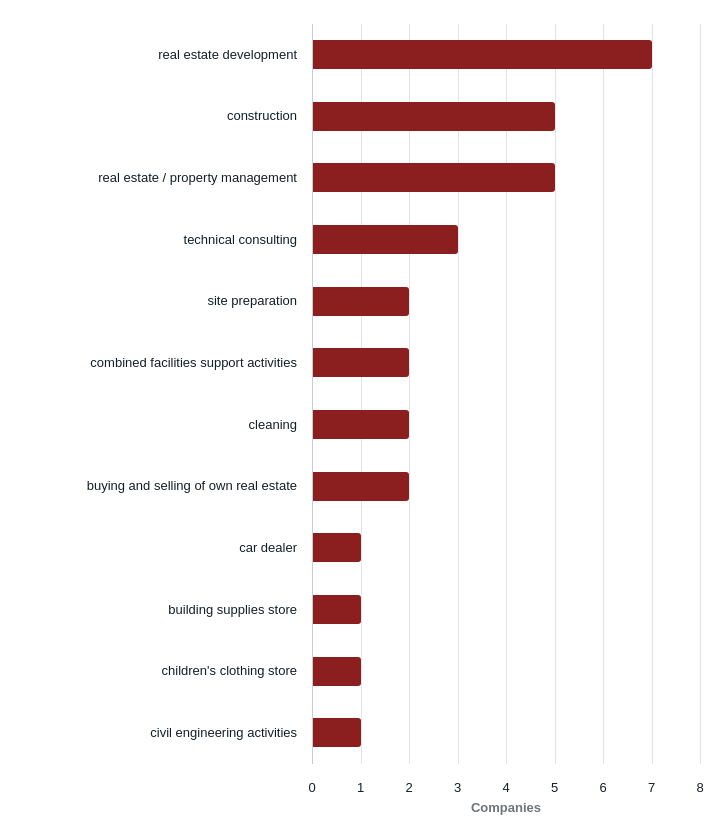
A total of 64 bankruptcies were recorded across the municipality in the reference period. Analysis of the affected sectors indicates that headwinds were concentrated in specific real estate and contracting niches:
- Real Estate Development & Property Management: Real estate development entities (7 companies in bankruptcy context, combined sales revenue NOK 291M, EBITDA -NOK 114.5M) and property management firms (5 companies) faced significant earnings pressures due to financing cost adjustments.
- General Construction & Trade: 5 general construction companies and individual specialized trade units encountered insolvency, reflecting cost pressure in building materials and project timing delays.
- Automotive & Retail Outlets: Select automotive sales units (such as Auto Refrance AS) and local specialty stores adjusted operational footprints during market shifts.
Despite these selective pressure points, core industrial services, technical consulting, and public-facing healthcare sectors maintained resilient underlying balance sheets.
Opportunities for Founders & Market Entry
Drammen's large consumer market, strategic location along key E18/E134 transport arteries, and diverse corporate ecosystem create several promising entry points for new ventures.
High-Potential Focus Areas
- Technical & B2B Services: With 127 engineering firms generating NOK 1.96B and 54 IT companies turning over NOK 1.62B, sub-contracting solutions for digital transformation, industrial automation, and green transition projects remain in high demand.
- Specialized Logistics & Craft Trades: Rapid expansion in electrical installation (+22% revenue growth) and civil engineering (+10% growth) highlights strong demand for reliable B2B trades and logistics partners.
- HealthTech & Community Support: Given Vestre Viken's massive hospital footprint and Uloba's nationwide reach, founders offering health technology, administrative automation, and assistive technologies have direct access to a national competency cluster.
- Niche Food & Hospitality: Restaurants in Drammen generated NOK 421.3M in operating income with solid operating margins (6%), proving that well-concepted food and hospitality offerings find receptive local demand.
When evaluating specific site locations, commercial zoning, or localized market density, prospective founders can soft-test opportunities through SmartGrunder, using local market tools to pinpoint ideal sub-districts and commercial addresses across Drammen municipality.
Conclusion
Drammen municipality demonstrates a powerful economic profile characterized by nearly NOK 100 billion in enterprise turnover, a skilled workforce exceeding 63,000 employees, and a central location within the Greater Oslo regional market. While high interest rates have led to structural adjustments in property development and building trades, the municipality's core strengths in health services, automotive commerce, engineering, and transport provide enduring stability.
For entrepreneurs, local planners, and private investors, Drammen provides an attractive combination of high market density, diversified commercial zones from Mjøndalen to Svelvik, and robust consumer purchasing power. Strategic market entry targeted at technical B2B services, specialized craft trades, and healthcare innovation remains highly favorable.