Municipality
Economic Analysis of Gjøvik Municipality: Market Structure, Industry Shifts, and Opportunities for Founders
An in-depth evaluation of enterprise performance, employment dynamics, geographic centers, and commercial potential in Innlandet's regional hub
Executive Summary
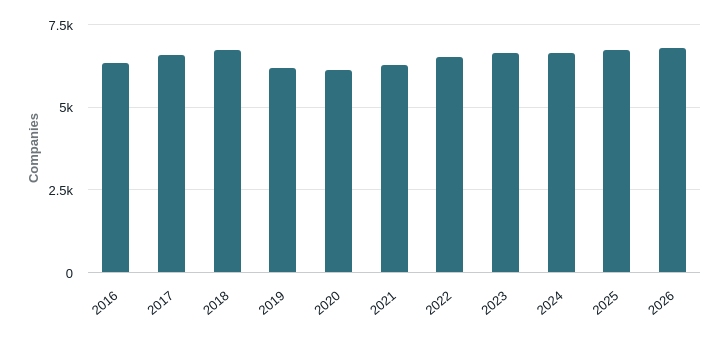
Gjøvik serves as a premier commercial, educational, and healthcare hub in Innlandet county. With a robust enterprise ecosystem comprising over 6,700 registered entities and an employment base exceeding 20,000 active positions, the municipality demonstrates remarkable structural diversity. Its economy is underpinned by major public and healthcare institutions—most notably Sykehuset Innlandet and NTNU i Gjøvik—alongside established commercial leaders in banking, manufacturing, and construction.
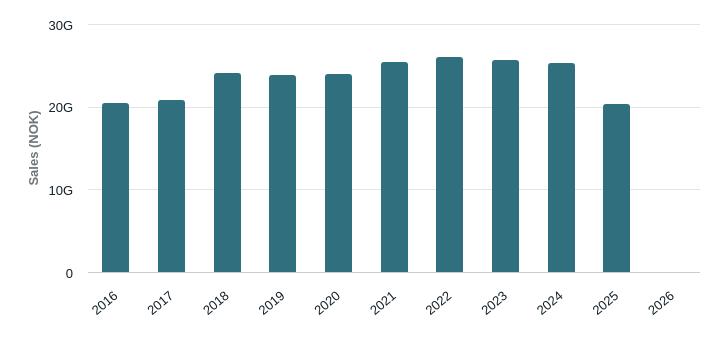
Between 2016 and 2022, Gjøvik experienced steady economic expansion, with total corporate turnover rising from NOK 20.4 billion to a peak of NOK 26.0 billion in 2022. While macroeconomic headwinds and sector-specific realignments led to a slight deceleration in 2023 and 2024 (reaching NOK 25.2 billion), employment levels remain highly stable around 21,000 to 22,000 employees.
For entrepreneurs and prospective business owners, Gjøvik offers a resilient ecosystem characterized by high consumer density in the urban core, specialized industrial parks in Hunndalen, strong cooperative movements in Biri, and access to a highly skilled candidate pool generated by local higher education institutions.
Economic Overview
Gjøvik's financial output and employment figures highlight a strong post-2016 trajectory, marked by substantial growth during the late 2010s and early 2020s. Total revenue generated by local companies grew from NOK 20.4 billion in 2016 to NOK 26.0 billion in 2022, representing a cumulative increase of over 27% during this period.
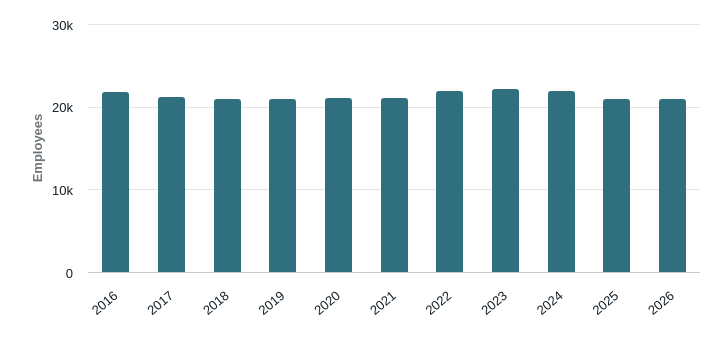
Employment patterns closely mirrored revenue growth, expanding from 21,758 employees in 2016 to a peak of 22,169 in 2023. Recent figures for 2024 to 2026 indicate a slight contraction in reported workforce counts and revenues. Note: Figures for 2025 and 2026 reflect preliminary or incomplete annual accounting reports rather than a permanent contraction.
| Metric | 2016 | 2018 | 2020 | 2022 | 2023 | 2024 |
|---|---|---|---|---|---|---|
| Total Sales (NOK) | 20.4B | 24.1B | 24.0B | 26.0B | 25.7B | 25.2B |
| YoY Sales Growth | — | +15.5% | +0.5% | +2.3% | -1.1% | -1.9% |
| Total Employees | 21,758 | 20,962 | 21,018 | 21,926 | 22,169 | 21,844 |
| YoY Employee Growth | — | -1.1% | +0.4% | +4.0% | +1.1% | -1.5% |
Key drivers of this financial stability include a well-diversified tax base split between public sector healthcare, technical education, financial services, and localized specialized manufacturing.
Industry Structure & Legal Forms
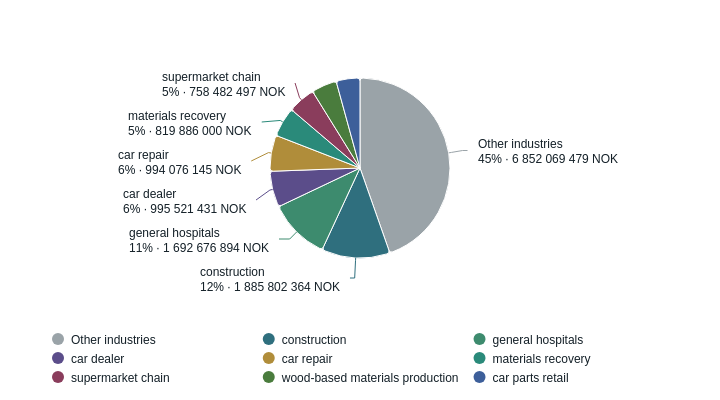
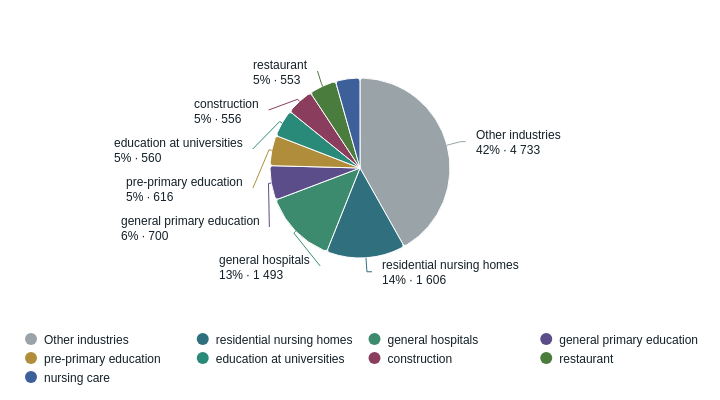
Gjøvik's industry landscape is anchored by social infrastructure, professional services, retail, and construction. Healthcare and residential care represent the largest single source of employment, led by residential nursing homes (1,606 employees across 24 entities) and general hospital activities (1,493 employees across 5 entities generating NOK 1.83 billion in operating income).
The secondary market is driven by commercial banking, technical consulting, and heavy trade. The monetary intermediation sector (9 companies) reports NOK 3.20 billion in operating income, delivering exceptional operating margins. Meanwhile, the construction industry (28 companies, 556 employees) generates NOK 1.89 billion in operating income.
Top Industry Sectors by Workforce
- Healthcare & Social Care: Over 4,000 employees spanning hospitals, nursing homes, and specialized care facilities.
- Education: Primary, vocational, and university-level institutions account for over 2,100 active academic and administrative roles.
- Construction & Contracting: 28 companies employing 556 workers with total revenues approaching NOK 1.9 billion.
- Retail & Automotive: Supermarket chains (344 employees, NOK 780.6M revenue), car repair (283 employees, NOK 1.00B revenue), and car dealerships (223 employees, NOK 1.01B revenue).
Legal Organisation Forms
Limited liability companies (Aksjeselskap / AS) form the backbone of commercial activity in Gjøvik, representing 822 registered entities and 10,817 active employees.
| Organisation Form | Company Count | Employee Count | Operating Income (NOK) |
|---|---|---|---|
| Aksjeselskap (AS) | 822 | 10,817 | 20.49B |
| Kommune (KOMM) | 112 | 4,520 | — |
| Statsforetak / Særbedrift (SÆR) | 15 | 2,180 | 2.59B |
| Organisasjonsledd (ORGL) | 32 | 1,896 | — |
| Samvirkelag (SA) | 14 | 596 | 870.3M |
| Enkeltpersonforetak (ENK) | 71 | 341 | 38.4M |
Business Geography & Spatial Activity
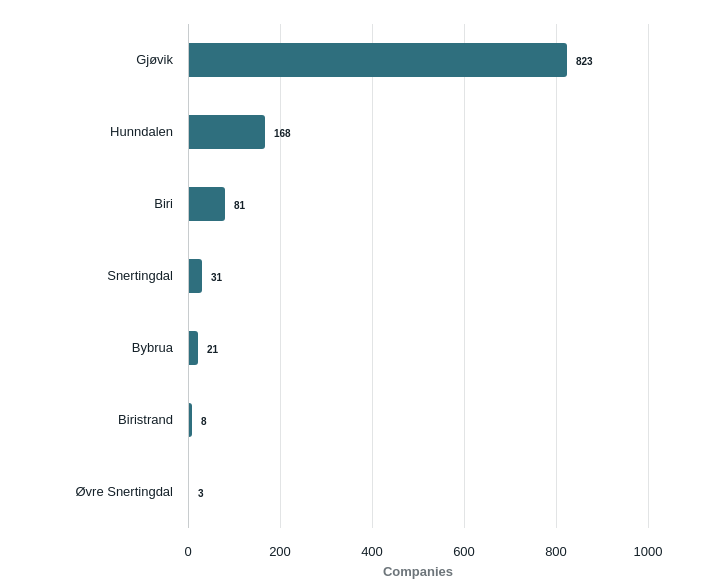
Economic activity in Gjøvik municipality is heavily concentrated in the central urban area of Gjøvik city, supported by key outlying urban settlements and industrial parks including Hunndalen and Biri.
| Place / Urban Area | Active Companies | Employees | Operating Income (NOK) | Sales Revenue (NOK) |
|---|---|---|---|---|
| Gjøvik (City Center) | 823 | 16,818 | 20,067.7M | 15,485.6M |
| Hunndalen | 168 | 2,707 | 6,010.9M | 5,894.2M |
| Biri | 81 | 1,432 | 1,587.0M | 1,544.0M |
| Snertingdal | 31 | 287 | 163.3M | 145.5M |
| Bybrua | 21 | 201 | 189.8M | 188.2M |
| Biristrand | 8 | 55 | 21.4M | 11.6M |
| Øvre Snertingdal | 3 | 4 | 0.0M | 0.0M |
Geographic Highlights
- Gjøvik Urban Hub: Accounts for more than 80% of all registered municipal employment and NOK 20.1 billion in operating income, driven by regional health trusts, central administration, university campus facilities, and main commercial streets.
- Hunndalen Corridor: Operates as Gjøvik's industrial heartland. Hosting 168 companies and 2,707 workers, it generates over NOK 6.0 billion in operating income across manufacturing (e.g., Natre Vinduer), automotive trade, and logistics.
- Biri: Functions as a vibrant northern cluster focused on agricultural cooperatives, specialized manufacturing, and regional service enterprise, producing NOK 1.59 billion in operating income.
Largest Employers & Key Regional Players
Gjøvik's commercial and civic environment is stabilized by major public institutions, regional healthcare providers, national financial branches, and established industrial contractors.
Prominent Regional Employers
- Sykehuset Innlandet HF (Somatikk, Ambulanse, DPS): The single largest public operational employer in the region, employing over 1,600 personnel across its somatic hospital, ambulance services, and adult mental health divisions in Gjøvik.
- NTNU i Gjøvik: A primary regional engine for education, research, and technical innovation, housing 560 faculty and administrative staff members.
- Gjøvik Videregående Skole: Major secondary educational provider employing 249 professionals.
- Gjøvik Avløserlag SA: A major agricultural and temporary employment cooperative supporting 237 workers.
- Natre Vinduer AS (Avd Gjøvik): Key industrial manufacturer located in Hunndalen, employing 234 staff members with annual revenues of NOK 386.7 million.
- Ecura Bo Og Habilitering AS (Avd Innlandet 3): Specialized care and dwelling provider employing 222 personnel and generating NOK 154.6 million in operating income.
- DNB Bank ASA (Avd Kallerudlia): A vital financial services center employing 202 personnel, reporting NOK 2.68 billion in operating income and an EBITDA margin of 61%.
- Syljuåsen AS (Avd Gjøvik): Leading regional construction contractor employing 186 personnel with operating revenues of NOK 822.7 million.
- Meko Norway AS (Avd Adm): Major automotive parts distributor with 159 employees and NOK 575.1 million in operating revenue.
Business Dynamism & Insolvent Risk Analysis
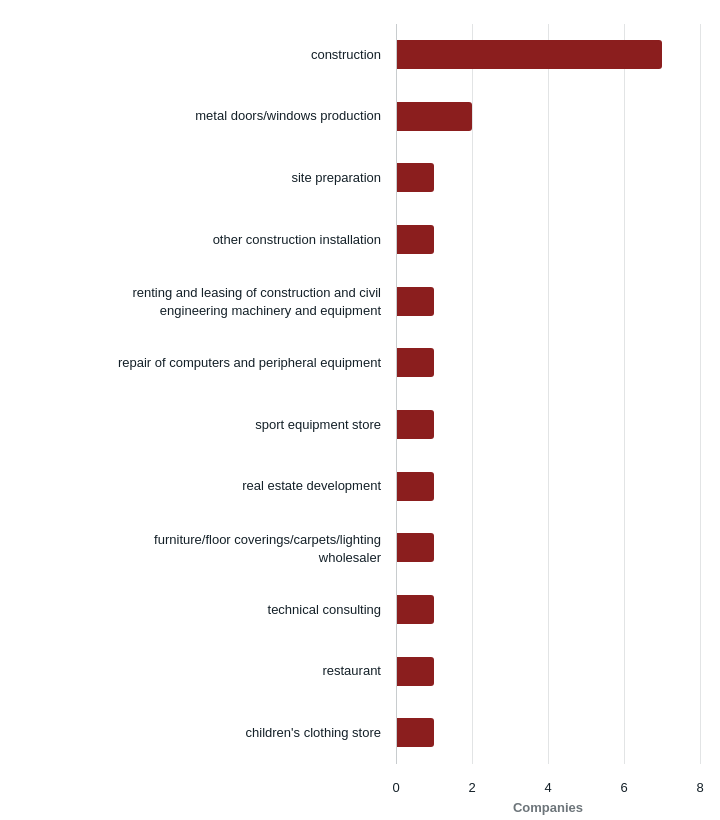
A clear understanding of market turnover and corporate distress provides essential context for evaluating startup risk. Within Gjøvik municipality, 25 total insolvencies were recorded in recent registry periods, representing a normal rate of churn relative to the area's 6,700 total registered companies.
An examination of insolvency metrics reveals that distress has been heavily concentrated in interest-rate-sensitive industries, specifically residential building construction, trade sub-contracting, and consumer retail:
- Construction & Contracting: Accounted for 7 recorded bankruptcies with combined pre-insolvency revenues of NOK 66.4 million. Sub-sectors like site preparation and general building faced compressed profit margins and rising material costs.
- Manufacturing (Metal Doors/Windows): 2 companies in insolvency recorded NOK 179.0 million in operating revenue alongside operating losses of NOK 56.0 million, demonstrating macro challenges in building-materials production.
- Retail & Hospitality: Notable individual insolvencies include Gamletorvet Sport AS (NOK 9.7M revenue) and Indian Dining AS (NOK 4.9M revenue), illustrating shifts in consumer discretionary spending.
Overall, the insolvency data highlights cyclical exposure in commercial construction and consumer retail rather than broad systemic failure in Gjøvik's core service economy.
Opportunities for Founders
Gjøvik offers compelling structural advantages for prospective business owners, backed by a strong student population, substantial public investment, and high regional purchasing power. Strategic entry points include:
- Tech Transfer & Knowledge Services: Leveraging NTNU i Gjøvik's research expertise in cybersecurity, information security, and engineering. B2B software, technical consulting, and IT services are well-positioned to serve local institutions.
- Healthcare Tech & Specialized Care: With Sykehuset Innlandet and major care providers concentrated locally, opportunities exist for medical technology suppliers, healthtech software, and private specialized care providers.
- Construction Supply & Green Sub-Contracting: While traditional construction faces cyclical pressures, niche opportunities exist in energy retrofitting, electrical installation, and sustainable building materials.
- Consumer Services & Food/Beverage: Gjøvik city center's high foot traffic and strong urban core (NOK 15.5B sales) support specialized food service, lifestyle retail, and experiential concepts.
Founders interested in exploring commercial real estate, industry density, and targeted market entry in Gjøvik can utilize tools like SmartGrunder to analyze specific street-level market conditions and industry demographics.
Conclusion
Gjøvik municipality maintains a resilient economic landscape anchored by healthcare, higher education, financial services, and specialized manufacturing. Its total enterprise turnover of over NOK 25 billion and workforce of ~21,000 employees provide a solid economic platform for new commercial ventures.
While construction and discretionary retail face macroeconomic pressures, Gjøvik's role as the regional academic and healthcare capital of Innlandet creates long-term stability. For decision-makers and founders, Gjøvik represents a mature, high-capacity market with well-developed infrastructure and a highly qualified workforce.