Municipality
Hjelmeland Economic Analysis: Aquaculture Powerhouse and Regional Business Landscape
An in-depth review of industry dynamics, employment trends, geographic clusters, and entrepreneurial potential in Hjelmeland
Executive Summary
Hjelmeland municipality, located in the heart of Rogaland's Ryfylke region, represents a highly specialized, ocean-driven economy. Characterized by a strong industrial core in aquaculture, fish processing, and maritime transport, the municipality generates remarkable revenue relative to its population size. Key economic drivers include leading global and regional seafood producers such as Mowi Avd Ryfisk, Tytlandsvik Aqua As, and Årdal Aqua As.
While the commercial sector is heavily anchored by capital-intensive seafood operations, public healthcare and education provide essential baseline employment across Hjelmeland's primary settlement centers. Recent years have seen cyclical shifts in top-line municipal revenue and workforce figures, reflecting international seafood market fluctuations and structural adjustments. Nevertheless, the municipality retains exceptional capital density and strong gross margins across its prime commercial sectors, offering a stable environment for new ventures and infrastructure investments.
Economic Overview
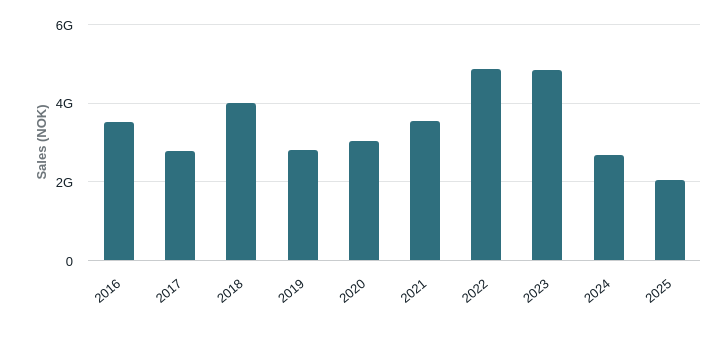
Hjelmeland's aggregate corporate sales and employment statistics illustrate a dynamic, commodity-influenced economic profile. Corporate revenue peaked in 2022 and 2023, exceeding NOK 4.8 billion annually, driven by high global demand and favorable pricing in the aquaculture sector. Subsequent years reflected market recalibrations, with sales leveling to NOK 2.68 billion in 2024 and NOK 2.03 billion in 2025.
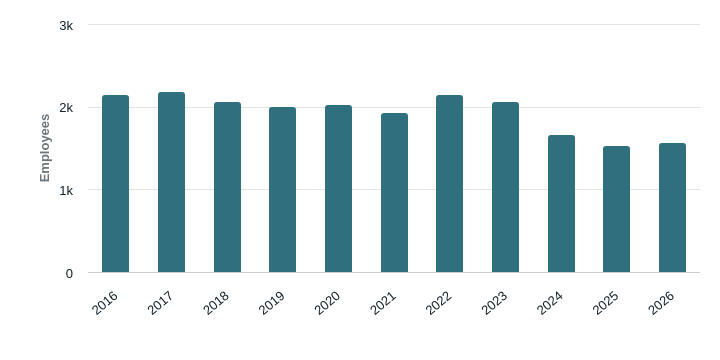
Employment trends mirror this economic evolution. After reaching a high of 2,136 workers in 2022, local corporate employment consolidated to 1,659 in 2024 and 1,523 in 2025, with projections indicating a stabilizing trend at 1,555 employees in 2026 (+2.1% YoY change).
| Indicator | Peak Period | Recent Figure | Key Driver |
|---|---|---|---|
| Annual Corporate Revenue | NOK 4,852.8M (2022) | NOK 2,026.5M (2025) | Global aquaculture pricing & harvest volumes |
| Workforce Total | 2,183 employees (2017) | 1,555 employees (2026 proj.) | Industrial streamlining & automation |
| Top Sector Revenue Growth | +46% (Fish Farming) | Varies by sub-sector | High productivity per employee |
Industry Structure
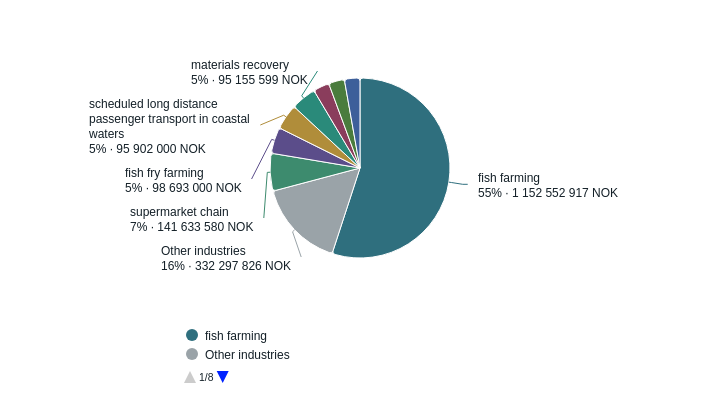
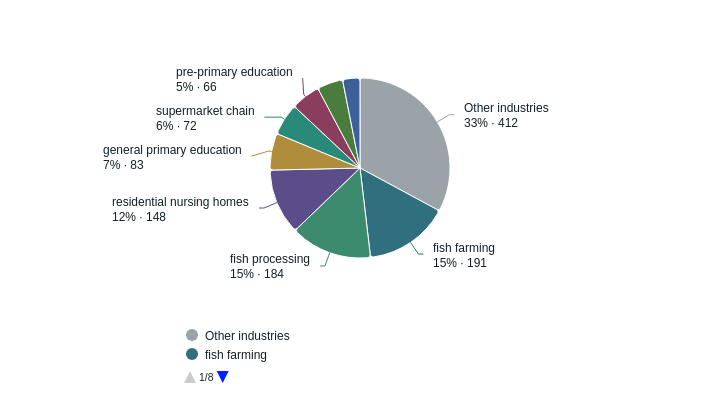
The commercial hierarchy of Hjelmeland is dominated by fish farming, processing, and maritime logistics. Fish farming alone generates over NOK 1.15 billion in operating income across 9 registered enterprises, achieving a standout EBITDA margin of 23% and an extraordinary operating income per employee of NOK 8.7 million. Combined with fish processing (184 employees) and fish fry farming (Fister Smolt As with 27 employees), the seafood value chain constitutes the dominant pillar of private commerce.
Secondary commercial sectors include materials recovery, represented by Ryfylke Miljøverk with NOK 95.2 million in operating income and a 35% EBITDA margin, alongside coastal passenger transport, retail grocery chains, and specialized construction services.
| Industry | Companies | Employees | Operating Income (NOK) | EBITDA Margin |
|---|---|---|---|---|
| Fish Farming | 9 | 191 | 1,153.6M | 23% |
| Fish Processing | 2 | 184 | 11.5M | 7% |
| Residential Nursing Homes | 2 | 148 | 0.0M (Public) | N/A |
| General Primary Education | 3 | 83 | 0.0M (Public) | N/A |
| Supermarket Chains | 5 | 72 | 145.0M | 2% |
| Coastal Passenger Transport | 1 | 58 | 95.9M | 12% |
| Materials Recovery | 1 | 33 | 95.2M | 35% |
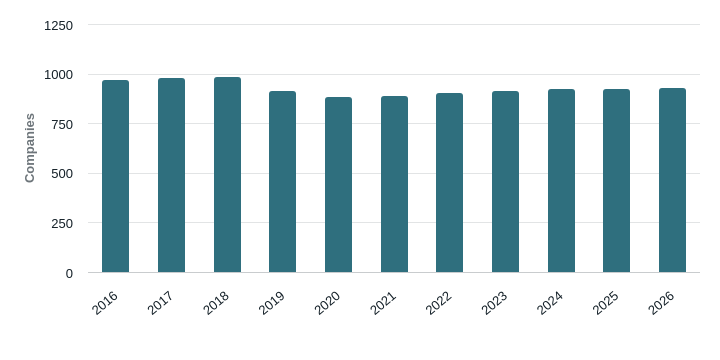
From an organizational structure perspective, standard limited liability companies (Aksjeselskap - AS) generate the vast majority of commercial value, accounting for NOK 1.87 billion in operating income and 644 employees across 76 entities. Municipal entities (Kommune - KOMM) represent the largest payroll employer aggregate with 485 staff across 22 institutions.
Business Geography
Hjelmeland's economic activity is geographically distributed across key coastal settlements and rural hubs, each serving distinct industrial roles:
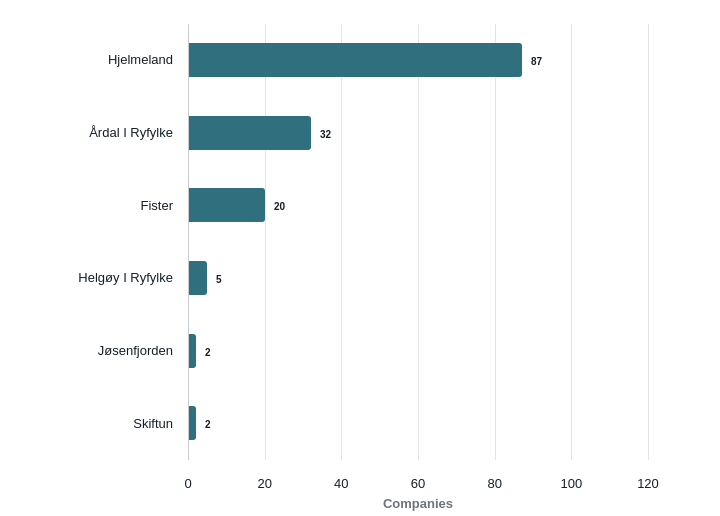
- Hjelmeland (Central Urban Hub): The primary commercial center accounts for 87 companies and 1,096 employees, generating NOK 1.44 billion in operating income. It holds the administrative headquarters, processing plants, and key service amenities.
- Årdal I Ryfylke: A vital industrial sub-hub hosting 32 companies and 285 employees, generating NOK 485.3 million in operating income. It supports aquaculture technology, health facilities, and local contracting services.
- Fister: Known for smolt production and agricultural activities, Fister comprises 20 companies and 140 employees, generating NOK 118.5 million in revenue.
- Helgøy I Ryfylke: Home to specialized maritime transport (Helgøy Skyssbåt As), generating NOK 95.9 million across 5 businesses with 84 employees.
- Jøsenfjorden & Skiftun: Smaller rural communities focused on primary industries and local services, delivering combined revenues exceeding NOK 29 million.
| Location | Companies | Employees | Operating Income (NOK) | EBITDA Margin |
|---|---|---|---|---|
| Hjelmeland | 87 | 1,096 | 1,435.3M | 21% |
| Årdal I Ryfylke | 32 | 285 | 485.3M | 9% |
| Fister | 20 | 140 | 118.5M | 12% |
| Helgøy I Ryfylke | 5 | 84 | 95.9M | 12% |
| Jøsenfjorden | 2 | 8 | 18.1M | 3% |
| Skiftun | 2 | 6 | 11.5M | 7% |
Largest Employers
Major employers in Hjelmeland are a mix of large-scale commercial aquaculture operators, transport specialists, and municipal care facilities:
- Mowi Avd Ryfisk (Hjelmeland): 180 employees operating in fish processing at Hundsnesvegen.
- Årdal Omsorgssenter (Årdal): 75 employees providing residential care services.
- Hjelmeland Omsorgssenter (Hjelmeland): 73 employees focused on municipal elder care.
- Helgøy Skyssbåt As (Helgøy I Ryfylke): 58 employees operating passenger coastal transport with NOK 95.9 million in revenue.
- Sterling White Halibut As Avd Hjelmeland (Årdal): 49 employees delivering NOK 110.3 million in sales revenue in specialized halibut farming.
- Tytlandsvik Aqua As (Hjelmeland): 45 employees producing NOK 518.1 million in operating income with an impressive EBITDA of NOK 125.2 million.
- Årdal Aqua As (Hjelmeland): 42 employees generating NOK 337.2 million in operating income.
- Ryfylke Miljøverk (Hjelmeland): 33 employees delivering inter-municipal waste management and materials recovery generating NOK 95.2 million.
- Munthe Dagligvare As (Hjelmeland): 28 employees running local retail grocery operations with NOK 39.8 million in revenue.
- Fister Smolt As (Fister): 27 employees achieving NOK 98.7 million in operating income in fish fry production.
Business Dynamism and Insolvency
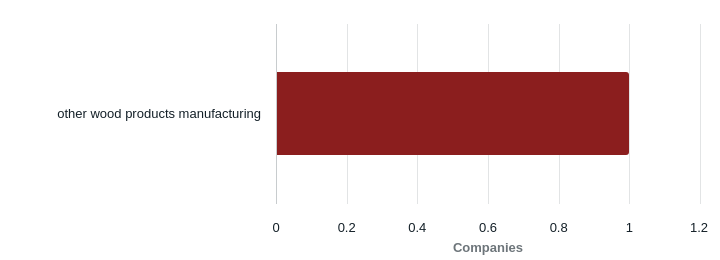
Hjelmeland exhibits remarkable corporate resilience and stability. The municipality displays extremely low bankruptcy rates compared to regional and national averages. The registered insolvency statistics record only 1 recent bankrupt entity (Norfill Sports As in Årdal I Ryfylke within manufacturing), with zero active employees and minimal financial disruption to the broader economy.
The low insolvency frequency reflects the capital-intensive nature of the local corporate landscape. Aquaculture firms and major service providers operate with strong equity positions—such as Tytlandsvik Aqua As holding over NOK 209 million in total equity and Årdal Aqua As holding NOK 291 million—providing significant buffers against macroeconomic shocks.
Opportunities for Founders
For entrepreneurs and prospective business founders, Hjelmeland offers targeted market niches aligned with its dominant industrial assets:
- Aquaculture Tech & B2B Services: With massive revenue generation per worker in local fish farming and smolt production, specialized service providers in biological monitoring, net cleaning, automation, and environmental tech have a ready client base.
- Circular Economy & Resource Optimization: Leveraging the presence of Ryfylke Miljøverk, ventures focusing on organic waste repurposing, byproduct valorization, and sustainable industrial packaging possess strong strategic alignment.
- Local Tourism & Maritime Experiences: Given the coastal geography and transit infrastructure created by operators like Helgøy Skyssbåt As, opportunities exist in eco-tourism, local food concepts, and hospitality sub-sectors.
- Commercial Construction & Facilities Support: Sub-contracting, maintenance, and specialized joinery (such as existing operators generating NOK 40.7M in revenue) remain in consistent demand across commercial and municipal facilities.
Entrepreneurs exploring location dynamics, local demographic clusters, or sector density in Hjelmeland can utilize SmartGrunder's analytical tools to evaluate potential addresses and market gaps across the municipality.
Conclusion
Hjelmeland municipality stands as a high-yield industrial anchor within Rogaland. Its economic foundation is grounded in world-class aquaculture, robust public infrastructure, and reliable maritime logistics. While top-line sales figures fluctuate alongside global seafood market conditions, the underlying business base exhibits exceptional equity, strong profitability margins, and minimal credit risk.
By leveraging existing industrial strengths, investment in green technologies, and specialized B2B services, Hjelmeland offers a highly favorable environment for sustainable corporate growth and new entrepreneurial initiatives.