Municipality
Economic Landscape and Entrepreneurial Opportunities in Hole Municipality
An in-depth analysis of industry structure, labor trends, local markets, and business conditions for founders and decision-makers
Executive Summary
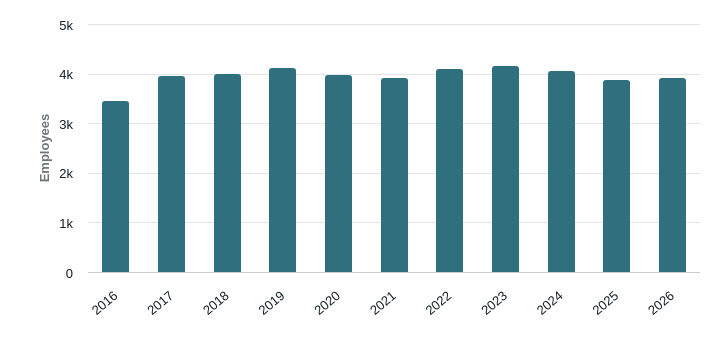
Hole municipality, located in Viken along the scenic shores of Tyrifjorden and positioned as a key bridge between the Greater Oslo region and Ringerike, presents a distinctive economic profile characterized by strong roots in agriculture, healthcare services, hospitality, and public sector employment. With an overall employment base hovering around 3,900 to 4,160 workers across recent years, Hole functions both as a vibrant local commercial center and a strategic suburban corridor.
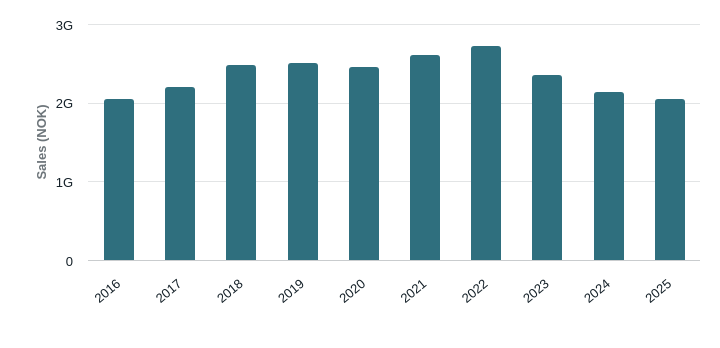
The municipal economy experienced substantial top-line expansion between 2016 and 2022, reaching a peak annual corporate sales revenue of NOK 2,724.8 million in 2022. Following global macroeconomic realignments and cost inflation, top-line sales adjusted to NOK 2,044.6 million by 2025, while total employment stabilized around 3,907 in 2026 projections. The local market is anchored by heavy municipal involvement, high-value agricultural operations like Elstøen Salatgartneri As, premier hospitality establishments such as Sundvolden Hotel As, and a dense cluster of specialized healthcare and mental health institutions.
For entrepreneurs and prospective founders, Hole offers a combination of strategic location, high quality of life, and specific underserved niches in technical consulting, eco-tourism, local services, and agritech. This article provides a comprehensive data-grounded overview of Hole's economic mechanics to inform strategic investment and business planning.
Economic Overview
Hole's macro-economic metrics reveal a decade defined by steady growth through 2022, followed by top-line consolidation in response to broader shifts in construction, energy costs, and consumer spending. Corporate revenue within the municipality expanded from NOK 2,043.3M in 2016 to NOK 2,724.8M in 2022, representing an cumulative increase of over 33% before contracting in recent financial years.
Labor force dynamics show remarkable resilience. Employment grew significantly from 3,451 workers in 2016 to a peak of 4,161 in 2023 (+20.6%). Although employment recorded modest contractions in 2024 (-2.6%) and 2025 (-4.3%), early projections for 2026 indicate a return to positive job creation (+0.7% to 3,907 employees).
Historical Revenue & Employment Trends
| Year | Corporate Revenue (NOK) | YoY Sales Change | Total Employees | YoY Employment Change |
|---|---|---|---|---|
| 2016 | 2,043.3M | — | 3,451 | — |
| 2017 | 2,203.0M | +7.8% | 3,942 | +14.2% |
| 2018 | 2,479.5M | +12.6% | 3,995 | +1.3% |
| 2019 | 2,505.7M | +1.1% | 4,108 | +2.8% |
| 2020 | 2,456.2M | -2.0% | 3,971 | -3.3% |
| 2021 | 2,602.8M | +6.0% | 3,903 | -1.7% |
| 2022 | 2,724.8M | +4.7% | 4,089 | +4.8% |
| 2023 | 2,356.6M | -13.5% | 4,161 | +1.8% |
| 2024 | 2,132.3M | -9.5% | 4,054 | -2.6% |
| 2025 | 2,044.6M | -4.1% | 3,881 | -4.3% |
| 2026 | N/A | N/A | 3,907 | +0.7% |
Note: Data reflects reported corporate and organizational figures within Hole municipality.
Industry Structure
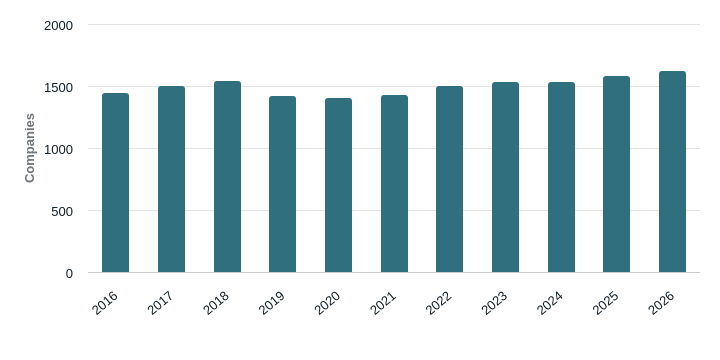
Hole's business structure is characterized by a mix of public sector administration, specialized healthcare, commercial agriculture, hospitality, and local trade. A significant portion of municipal activity is concentrated in essential human services, creating stable, non-cyclical employment base across the region.
Sectoral Highlights
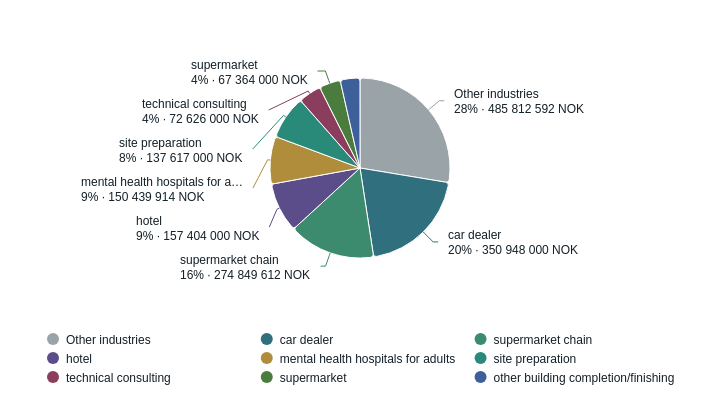
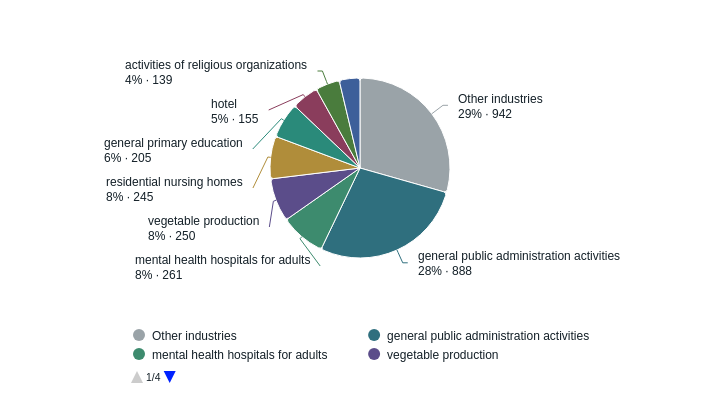
- Public Administration & Healthcare: General public administration represents the single largest employment concentration (888 employees across 2 entities). Specialized private healthcare, including adult mental health institutions (4 companies, 261 employees, NOK 151.1M operating income) and residential nursing facilities (5 companies, 245 employees), forms a major economic pillar.
- Agriculture & Horticulture: Hole's fertile lowland areas are renowned for intensive vegetable production. Led by specialized producers, the vegetable sector accounts for 250 employees across 2 major enterprises.
- Hospitality & Leisure: Driven by regional tourism and corporate conferences around Tyrifjorden, the hotel sector generates NOK 159.3M in operating income across 155 employees, while local restaurants account for NOK 42.9M across 92 employees with an impressive EBITDA margin of 24%.
- Retail & Trade: Supermarket chains dominate local commercial turnover, generating NOK 282.6M in operating income across 83 employees.
- Construction & Technical Services: Site preparation (6 companies, NOK 139.6M revenue, 68 employees) and technical consulting (11 companies, NOK 73.3M revenue, 54 employees) provide critical infrastructure capacity.
Legal Form Distribution
Private limited companies (Aksjeselskap / AS) account for the vast majority of commercial activity, comprising 169 companies, 1,855 employees, and NOK 2,079.7M in operating income. Municipal administrative entities (KOMM and ORGL) employ an additional 1,716 individuals, underscoring the dominant role of public services in local workforce dynamics.
Business Geography
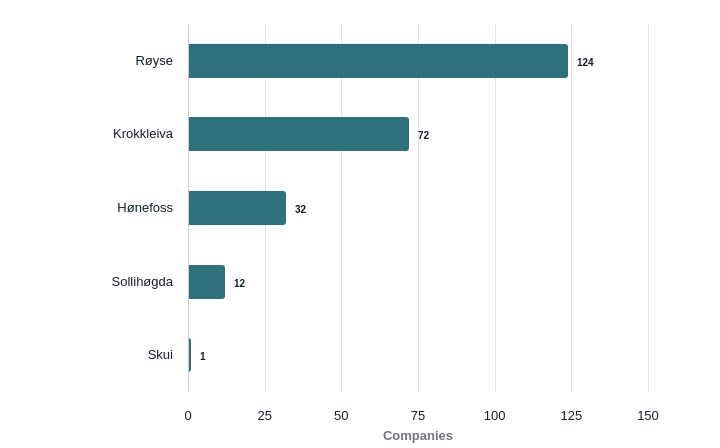
Economic activity in Hole is distributed across several key commercial centers, each exhibiting distinct sectoral characteristics and productivity profiles.
Municipal Key Sub-markets
| Location | Active Companies | Employees | Operating Income (NOK) | Sales Revenue (NOK) | Revenue Growth |
|---|---|---|---|---|---|
| Røyse | 124 | 2,614 | 1,115.2M | 797.7M | +8% |
| Krokkleiva | 72 | 1,041 | 534.4M | 483.8M | 0% |
| Hønefoss (Hole) | 32 | 285 | 557.6M | 549.5M | +35% |
| Sollihøgda | 12 | 96 | 176.6M | 164.9M | +27% |
| Skui (Hole) | 1 | 1 | 2.3M | 2.3M | +121% |
Geographical Insights
- Røyse: Functions as the economic and administrative heartbeat of Hole. Røyse hosts 124 companies and over 2,600 employees, spanning agricultural processing, municipal services, schools, and private care centers. Røyse generated NOK 1,115.2M in operating income with an 8% top-line growth rate.
- Krokkleiva: Serves as a primary hub for hospitality and healthcare, accommodating 1,041 employees across 72 enterprises. Operating income reached NOK 534.4M with an average EBITDA margin of 9%.
- Hønefoss (Hole zone): Encompasses commercial and light industrial activity near the Ringerike border. This district delivered strong top-line expansion (+35%), bringing in NOK 557.6M in operating income across 32 businesses.
- Sollihøgda: Positioned on the eastern gateway toward Bærum and Oslo, Sollihøgda handles transportation, service stops, and forestry activity, registering NOK 176.6M in operating income.
Largest Employers
Employment in Hole is balanced between the public sector, large agricultural operations, specialized care institutions, and historic hospitality brands. The top registered employers highlight the municipality's structural reliance on public services, healthcare, and primary industries.
Key Local Employers
- Hole Kommune: The largest municipal employer, providing general public administration with 860 employees.
- Elstøen Salatgartneri As: Located in Røyse, this major agricultural enterprise employs 248 people in large-scale vegetable production.
- Hole Bo Og Rehabiliteringssenter: A major municipal nursing and rehabilitation facility in Krokkleiva employing 130 workers.
- Syvendedags Adventistkirken Den Norske Union: Headquartered in Røyse, employing 130 people with operating income of NOK 89.4M.
- Sundvolden Hotel As: One of Norway's premier historic conference hotels, located in Krokkleiva with 121 employees and NOK 124.8M in operating income.
- Nøstret Bo Og Omsorgsenter As: A specialized adult mental health care facility in Røyse with 97 employees and NOK 62.9M in operating income (EBITDA margin 16%).
- Granstad Taxi Og Busstransport: Based in Krokkleiva, providing local transport services with 74 employees.
- Solstad Bo Og Omsorgssenter As: Specialized mental health facility in Røyse employing 70 workers (NOK 36.0M revenue).
- Borger Hvalheim: Adult healthcare provider in Røyse employing 67 people with NOK 31.3M in operating income.
- Hole Ungdomsskole & Local Schools: Secondary and primary education facilities (Hole Ungdomsskole with 58 employees, Vik Skole with 55 employees) anchored in Røyse.
Business Dynamism & Market Stability
Business dynamic metrics in Hole illustrate a settled, mature local economy with exceptional baseline stability and minimal corporate insolvency risks.
Bankruptcy Analysis
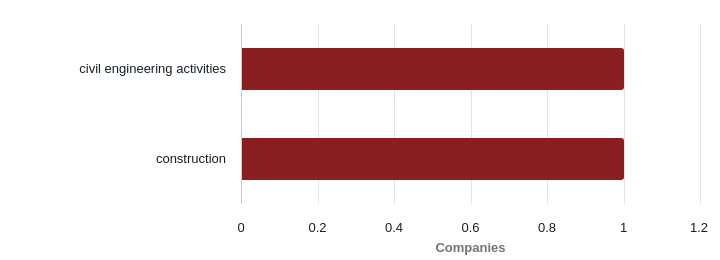
Data registered for the area records a remarkably low total of 2 insolvencies, reflecting a stable commercial environment even during periods of broader economic tightening.
- Civil Engineering & Construction: Bankruptcies were isolated strictly to the small-scale construction sector (1 civil engineering unit and 1 general construction unit, including Hole Bygg As and Sirkom As, both based in Krokkleiva). Neither entity maintained active reported employee headcounts at the time of filing.
Market Resilience Factors
The low insolvency rate is primarily attributable to:
- High Public & Health Sector Weight: A large share of local employment is anchored in public administration and long-term healthcare agreements, which insulate the local economy from consumer demand volatility.
- Strong Niche Performance: High-margin commercial segments—such as technical consulting (21% EBITDA margin) and local restaurants (24% EBITDA margin)—continue to generate positive cash flow despite macroeconomic pressures.
Opportunities for Founders
Hole offers focused, highly attractive market entry points for prospective entrepreneurs, particularly those looking to leverage proximity to Oslo while benefiting from lower commercial space costs and strong local demand.
Promising Entrepreneurial Angles
- Agritech & Sustainable Food Logistics: Building on Røyse's status as a top vegetable production hub (anchored by Elstøen Salatgartneri As), founders can introduce automated sorting, greenhouse technology, cold-chain logistics, and organic processing.
- Experiential Tourism & Hospitality Support: With major destinations like Sundvolden Hotel As drawing regional conference traffic and holidaymakers, opportunities exist in outdoor adventure activities along Tyrifjorden, specialized catering, and cultural event services.
- Healthcare Technology & Specialized Support Services: Given the high density of private and municipal care facilities (Nøstret, Solstad, Borger Hvalheim), B2B providers offering health-tech, specialized staffing, software, and facility management can access a concentrated local client base.
- Technical & Environmental Consulting: Technical consulting already demonstrates strong profitability in Hole (NOK 15.8M EBITDA across 11 firms). Expanding engineering, environmental, and infrastructure advisory services capitalizes on ongoing regional transit corridor developments.
Entrepreneurs exploring local commercial space, zoning regulations, or sector-specific market potential in Hole can softly leverage tools provided by SmartGrunder to analyze street-level address demographics, commercial density, and municipal industry statistics.
Conclusion
Hole municipality represents a remarkably stable and resilient sub-regional economy within Viken. Supported by an impressive baseline of public administration, agriculture, specialized healthcare, and premium hospitality, Hole offers founders a low-risk environment with clear avenues for targeted growth.
As the region prepares for future infrastructure integration along the Oslo-Ringerike corridor, municipal decision-makers and founders who align their investments with Hole's natural strengths—agri-food innovation, health sector support, local service delivery, and sustainable tourism—will be ideally positioned to capture long-term value.