Municipality
Economic Landscape and Entrepreneurial Opportunities in Kåfjord Municipality
An in-depth analysis of municipal employment, key commercial sectors, geographic hubs, and growth potential for founders.
Executive Summary
Kåfjord municipality (Gáivuotna / Kaivuono) represents a distinct rural economy in Troms og Finnmark characterized by a strong public sector baseline, a resilient culture and tourism segment, and specialized private sector industries. With an active workforce spread across key centers like Olderdalen, Birtavarre, and Samuelsberg, the local market relies heavily on municipal services, healthcare, and education alongside key private enterprises in earthmoving, grocery retail, and cultural tourism.
Key takeaways for prospective founders and local decision-makers include:
- Public Sector Foundation: A significant share of local employment is anchored by municipal administration, health centers, and care services.
- High-Margin Niche Markets: Commercial sectors such as camping, outdoor recreation, and site preparation exhibit robust profitability and solid profit margins.
- Geographic Specialization: Samuelsberg accounts for the largest share of total commercial turnover, driven by heavy contracting and cultural centers, while Olderdalen serves as the administrative core and Birtavarre balances care facilities with local commerce.
- Entrepreneurial Pathways: Opportunities exist to build complementary services around regional cultural institutions, specialized contracting, eco-tourism, and local supply chain logistics.
Economic Overview
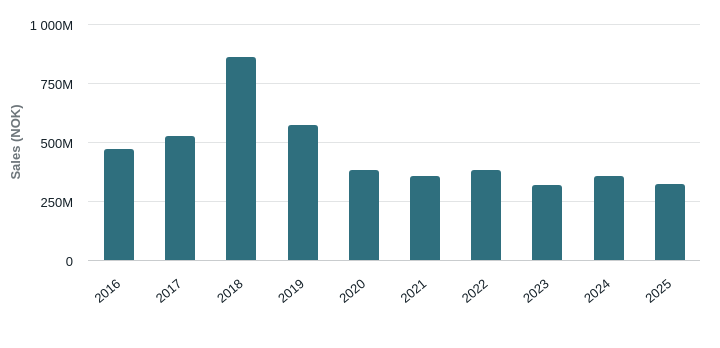
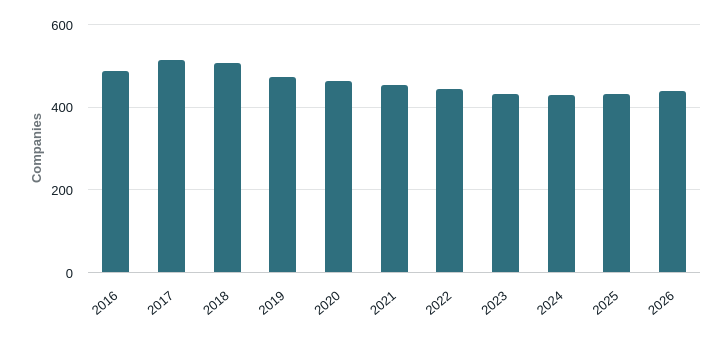
Kåfjord's broader economic metrics reflect a stabilization following significant fluctuations in overall commercial turnover and employment figures over the past decade. Local sales and workforce levels peaked around 2017–2018, adjusting subsequently toward a steady baseline appropriate for a municipality of its scale.
Historical Sales & Turnover Trends
Total commercial sales reached a high of NOK 861.8M in 2018 before recalibrating to lower levels in subsequent years. Between 2021 and 2024, sales recovered moderately from NOK 354.1M to NOK 357.6M, illustrating ongoing underlying demand despite broader macroeconomic shifts.
| Year | Total Sales (NOK) | YoY Change |
|---|---|---|
| 2016 | 472.3M | — |
| 2017 | 523.8M | +10.9% |
| 2018 | 861.8M | +64.5% |
| 2019 | 574.0M | -33.4% |
| 2020 | 381.0M | -33.6% |
| 2021 | 354.1M | -7.0% |
| 2022 | 380.7M | +7.5% |
| 2023 | 319.4M | -16.1% |
| 2024 | 357.6M | +11.9% |
| 2025 | 321.5M | -10.1% |
Employment Trends
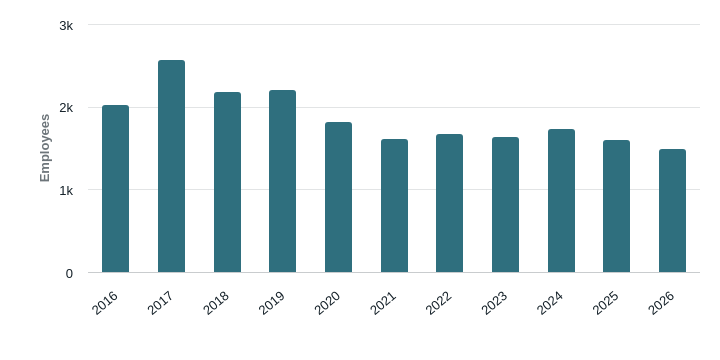
Employment patterns demonstrate a parallel trend. Total registered workforce roles moved from over 2,500 in 2017 to approximately 1,600–1,700 positions in recent years, stabilization reflecting structural shifts in project-based work and public sector reorganizations.
- 2017 Peak: 2,570 reported employees
- 2021 Baseline: 1,611 employees
- 2024 Level: 1,733 employees (+6.4% YoY growth)
- 2025–2026 Projections: Estimated around 1,488 to 1,596 roles based on standard reporting curves.
Industry Structure & Market Dynamics
The industry mix in Kåfjord combines public sector employment with targeted commercial sectors that achieve impressive margins relative to their size.
Public vs. Commercial Employment Mix
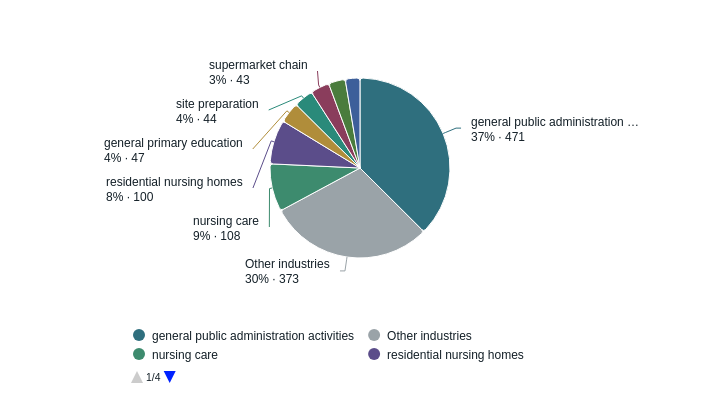
Public administration, nursing care, primary education, and emergency services represent the single largest group of local jobs. Together, general public administration activities (471 employees across 3 entities), nursing care (108 employees), and residential nursing homes (100 employees) provide foundational economic stability to the municipality.
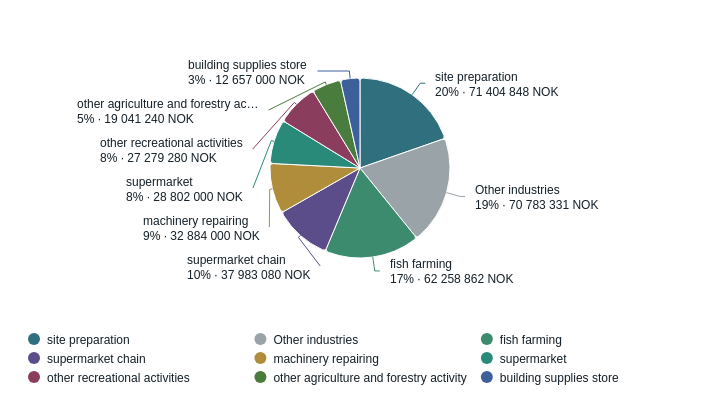
In the private market, key revenue and profit-generating sectors include:
- Site Preparation & Contracting: 6 active companies employing 44 workers generate NOK 73.0M in operating income with an EBITDA margin of 17% and revenue growth of 30%.
- Camping & Tourism: 3 operations generate NOK 9.7M with a strong EBITDA margin of 27% and 22% operating margin, highlighting strong demand for outdoor accommodation.
- Other Recreational Activities: 2 operations report NOK 27.8M operating income with a 28% EBITDA margin.
- Grocery & Retail: Supermarket chains and local cooperative stores generate significant localized retail revenue across Olderdalen and Birtavarre.
Corporate Legal Forms
Limited liability companies (AS) generate the bulk of commercial turnover in Kåfjord, accounting for 60 registered firms, 396 employees, and NOK 336.0M in combined operating income with an average EBITDA margin of 13%. Municipal organizational units (ORGL and KOMM) account for the largest headcount overall, while sole proprietorships (ENK) and cooperative societies (SA) maintain steady positions in traditional sectors.
Business Geography & Local Centers
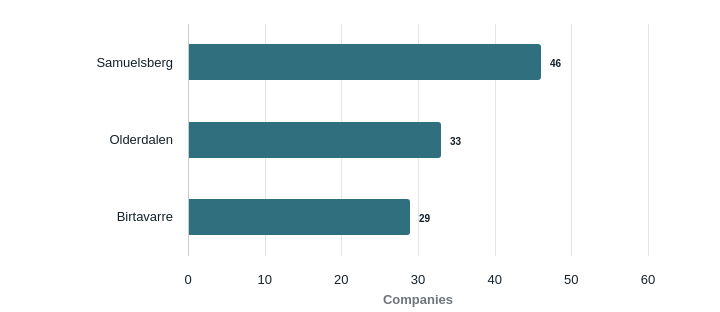
Commercial activity in Kåfjord is partitioned across three main geographic locations: Olderdalen, Birtavarre, and Samuelsberg (Manndalen).
| Location | Companies | Reported Employees | Operating Income | Key Highlights |
|---|---|---|---|---|
| Olderdalen | 33 | 762 | NOK 60.8M | Municipal administrative seat; strong EBITDA margin (18%) |
| Birtavarre | 29 | 434 | NOK 65.5M | Care center cluster, health services, and local trade |
| Samuelsberg | 46 | 290 | NOK 289.1M | Heavy contracting hub, cultural institutions, 7% growth |
Local Dynamics
- Olderdalen: Functions as the primary public administration hub and administrative center of the municipality, maintaining high employment density.
- Birtavarre: Houses the local health center (Kåfjord helsesenter), nursing home services, ambulance services, and essential retail outlets such as Prix Birtavarre.
- Samuelsberg / Manndalen: Drives the municipality's commercial revenue. Home to prominent civil engineering firms and important regional cultural anchor institutions.
Largest Employers
Employment in Kåfjord is led by municipal service organizations, public health entities, and well-established private and cultural institutions.
Leading Entities by Reported Headcount
- Gaivuona Suohkan / Kåfjord Kommune (Olderdalen): 443 employees — Central municipal administrative body.
- Kåfjord Kommune Hjemmesykepleien (Birtavarre): 108 employees — Home nursing care service.
- Kåfjord Helsesenter Sykehjemmet (Birtavarre): 100 employees — Residential nursing care facility.
- Kåfjord Kommune Omsorg For Psykisk Utviklingshemmede (Olderdalen): 38 employees — Care services for mental disabilities.
- UNN HF Ambulansetjenesten Kåfjord (Birtavarre): 30 employees — Regional ambulance service operating under Troms/Finnmark health trust, generating NOK 11.8M operating income.
- Kåfjord Kommune Anleggstjenesten (Olderdalen): 29 employees — Municipal infrastructure maintenance and roads.
- Riddu Riddu Festivála AS (Samuelsberg): 25 employees — World-renowned Indigenous cultural festival producing NOK 15.9M in operating income.
- Kåfjord Vekst AS (Birtavarre): 24 employees — Vocational rehabilitation and work-inclusion company generating NOK 6.0M operating income (11% EBITDA margin).
- Manndalen Maskin AS (Samuelsberg): 21 employees — Leading private civil engineering firm generating NOK 55.2M in revenue with an EBITDA margin of 21% and 37% revenue growth.
- Davvi Álbmogiid Guovddás OS / Senter for Nordlige Folk AS (Samuelsberg): 18 employees — Indigenous cultural center and social history museum generating NOK 11.5M in operating income.
Business Dynamism & Market Stability
The market environment in Kåfjord exhibits high stability, supported by long-term public funding and steady local demand. Commercial failure rates remain consistently low, reflecting cautious financial management and strong regional ties among established companies.
Key Stability Factors
- Low Insolvency Rates: Minimal bankruptcy activity indicates a well-balanced market where existing operators hold sustainable market shares.
- Growth in Civil Infrastructure: Private earthmoving and contracting firms (such as Manndalen Maskin AS) demonstrate strong financial health, benefiting from local infrastructure maintenance and regional construction contracts.
- Cultural Resilience: Organizations tied to coastal Sámi culture and international indigenous events provide predictable annual visitor traffic, underpinning local hospitality and service businesses.
Opportunities for Founders
Entrepreneurs considering starting a venture in Kåfjord can find viable niches where local demand and high profit margins intersect.
Strategic Growth Areas
- Eco-Tourism & High-Margin Hospitality: With camping and recreational sectors achieving EBITDA margins of 27%–28%, there is clear room for upscale outdoor accommodations, guided wilderness tours, and cultural tourism packages linked to the Riddu Riddu brand.
- Specialized Contracting & Fleet Support: High revenue turnover in site preparation and civil engineering creates demand for sub-contracting services, heavy machinery maintenance, and logistics support.
- Local Service & Retail Innovation: Modernizing retail, food delivery, or artisanal craft production tailored to both local residents and seasonal visitors.
- Green & Coastal Economy: Agricultural activities (including goat farming) and marine support services present opportunities for circular economy projects and niche food products.
When exploring prospective locations, industry requirements, or registration steps in Kåfjord, founders can utilize tools like SmartGrunder to analyze address data, competitive density, and municipal sector statistics.
Conclusion
Kåfjord offers a stable economic environment anchored by solid public institutions and profitable niche commercial sectors. The geographic synergy between Olderdalen's administrative core, Birtavarre's healthcare hub, and Samuelsberg's high-turnover private enterprises creates a balanced ecosystem.
For new business owners, success in Kåfjord relies on identifying underserved local service niches, tapping into the region's strong cultural identity, and leveraging high-margin opportunities in tourism and infrastructure support. With conservative financial management and local community integration, early-stage companies are well-positioned to thrive in Kåfjord.