Municipality
Karasjok Economic Analysis: Business Landscape, Key Sectors, and Entrepreneurial Opportunities
An in-depth evaluation of Karasjok's institutional foundation, local enterprise structure, and growth potential for founders.
Executive Summary
Karasjok (Kárášjohka) occupies a distinct position in Northern Norway's regional economy. Serving as the administrative capital of the Sámi Parliament (Sametinget) and a central national hub for Sámi culture, media, and healthcare, Karasjok combines strong public-sector stabilization with targeted commercial opportunities.
With a total reported employment base hovering around 2,050 to 2,090 positions and municipal sales reaching NOK 818.2M in 2025, the local economy exhibits structural stability driven by regional institutions like NRK Sápmi, SANKS (Sámi Klinihkka / Finnmarkssykehuset HF), and Karasjok Kommune. While public administration and health services anchor overall employment, key commercial niches—including meat processing, specialized construction, media publishing, and cultural tourism—provide viable entry points for private enterprise.
Economic Overview
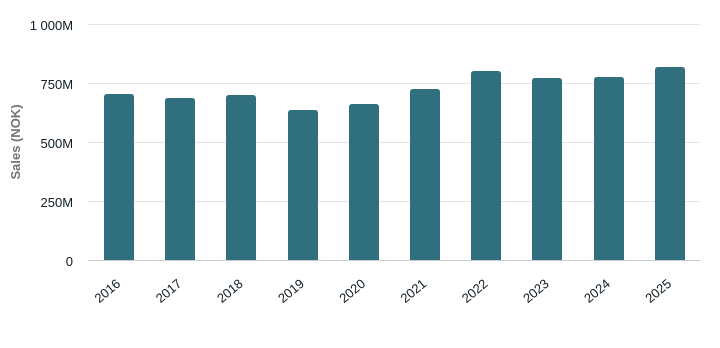
Karasjok's aggregate corporate revenue and workforce numbers demonstrate resilience through shifting macroeconomic conditions. Over the past decade, sales revenues across active local businesses expanded from NOK 705.4M in 2016 to a peak of NOK 799.2M in 2022, followed by a slight recalibration to NOK 769.6M in 2023 (-3.7%). Revenue rebounded with NOK 774.5M in 2024 (+0.6%) and NOK 818.2M in 2025 (+5.6%).
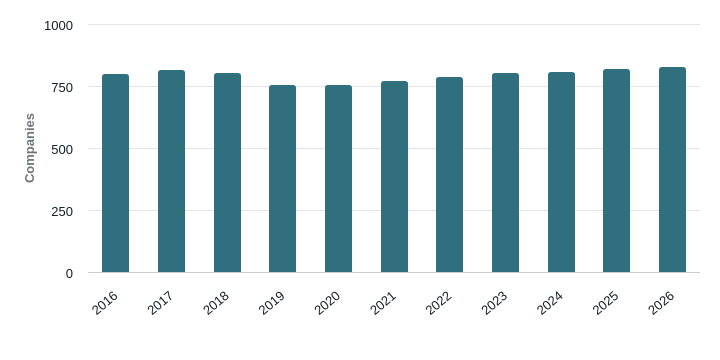
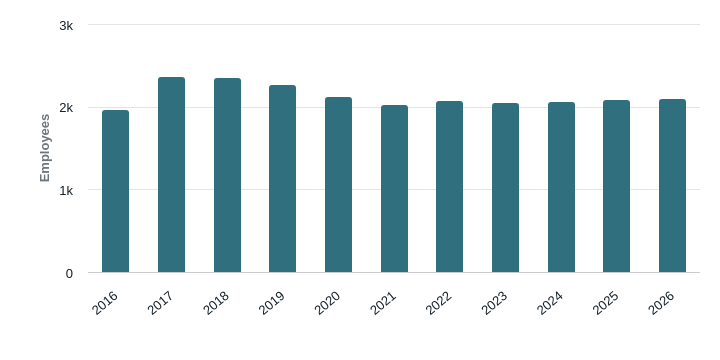
Employment levels have maintained remarkable consistency following an expansion in 2017. Total recorded workforce in the area moved from 1,954 employees in 2016 to 2,359 in 2017, stabilizing between 2,025 and 2,090 in recent years.
| Year | Aggregate Sales (NOK) | YoY Sales Change | Total Employment | YoY Employment Change |
|---|---|---|---|---|
| 2016 | 705.4M | — | 1,954 | — |
| 2017 | 688.3M | -2.4% | 2,359 | +20.7% |
| 2018 | 697.1M | +1.3% | 2,346 | -0.6% |
| 2019 | 635.7M | -8.8% | 2,266 | -3.4% |
| 2020 | 661.0M | +4.0% | 2,116 | -6.6% |
| 2021 | 723.5M | +9.5% | 2,025 | -4.3% |
| 2022 | 799.2M | +10.5% | 2,069 | +2.2% |
| 2023 | 769.6M | -3.7% | 2,042 | -1.3% |
| 2024 | 774.5M | +0.6% | 2,054 | +0.6% |
| 2025 | 818.2M | +5.6% | 2,081 | +1.3% |
| 2026 | — | — | 2,091 | +0.5% |
Industry Structure & Legal Forms
Karasjok's industry composition reflects a blend of specialized public healthcare, media production, public administration, and primary product processing.
Key Industry Sectors
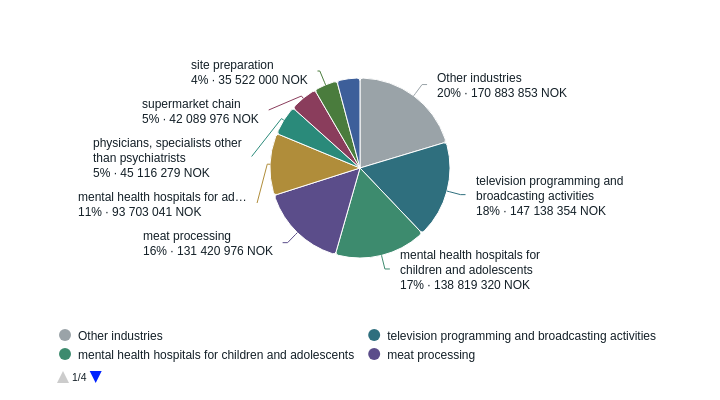
- Healthcare & Specialized Services: Mental health services (adults and youth) operated under Finnmarkssykehuset HF generate over NOK 230M in combined operating income and employ over 230 specialists. Specialist physician and ambulance services add another NOK 79.8M in revenue across 72 employees.
- Media, Publishing & Culture: Norsk Rikskringkasting AS Avd Sápmi (NRK Sápmi) generates NOK 151.1M in operating income with 92 staff. Book publishing accounts for NOK 30.4M (22% revenue growth, 20 employees), and museum activities (Riddoduottarmuseat) generate NOK 26.1M (24% revenue growth, 40 employees).
- Primary Industry & Processing: Meat processing is a primary commercial value driver, generating NOK 150.3M in operating income across 23 employees with a 3% revenue growth rate.
- Construction & Contracting: General construction encompasses 8 companies and 50 employees, delivering NOK 28.8M in operating income with a strong 51% revenue growth. Site preparation adds 5 companies, 39 employees, and NOK 36.4M in operating income.
Legal Form Mix
| Organisation Type | Number of Companies | Total Employees | Combined Operating Income (NOK) |
|---|---|---|---|
| Limited Liability (AS) | 81 | 596 | 460.9M |
| Organisasjonsledd (ORGL) | 25 | 558 | 0.0M (Public/Municipal) |
| Health Trust / State Enterprise (SÆR) | 6 | 257 | 312.3M |
| Municipal Entities (KOMM) | 1 | 458 | 0.0M |
| State Administration (STAT) | 1 | 84 | 0.0M |
| Cooperatives (SA) | 4 | 56 | 196.2M |
| Foundations (STI) | 4 | 55 | 39.9M |
| Sole Proprietorships (ENK) | 12 | 32 | 0.0M |
Business Geography
Economic and commercial activities in Karasjok are highly concentrated in the municipal center. Data for the primary location cluster shows:
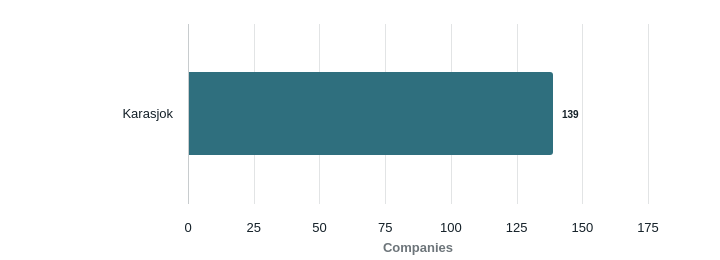
- Karasjok Central Area: 139 registered companies accounting for 2,133 employees, NOK 1,009.4M in total operating income, NOK 880.2M in sales revenue, and NOK 421.4M in local payroll. The center generates an aggregate EBITDA of NOK 70.3M.
Because Karasjok serves as an inland crossroads in Finnmark and a border center toward Finland (Karasjok/Gást Luohkká corridor), commercial infrastructure, health services, and municipal administrative buildings are co-located within easy reach of the E6 route.
Largest Employers
The major employers in Karasjok consist primarily of municipal and state public institutions, regional healthcare providers, national media institutions, and hospitality facilities.
Top Employer Breakdown
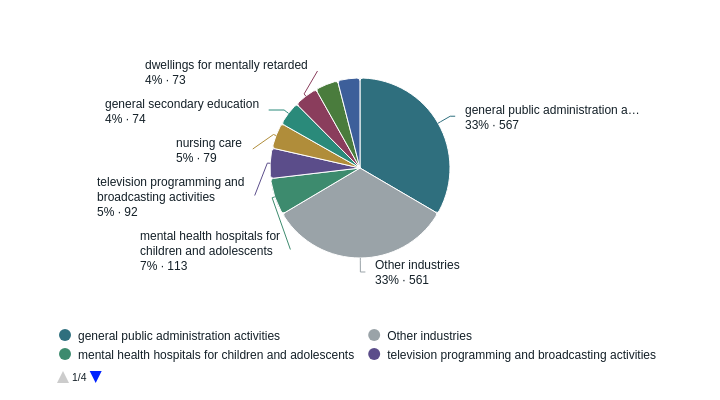
- Karasjok Kommune / Karasjoga Gielda: 458 employees (General public administration).
- NRK Sápmi (Norsk Rikskringkasting AS): 92 employees, NOK 151.1M operating income (Broadcasting and news production).
- Sámediggi / Sametinget: 84 employees (Sámi Parliament / Public administration).
- Karasjok Kommune Hjemmesykepleie: 79 employees (Home nursing care).
- Samisk Videregående Skole Karasjok: 74 employees (Upper secondary education).
- Karasjok Kommune Miljøarbeidertjenesten: 73 employees (Care services and specialized housing).
- Karasjok Kommune Sykeavdelingen: 70 employees (Nursing homes).
- SANKS Adult Psychiatry (Finnmarkssykehuset HF): 66 employees, NOK 93.7M operating income.
- SANKS Youth Psychiatry / BUP (Finnmarkssykehuset HF): 59 employees, NOK 76.4M operating income.
- SANKS Child Psychiatry (Finnmarkssykehuset HF): 54 employees, NOK 62.5M operating income.
- Karasjok Skole: 47 employees (Primary education).
- Riddoduottarmuseat STI: 40 employees, NOK 26.1M operating income (Social history museums).
- Scandic Karasjok: 40 employees (Hotel and conference services).
- Finnmarkssykehuset HF Ambulance: 36 employees, NOK 34.7M operating income.
- Finnmarkssykehuset HF Somatikk: 36 employees, NOK 45.1M operating income.
Business Dynamism & Insolvencies
Corporate stability in Karasjok is reinforced by strong public-sector spending and institutional permanent employment. Bankruptcies in the municipality remain minimal, indicating limited systemic risk but highlighting sector-specific pressures in small-scale private operations.
Bankruptcies Overview
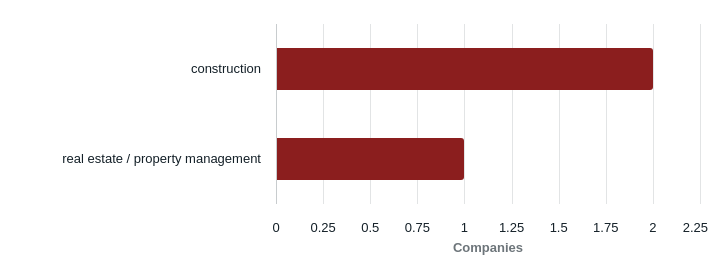
A total of 3 bankrupt companies are recorded in recent municipal data:
- Real Estate / Property Management: 1 company (Lp Eiendom AS; Operating income NOK 160.0K, total debt NOK 362.0K).
- Construction: 2 companies (including Nordlys Entreprenør AS and Saha AS; operating income NOK 0).
The low total count of insolvencies illustrates that while small sub-contractors and holding companies face liquidity risks typical of rural construction markets, the broader commercial landscape in Karasjok remains durable.
Opportunities for Founders
Entrepreneurial opportunities in Karasjok stem directly from its public sector anchor, specialized regional mandates, and unique cultural economy.
High-Potential Business Areas
- Specialized Contracting & Subcontracting: General construction in Karasjok showed a 51% revenue increase, reaching NOK 28.8M. Specialized trade services, green technology installation, and facility support can leverage this local demand.
- Cultural, Language & Digital Services: With the presence of Sametinget, NRK Sápmi, and publishing houses (NOK 30.4M sector revenue), founders in translation, digital media, software localization, and content creation have a natural market.
- Food Technology & Local Value Addition: Building on Karasjok's established meat processing sector (NOK 150.3M op income), niche food processing, reindeer product refinement, and cold-chain logistics represent high value-add opportunities.
- Experience Tourism & Hospitality: Hospitality assets like Scandic Karasjok and museum foundations (Riddoduottarmuseat, NOK 26.1M op income) create demand for activity providers, local guide networks, and specialized winter tourism concepts.
Founders exploring site selection, market gaps, or corporate structure options in Karasjok can leverage tools like SmartGrunder to analyze industry statistics and locate suitable business concepts.
Conclusion
Karasjok offers a unique economic profile in Troms og Finnmark. Supported by substantial institutional employers in healthcare, public administration, and national Sámi media, the municipality maintains steady purchasing power and low insolvency rates.
For entrepreneurs and investors, Karasjok is not merely a local market of ~2,000 workers, but a strategic center serving cross-border and regional functions. By targeting public-sector procurement needs, specialized construction, media technology, and high-value local processing, new businesses can build long-term commercial operations in inner Finnmark.