Municipality
Economic Analysis and Business Landscape of Lebesby Municipality
A data-driven structural overview of local industries, geographical hubs, employment trends, and growth opportunities for entrepreneurs
Executive Summary
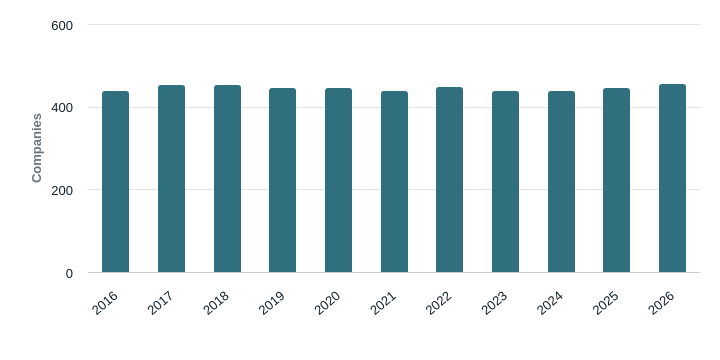
Lebesby municipality, situated in Troms og Finnmark county, features a distinct coastal economy defined by a strong municipal public sector, a deeply rooted seafood value chain, and high-revenue primary marine industries. With a total of 460 registered business entities across its domain, Lebesby acts as a vital commercial anchor on the Nordkynn peninsula.
The municipality's commercial output is primarily concentrated around Kjøllefjord, which serves as the municipal capital and principal economic center. Private sector revenues are anchored in seafood processing, fish farming, commercial harvesting, specialized plastic manufacturing, site preparation, and tourism. In recent years, local corporate sales reached a peak of NOK 885.1M in 2024, demonstrating significant commercial capacity relative to the population base.
For entrepreneurs and prospective business founders, Lebesby offers an ecosystem with low formal corporate failure rates, substantial municipal support infrastructure, and targeted niches across blue economy services, technical consulting, and regional tourism. The local economy presents stable public sector demand alongside cyclical marine industries, creating balanced entry points for specialized service providers.
Economic Overview & Revenue Trends
Lebesby's overall corporate revenue and workforce dynamics reflect both the cyclical nature of North Norwegian seafood production and steady employment in public administration. Over the past decade, local enterprise turnover has experienced noticeable fluctuation linked to marine harvest volumes, international seafood market prices, and industrial investments.
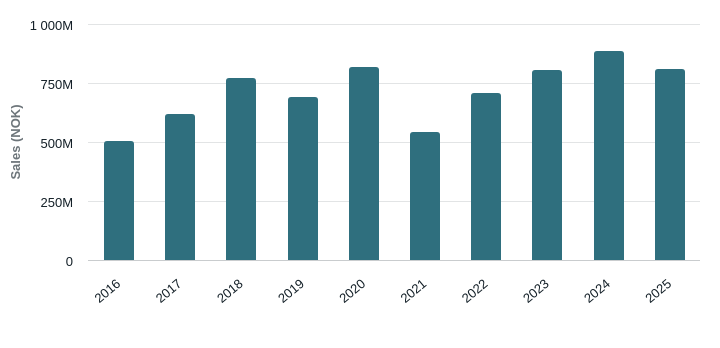
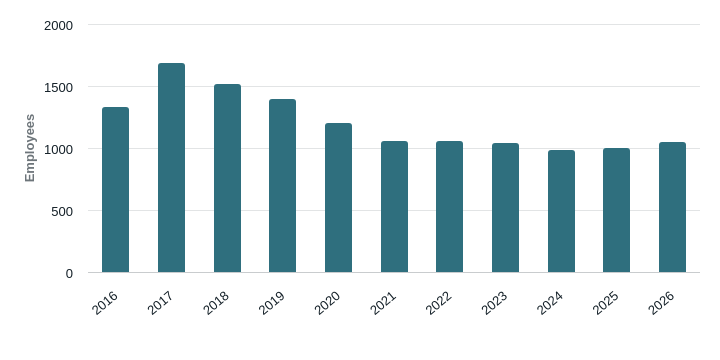
Annual sales among registered commercial entities grew from NOK 506.3M in 2016 to a high of NOK 885.1M in 2024, before contracting moderately to NOK 807.2M in 2025. Total reported workforce figures dropped from 1,332 employees in 2016 down to 980 in 2024, followed by a positive rebound projected to reach 1,047 positions by 2026.
| Year | Corporate Sales (NOK) | YoY Sales Change | Workforce (Employees) | YoY Employee Change |
|---|---|---|---|---|
| 2016 | 506.3M | — | 1,332 | — |
| 2017 | 617.0M | +21.9% | 1,685 | +26.5% |
| 2018 | 770.0M | +24.8% | 1,513 | -10.2% |
| 2019 | 689.7M | -10.4% | 1,395 | -7.8% |
| 2020 | 816.0M | +18.3% | 1,202 | -13.8% |
| 2021 | 540.7M | -33.7% | 1,058 | -12.0% |
| 2022 | 709.3M | +31.2% | 1,058 | 0.0% |
| 2023 | 803.5M | +13.3% | 1,042 | -1.5% |
| 2024 | 885.1M | +10.1% | 980 | -6.0% |
| 2025 | 807.2M | -8.8% | 1,000 | +2.0% |
| 2026 | — | — | 1,047 | +4.7% |
Note: Workforce trends demonstrate stabilization around 1,000–1,050 full-time roles, establishing a firm floor for municipal consumer demand.
Industry Structure & Legal Forms
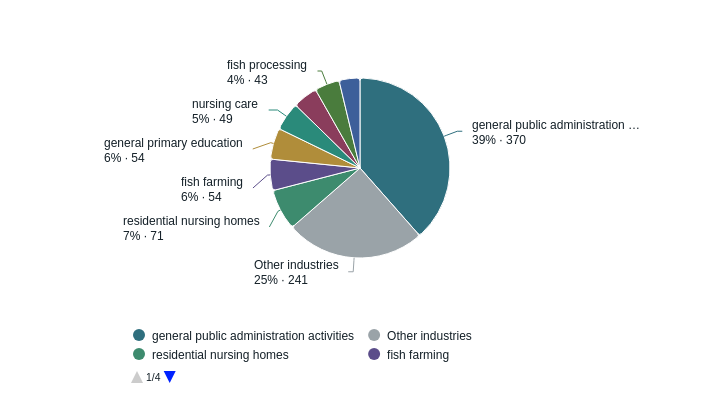
The industrial layout of Lebesby is dual-structured: public administration and health/education services provide baseline employment, while private sector enterprise is heavily weighted toward marine resource extraction, seafood handling, manufacturing, and support services.
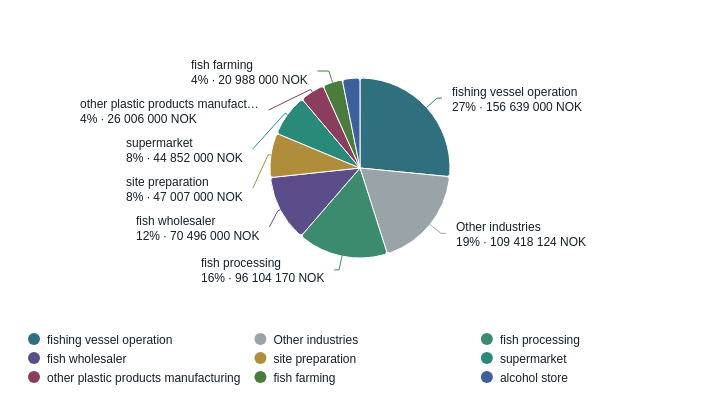
Among commercial sectors, fishing vessel operation generates significant top-line figures (NOK 156.6M across 6 companies), followed closely by fish processing (NOK 96.1M across listed processors) and fish wholesaling (NOK 70.5M). Manufacturing also exhibits high vitality, led by specialized plastic product manufacturing (NOK 26.0M operating income with a 40% growth rate) and site preparation (NOK 47.1M operating income, up 82%).
| Industry Sector | Company Count | Employee Count | Operating Income / Sales | Key Financial Metrics |
|---|---|---|---|---|
| Public Administration | 2 | 370 | NOK 0 (Municipal) | Core public employer |
| Fishing Vessel Operation | 6 | 25 | NOK 160.0M | NOK 156.6M sales revenue |
| Fish Processing | 1 | 43 | NOK 100.9M | NOK 96.1M sales revenue |
| Fish Wholesaling | 1 | 9 | NOK 70.6M | 42% YoY revenue growth |
| Site Preparation | 1 | 13 | NOK 47.1M | 18% EBITDA margin |
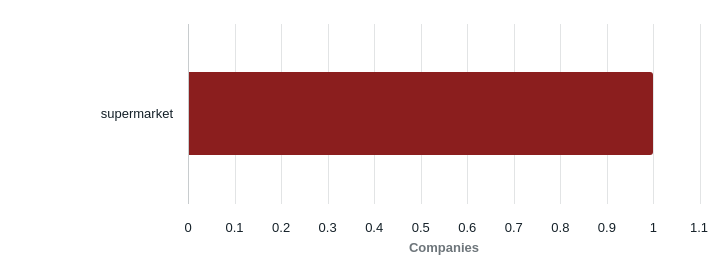
| Supermarkets & Retail | 4 | 36 | NOK 49.4M | NOK 44.9M sales revenue |
| Plastic Product Manufacturing | 1 | 16 | NOK 26.3M | 10% EBITDA margin, 40% growth |
| Fish Farming | 2 | 54 | NOK 21.0M | Primary aquaculture operations |
| Hotel & Hospitality | 1 | 43 | NOK 10.8M | 12% EBITDA margin, 20% growth |
In terms of corporate legal organization, limited liability companies (Aksjeselskap - AS) account for 36 entities employing 344 people and generating over NOK 605.2M in combined operating income. Public organizational forms (ORGL and KOMM) represent 29 entities, accounting for over 698 employed individuals in municipal administration, healthcare, and primary education.
Business Geography & Local Hubs
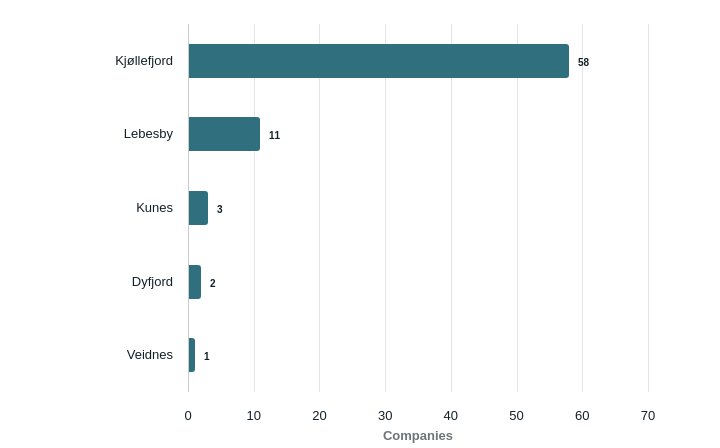
Economic activity within Lebesby municipality is geographically centered around distinct coastal settlements, each serving specific commercial roles within the local economy.
- Kjøllefjord: The administrative, commercial, and transport hub of Lebesby. Kjøllefjord hosts 58 active enterprises, 891 employees, and NOK 366.5M in sales revenue. It contains the municipal headquarters, major fish processing plants, retail trade, and hospitality venues.
- Dyfjord: A focused maritime and fishing hub. Despite hosting only 2 active enterprises and 18 employees, Dyfjord records NOK 153.9M in sales revenue, driven primarily by large-scale commercial fishing operations.
- Lebesby Village: Serves as an agricultural and inland municipal location with 11 companies, 142 employees, and NOK 36.8M in sales revenue, including educational centers and local retail.
- Kunes: Located along the fjord, Kunes holds 3 companies and 25 employees, generating NOK 33.9M in sales revenue with strong profitability metrics (10% EBITDA margin).
- Veidnes: Represents a smaller coastal settlement with 1 enterprise listed.
| Geographic Hub | Active Companies | Total Employees | Sales Revenue (NOK) | Revenue Growth |
|---|---|---|---|---|
| Kjøllefjord | 58 | 891 | 366.5M | +26% |
| Dyfjord | 2 | 18 | 153.9M | -45% |
| Lebesby | 11 | 142 | 36.8M | -32% |
| Kunes | 3 | 25 | 33.9M | +15% |
| Veidnes | 1 | 3 | 0.0M | 0% |
Largest Employers & Anchor Enterprises
Lebesby's employer landscape is led by Lebesby Kommune, which directly anchors the local labor market across administrative, health, and educational divisions. In the private sector, primary industry giants and specialized manufacturing firms dominate the workforce list.
Key employers operating in the municipality include:
- Lebesby Kommune (Public Sector): The largest single employer with 342 employees across public service functions.
- Kjøllefjord Helsesenter (Healthcare): Employs 71 staff in residential nursing care.
- Lerøy Aurora AS Avd Lebesby (Aquaculture): Employs 45 workers in fish farming in Friarfjord.
- Lerøy Norway Seafoods AS Avd Kjøllefjord (Seafood Processing): Employs 43 workers with NOK 96.1M in sales revenue.
- Hotel Nordkyn AS (Hospitality): Employs 43 workers, generating NOK 6.3M in sales revenue with a strong 12% EBITDA margin and 20% revenue growth.
- Lebesby Kommune Hjemmesykepleien (Healthcare): Employs 40 staff providing home care services.
- Kjøllefjord Skole (Education): Employs 35 staff in primary education.
- Lyder Fisk AS (Commercial Fishing): Based in Dyfjord, employing 17 staff and generating NOK 151.5M in sales revenue.
- GSG AS (Manufacturing): Based in Kunes, employing 16 staff in plastic product manufacturing, generating NOK 26.0M in sales with a 40% growth rate.
- Bøgeberg Landhandel AS (Retail): Employs 14 staff in supermarket operations, generating NOK 11.1M in sales with an 8% growth rate.
Business Dynamism & Financial Health
Business dynamic indicators in Lebesby highlight a highly resilient local market characterized by minimal corporate liquidations and stable operational margins in select service sectors.
During the evaluated reporting period, only 1 corporate bankruptcy was recorded in Lebesby municipality (Nye Mossakiosken AS in Kjøllefjord, operating in the retail segment with 0 active employees and 0 revenue). This demonstrates notable structural stability among established operators.
Financial performance varies across sectors:
- High-Margin Sectors: Site preparation leads profitability with an 18% EBITDA margin (NOK 8.6M EBITDA on NOK 47.1M turnover), followed by technical consulting (16% EBITDA margin) and local hospitality (12% EBITDA margin at Hotel Nordkyn AS).
- Cyclical & Pressured Sectors: Seafood processing and vessel operations experience margin compression due to fluctuating raw material prices, fuel expenses, and fish quotas. For example, Lerøy Norway Seafoods AS recorded an EBITDA of NOK -13.3M on NOK 96.1M in sales, illustrating the temporary cost burdens affecting coastal seafood processors.
- Growth Leaders: Industrial manufacturing (GSG AS, +40% revenue growth), fish wholesaling (+42% growth), and specialized civil work (+82% site preparation growth) represent the primary revenue expansion drivers.
Opportunities for Founders & Market Gaps
For entrepreneurs evaluating establishment in Lebesby, the municipality offers specific market openings driven by industry supply chain needs, municipal infrastructure projects, and regional tourism development.
Key strategic entry points include:
- Maritime & Seafood Industry Services: Sub-contracting roles in net cleaning, vessel maintenance, cold storage logistics, and technical maintenance for processing equipment.
- Specialized Construction & Technical Consulting: Strong localized demand exists for earthmoving, engineering support, energy efficiency consulting, and site prep services, evidenced by high profit margins in these sectors.
- Hospitality & Eco-Tourism: With Hotel Nordkyn AS demonstrating 20% revenue growth, opportunities exist for niche wilderness guiding, seasonal dining, outdoor activity management, and adventure tourism tailored to Arctic travelers.
- Commercial Retail & Craft Services: Opportunities for localized trade services, specialized repair shops, and personal care services catering to the resident workforce in Kjøllefjord.
When identifying optimal business locations, commercial real estate options, and untapped industry codes across Lebesby, prospective founders can softly utilize tools like SmartGrunder to analyze real-time address distribution and competitive density.
Conclusion & Strategic Outlook
Lebesby municipality represents a robust coastal economy where stable public sector employment intersects with high-value marine production. The economic baseline remains grounded in Kjøllefjord, while specialized industrial pockets in Kunes and Dyfjord contribute significantly to aggregate sales turnover.
With corporate revenues rebounding above NOK 800M annually and workforce levels stabilizing, Lebesby offers a secure environment for founders who understand Arctic industry dynamics. By tapping into local supply chain gaps in maritime services, civil construction, technical consulting, and tourism, entrepreneurs can establish durable, profitable enterprises aligned with the long-term economic development of Lebesby kommune.