Municipality
Lillehammer Municipal Economy: Strategic Industry Profile and Commercial Landscape
An in-depth economic analysis of Innlandet's regional capital for entrepreneurs, investors, and civic leaders
Executive Summary
Lillehammer serves as a principal economic, administrative, and educational center within Innlandet county. Positioned strategically along the Mjøsa region and Gudbrandsdalen corridor, the municipality features a balanced economic base combining dominant public sector institutions with vibrant private enterprises across civil engineering, digital infrastructure, market research, specialized retail, and leisure tourism.
Key economic characteristics of Lillehammer include:
- Strong Institutional Footprint: Major employers such as Sykehuset Innlandet HF, Universitetet i Innlandet, Statsforvalteren i Innlandet, and Statens vegvesen provide high workforce stability and consistent regional purchasing power.
- High-Value Private Sector Anchors: Key private drivers include civil contractor Anlegg Øst Entreprenør AS (generating over NOK 2.0 billion in operating income), telecommunications leader Eidsiva Digital AS, market research provider Norstat Norge AS, and regional tourism anchor Hunderfossen Resort AS.
- Concentrated Commercial Core: Business activity is heavily concentrated in the central Lillehammer city hub, supported by active secondary hubs in Fåberg and Vingrom.
- Solid Corporate Structure: Private limited companies (AS) represent the overwhelming share of commercial employment and turnover, supplemented by public entities (Sær/Orgl) and foundations (Stiftelser) operating in healthcare, education, and culture.
Macroeconomic Overview: Revenue & Employment Trends
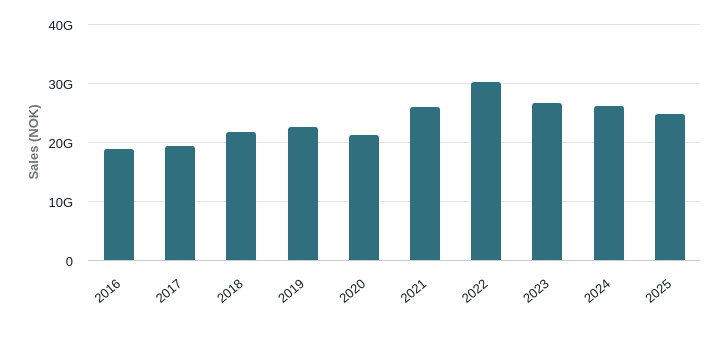
Lillehammer's business economy experienced significant growth over the past decade, reaching a historical revenue peak in 2022 driven by strong post-pandemic recovery and infrastructure investment, before modern macroeconomic adjustments led to revenue stabilization in 2024–2025.
Historical Revenue Trajectory
Commercial sales grew from NOK 18.74 billion in 2016 to a peak of NOK 30.22 billion in 2022 (+16.2% YoY growth that year). Following global inflationary pressures and higher interest rates, sales adjusted to NOK 26.18 billion in 2024 and NOK 24.73 billion in 2025.
| Metric | 2016 | 2019 | 2021 | 2022 | 2024 | 2025 |
|---|---|---|---|---|---|---|
| Total Sales (NOK M) | 18,741.6 | 22,612.0 | 26,007.2 | 30,215.1 | 26,184.6 | 24,730.2 |
| YoY Revenue Growth | — | +4.0% | +22.5% | +16.2% | -1.6% | -5.6% |
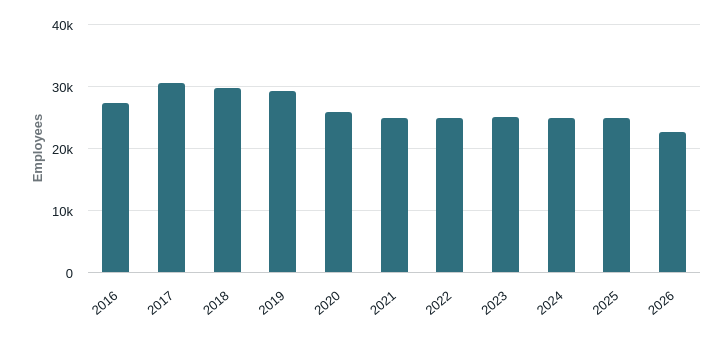
| Total Employees | 27,248 | 29,231 | 24,826 | 24,854 | 24,899 | 24,916 |
Employment Dynamics
Total reported employment stabilized around 24,800 to 25,000 headcount between 2021 and 2025. The high baseline headcount highlights Lillehammer's function as a regional employment aggregator, pulling daily commuters from neighboring municipalities in Gudbrandsdalen and Hedmarken.
Industry Structure & Legal Form Composition
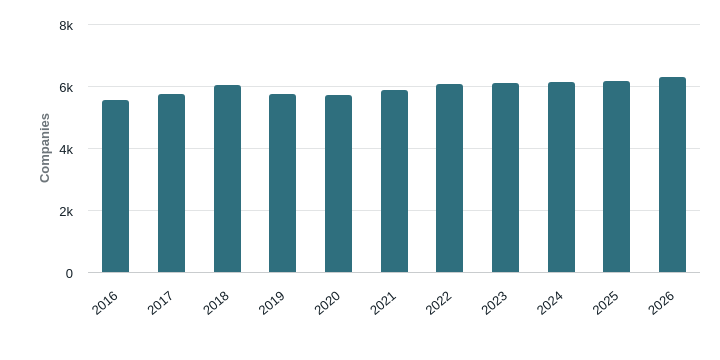
Lillehammer's industry structure is characterized by a mix of heavy public healthcare, university-level education, civil engineering, specialized business services, and a well-developed hospitality ecosystem.
Key Industry Sectors
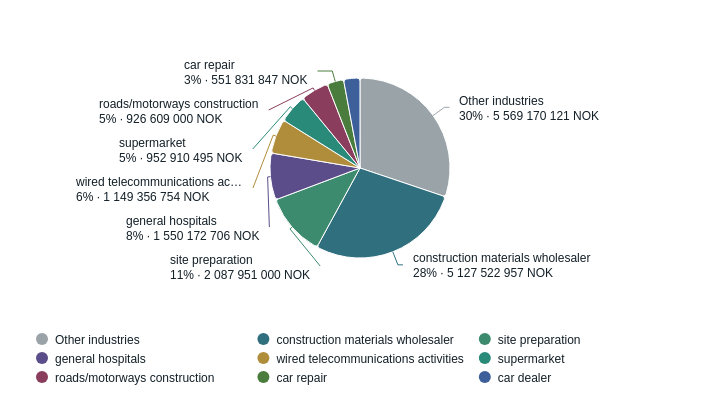
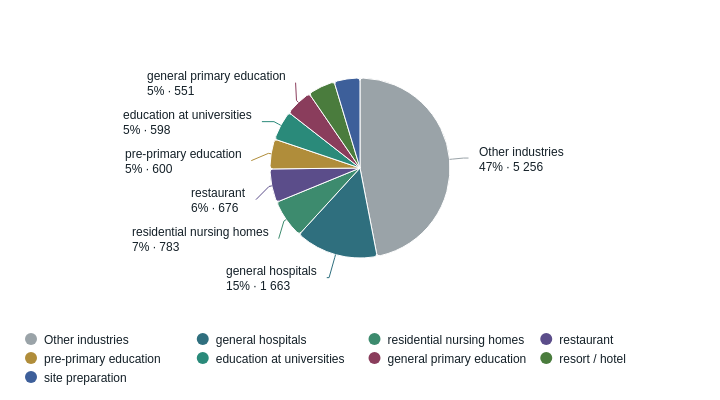
- Healthcare & Social Services: General hospital services lead sector headcount with 1,663 employees across 4 entities generating NOK 1.73B in operating income, backed by residential nursing facilities (783 employees) and specialized nursing care.
- Civil Engineering & Construction: Site preparation represents one of the most profitable sectors, led by 14 companies generating NOK 2.12B in operating income and employing 519 workers, achieving high average productivity (NOK 5.1M operating income per employee).
- Wholesale & Retail Trade: Construction materials wholesaling (NOK 5.15B operating income across 6 firms) and local supermarket chains play an essential distribution role for the region.
- Business Services & Technology: Highly scalable companies operate in digital infrastructure (wired telecommunications) and market research (Norstat Norge AS generating NOK 270.5M with 30% EBITDA margins).
- Hospitality & Leisure: Restaurants (29 companies, 676 employees), resorts (549 employees), and cultural heritage institutions generate consistent revenue linked to Lillehammer's international tourist draw.
Legal Organisation Forms
| Organisation Form | Companies | Employees | Operating Income (NOK M) | Total Equity (NOK M) |
|---|---|---|---|---|
| AS (Aktieselskap) | 790 | 11,584 | 19,292.9 | 6,061.6 |
| Orgl (Organisasjonsledd) | 119 | 6,107 | 0.0 | 0.0 |
| Sær (Særskilt organisert statlig) | 16 | 2,184 | 2,474.6 | 1,152.9 |
| Sti (Stiftelse) | 13 | 418 | 376.6 | 229.8 |
| Sa (Samvirkeforetak) | 14 | 225 | 4,690.9 | 2,244.8 |
| SF (Statsforetak) | 3 | 57 | 106.2 | 468.3 |
Business Geography & Sub-Regional Activity
Economic activity in Lillehammer municipality is organized around several distinct geographic nodes, each serving specific commercial roles:
Geographic Nodes Overview
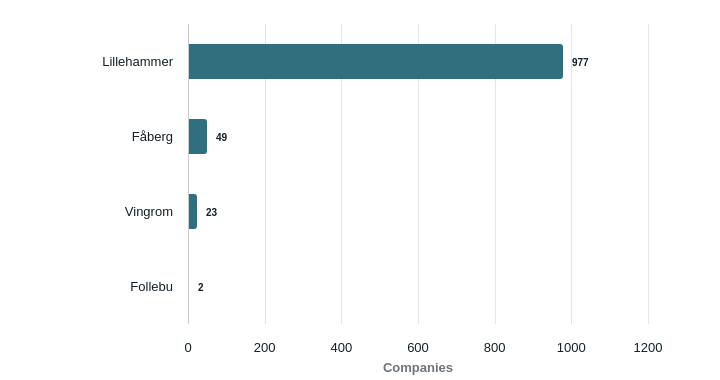
- Lillehammer (City Center & Urban Core): Aggregates 977 companies, over 20,300 employees, and NOK 27.06 billion in operating income. It houses the central retail district, county hospital, university campus, municipal administration, and major tech office spaces.
- Fåberg: A crucial industrial and tourism hub north of the urban core, hosting 49 companies and 1,069 employees with NOK 464.1 million in operating income. It features major regional attractions such as Hunderfossen Resort AS and specialized wood/joinery producers.
- Vingrom: Located south along the E6 corridor, Vingrom holds 23 companies and 173 employees, producing NOK 519.5 million in operating income due to high-revenue commercial and transport activities.
- Follebu: A smaller rural settlement area with local service units.
| Location | Companies | Employees | Operating Income (NOK M) | Gross Margin |
|---|---|---|---|---|
| Lillehammer | 977 | 20,323 | 27,059.1 | 1309% |
| Fåberg | 49 | 1,069 | 464.1 | 284% |
| Vingrom | 23 | 173 | 519.5 | 134% |
| Follebu | 2 | 5 | 1.3 | 92% |
Largest Local Employers & Corporate Anchors
Lillehammer hosts major public health institutions, national government agencies, and market-leading private corporations that anchor the regional labor market.
Major Local Organizations
- Sykehuset Innlandet HF Lillehammer Somatikk: 1,478 employees. The largest medical center in the county, generating NOK 1.46B in operating income.
- Lillehammer Helsehus & Municipal Services: 598 employees providing comprehensive municipal healthcare and home care.
- Universitetet i Innlandet (Lillehammer Campus): 598 employees driving higher education, research, and creative media technology studies.
- Hunderfossen Resort AS: 471 employees. Premier regional family resort generating NOK 34.7M operating income with an EBITDA margin of 26%.
- Anlegg Øst Entreprenør AS (Avd Lillehammer): 397 employees. Heavy civil engineering contractor reporting NOK 2.00B in operating income and NOK 199.3M EBITDA.
- Norstat Norge AS (Avd Lillehammer): 281 employees. International market research firm delivering NOK 270.5M in operating income and an impressive 30% EBITDA margin.
- Statens Vegvesen & Statsforvalteren i Innlandet: Public sector administrative headquarters employing over 400 specialized civil servants combined.
- Stiftelsen Lillehammer Museum: 187 employees overseeing Maihaugen and associated cultural museums.
- Eidsiva Digital AS: 159 employees. Telecommunications infrastructure leader reporting NOK 1.21B operating income.
Business Dynamism & Bankruptcy Analysis
Market adaptation in Lillehammer reflects national macroeconomic conditions, with insolvencies mostly constrained to interest-sensitive sectors like residential construction, real estate development, and non-essential consumer retail.
Recent Bankruptcy Trends
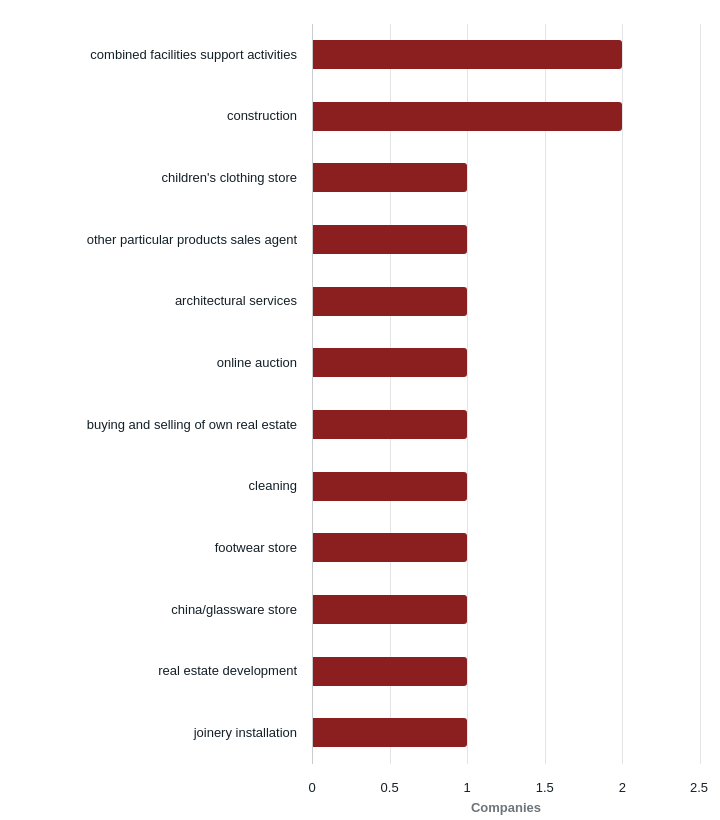
A total of 15–17 bankruptcies were recorded recently across specific commercial categories:
- Real Estate & Building Construction: The largest structural insolvency occurred in real estate development with Ram Bygg AS (NOK 53.2M prior turnover). Additional smaller closures occurred in joinery (Snekkerlaget AS), general building services (Lillehammer Byggservice AS), and small architectural firms.
- Retail & Commerce: Higher interest rates and changing shopping habits impacted specialty retail, leading to bankruptcies in tableware/china (T J Strand Lillehammer Glassmagasin AS, NOK 10.9M turnover), footwear (Stensrud AS), and niche e-commerce platforms (Diger AS).
- Services: Isolated insolvencies in commercial cleaning (Brand Vask & Renhold AS) and local staffing agencies (Jobbteam AS).
Overall, the underlying foundation remains healthy, with core institutional, tech, and civil engineering sectors absorbing market adjustments.
Opportunities for Founders & SmartGrunder Insights
Lillehammer presents clear market opportunities for prospective founders capable of tapping into its established institution-backed consumer base and digital ecosystem.
High-Potential Business Concepts
- B2B & Tech Services: Capitalizing on the presence of Eidsiva Digital AS and Norstat Norge AS, startups in data analytics, IT security, and software services can find a skilled tech labor pool from Universitetet i Innlandet graduates.
- Sub-Contracting & Construction Services: With Anlegg Øst Entreprenør AS driving multi-billion NOK infrastructure projects, specialized trade sub-contractors, equipment hire, and green construction technology suppliers face sustainable demand.
- Experience Economy & Tourism Tech: Complementing Hunderfossen Resort AS and Lillehammer Museum with niche hospitality, outdoor recreation gear, and digital tourism services offers strong seasonal growth potential.
- Health Tech & Eldercare Support: Given the concentration of hospital facilities (Sykehuset Innlandet HF) and municipal health facilities, innovations in health tech, logistics, and private care support have an immediate local testing ground.
Founders evaluating commercial real estate, foot traffic nodes, or niche gaps in Lillehammer can leverage SmartGrunder to explore optimal business addresses, compare local industry performance, and make data-driven establishment decisions.
Conclusion
Lillehammer offers a stable economic environment characterized by structural resilience. The synergy between a major public healthcare and educational sector, high-earning heavy engineering contractors, and established tourism anchors ensures consistent local purchasing power.
For entrepreneurs, investors, and local decision-makers, Lillehammer combines urban amenities with strong regional reach across Innlandet, making it an ideal destination for sustainable business expansion.