Municipality
Lom Municipal Economy Analysis: Market Overview for Founders and Investors
An in-depth economic examination of hospitality, regional commerce, and business opportunity in Lom municipality
Executive Summary
Lom is a landmark mountain municipality in Innlandet county, strategically positioned as a gateway to Jotunheimen and major national tourist routes. Its local economy is defined by a strong tourism and hospitality ecosystem, robust financial intermediation, agricultural processing, and specialized regional retail. Total commercial sales in Lom exceed NOK 1.07 billion, supported by an active labor force of over 1,500 employees across public and private sectors.
Key takeaways for prospective founders and local economic decision-makers include:
- High-Value Tourism Infrastructure: Hotels, mountain lodges, camping sites, and specialty food destinations generate substantial gross profits and employment, benefiting from intense seasonal visitor flows.
- Commercial Centralization: The primary urban center, Lom (Fossbergom), accounts for over 1,400 employees and NOK 1.3 billion in combined local operating income, serving as the commercial and administrative hub.
- Solid Financial and Agricultural Foundations: Local institutions such as Sparebank 1 Lom Og Skjåk and Ottadalen Mølle SA provide financial resilience and agricultural anchor capacity.
- Steady Revenue Recovery: Following post-pandemic adjustments, municipal company revenues have expanded steadily, surpassing NOK 1.07 billion in projected aggregate sales.
Economic Overview
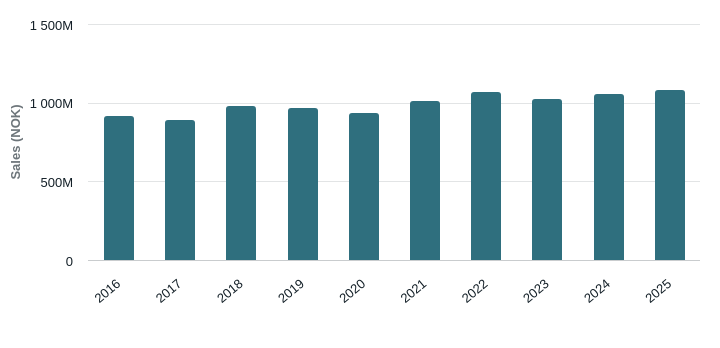
Lom's commercial turnover has demonstrated long-term resilience, recovering from macroeconomic shocks and seasonal fluctuations to achieve consistent top-line revenue growth in recent years. Between 2016 and 2025, commercial sales increased from NOK 916.7M to NOK 1,079.4M.
Sales Revenue Trend (2016–2025)
| Year | Sales Revenue (NOK) | YoY Change |
|---|---|---|
| 2016 | 916.7M | — |
| 2017 | 892.8M | -2.6% |
| 2018 | 978.3M | +9.6% |
| 2019 | 963.5M | -1.5% |
| 2020 | 932.7M | -3.2% |
| 2021 | 1,009.7M | +8.3% |
| 2022 | 1,065.1M | +5.5% |
| 2023 | 1,024.4M | -3.8% |
| 2024 | 1,056.2M | +3.1% |
| 2025 | 1,079.4M | +2.2% |
Labor Force Dynamics (2016–2026)
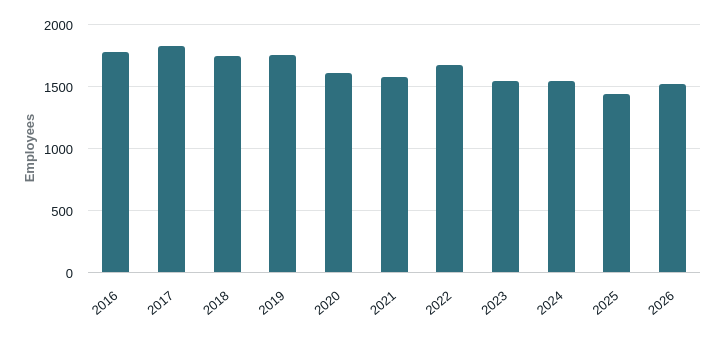
The local workforce registered 1,778 employees in 2016 before adjusting downward to around 1,514 employees in 2026. This trajectory reflects broader structural transitions toward lean staffing model adoption, seasonal labor flexibility, and automation across retail and accommodation sectors.
- Peak Employment Period: 2017 (1,819 employees)
- Stabilized Post-Pandemic Level: ~1,514 employees (2026 forecast, representing a +5.4% recovery from 2025)
Industry Structure
Lom’s corporate landscape is heavily anchored by accommodation, food services, retail, specialized manufacturing, and regional banking. Public health care and municipal education also form a major part of total employment.
Key Commercial Sectors
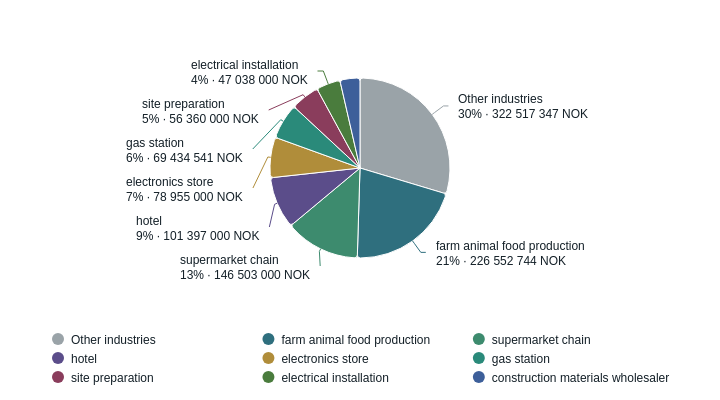
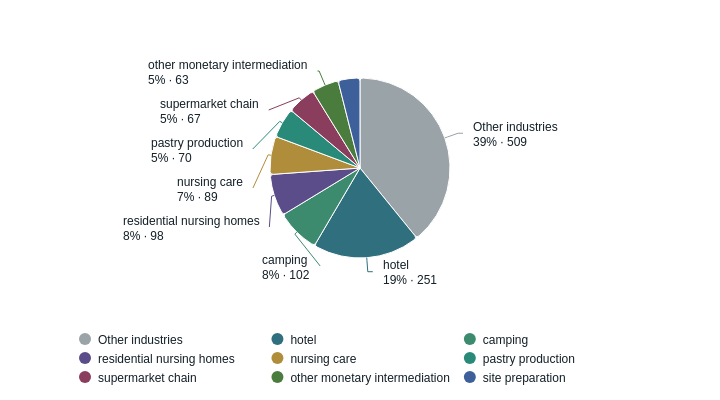
- Hotels & Lodges: 11 companies employ 251 workers, generating NOK 102.2M in operating income with an impressive average EBITDA margin of 15%.
- Financial Intermediation: Represented by Sparebank 1 Lom Og Skjåk, generating NOK 250.6M in operating income with an EBITDA margin of 71%.
- Farm Animal Food Production: Anchored by Ottadalen Mølle SA, generating NOK 227.8M in operating income with 41 employees.
- Supermarkets & Retail: Supermarket chains account for NOK 150.9M in annual sales and 67 employees.
- Specialty Food & Bakeries: Artisanal operations like Bakeriet I Lom AS employ 70 people and generate NOK 29.9M in sales revenue.
Corporate Legal Structure Distribution
| Legal Form | Companies | Employees | Operating Income (NOK) | Operating Margin |
|---|---|---|---|---|
| AS (Limited Liability) | 98 | 1,025 | 832.5M | 4% |
| Komm (Municipal Units) | 20 | 396 | 0.0M | N/A |
| SA (Cooperatives) | 6 | 105 | 343.6M | 1% |
| SPA (Savings Bank) | 1 | 63 | 250.6M | 70% |
| Sti (Foundations) | 3 | 30 | 10.6M | 3% |
Business Geography
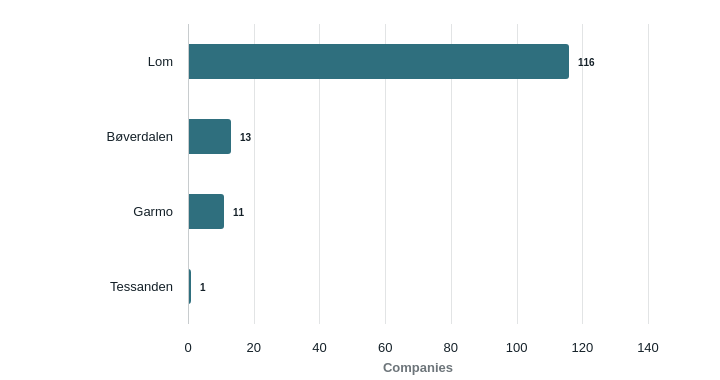
Economic activity within Lom is concentrated around the central hub of Lom (Fossbergom), with important satellite pockets situated along scenic valleys such as Bøverdalen and Garmo.
Geographic Breakdown
| Location | Companies | Employees | Operating Income (NOK) | Revenue Growth |
|---|---|---|---|---|
| Lom (Fossbergom) | 116 | 1,422 | 1,307.3M | +1% |
| Bøverdalen | 13 | 172 | 90.1M | +13% |
| Garmo | 11 | 90 | 53.7M | +34% |
| Tessanden | 1 | 7 | 0.56M | -8% |
- Lom (Central Area): Serves as the high-density service core hosting banks, municipal offices, major retail outlets, and premier tourist services.
- Bøverdalen: Experiences rapid growth (+13%) driven by iconic mountain lodges such as Raubergstulen, Juvasshytta, and Leirvassbu situated along routes leading up to Galdhøpiggen.
- Garmo: Represents a fast-expanding cluster (+34% growth) combining agricultural operations and tourist sites like Brimi Gard & Sæter.
Largest Employers
Employment in Lom is split between major public municipal service providers and well-established private entities operating in tourism, banking, and mill production.
Key Local Employers
- Lom Helseheim: 98 employees (Public residential nursing home care).
- Lom Kommune Pleie Og Omsorgstenesta: 89 employees (Public nursing care services).
- Bakeriet I Lom AS: 70 employees (NOK 29.9M income) — Renowned national landmark bakery and food production producer.
- Sparebank 1 Lom Og Skjåk Avd Hovedkontor Lom: 63 employees (NOK 250.6M income) — Regional banking headquarters.
- Ottadalen Mølle SA Avd Lom: 41 employees (NOK 227.8M income) — Key animal feed processing mill.
- Fossheim Turisthotell AS: 38 employees (NOK 19.5M income, 20% EBITDA margin).
- Nye Brimi Bue AS: 38 employees (NOK 14.1M income).
- Extra Lom (Ottadalen Samvirkelag): 37 employees (NOK 76.5M income).
- Raubergstulen Turisthytte AS: 36 employees (NOK 20.2M income, 26% EBITDA margin).
- Juvasshytta AS: 34 employees (NOK 16.8M income, 14% EBITDA margin).
- Nordal Turistsenter AS: 32 employees (NOK 13.6M income).
- Loar Skule & Loar Barnehage: 31 and 26 employees respectively (Public primary education and kindergarten).
Business Dynamism
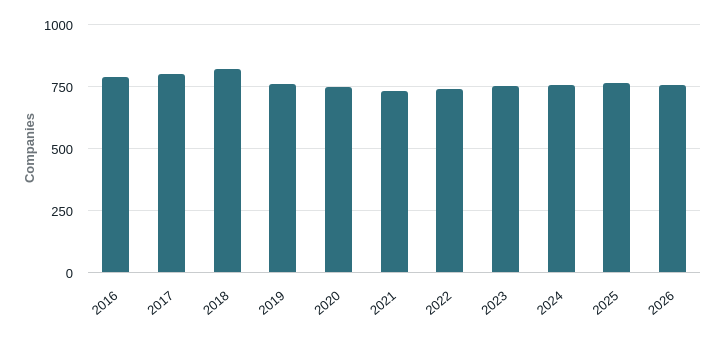
Lom exhibits notable financial stability, characterized by long-tenured family and cooperative businesses alongside established municipal infrastructure. Over 757 total registered entities exist within the municipality boundaries, showing a high ratio of enterprise density relative to total population.
Structural Stability & Risk Factors
- High Revenue Stability: Top commercial entities maintain low default ratios and conservative equity capitalization (e.g., Sparebank 1 Lom Og Skjåk holding NOK 1,195.7M total equity).
- Seasonal Profit Margins: High-altitude tourism operations experience short, intensive summer and winter peak seasons, requiring disciplined working capital management during shoulder months.
- Cooperative Enterprise Strength: Agriculture and retail cooperatives (Ottadalen Mølle SA, Extra Lom) provide structural market liquidity that buffers against broader cyclical downturns.
Opportunities for Founders
The commercial ecosystem in Lom offers attractive niches for innovative founders and specialized entrepreneurs, particularly around sustainable tourism, local culinary culture, and regional supply chain logistics.
Priority Growth Areas
- Eco-Tourism & Mountain Services: Demand remains high for premium guide services, equipment rentals, and year-round outdoor adventure concepts.
- Local Food Value Addition: Leveraging Lom's strong culinary reputation (Bakeriet i Lom, Brimi Gard & Sæter) for niche food manufacturing, direct-to-consumer artisanal products, and high-end gastronomy.
- Craft Trades & Technical Installation: Electrical installation (NOK 50.9M industry turnover, +38% revenue growth) and site preparation (NOK 58.5M turnover) demonstrate active local demand for property upgrading and infrastructure development.
- Digital & Administrative Services: Assisting rural businesses in digitizing bookings, inventory management, and seasonal labor recruitment.
Founders looking to explore available commercial addresses, local industry statistics, or site-specific market data in Lom can utilize SmartGrunder to analyze location statistics and identify ideal market openings.
Conclusion
Lom represents a distinctive mountain economy that successfully pairs traditional rural strengths—such as agriculture, banking, and public care—with a world-class tourism brand. With local sales topping NOK 1.07 billion and strong performance across core hubs like Fossbergom and Bøverdalen, the municipality offers a reliable environment for new venture creation.
For entrepreneurs seeking a well-connected mountain destination with high summer visitor volume and reliable local financial partners, Lom stands out as a compelling, resilient base in Innlandet.