Municipality
Economic Analysis of Marker Municipality: Industrial Strength, Strategic Logistics, and Local Enterprise
An in-depth review of industrial performance, employment structure, and market opportunities in Marker
Executive Summary
Marker municipality, located strategically along the primary E18 arterial corridor near the Swedish border in Viken county, demonstrates a resilient rural industrial economy characterized by strong manufacturing anchors, significant logistics operations, and essential public sector service structures.
With total local corporate revenues reaching over NOK 1.53 billion in 2025 and a baseline employment of approximately 1,555 personnel across commercial and public organizations, Marker maintains a well-balanced economic ecosystem. The municipality's economic hub, Ørje, concentrates nearly all major commercial activity, housing key global and national players in HVAC manufacturing, timber processing, agricultural feed production, and cross-border transport logistics.
Key Takeaways for Founders and Decision-Makers
- Industrial Anchors: Specialized manufacturing—led by ventilation leader Flexit AS and door/window manufacturer Løken Trevare A/S—generates high operating efficiency and substantial exports.
- Border & Logistics Hub: Positioned directly on the E18 corridor with active customs administrative presence (Tolletaten Ørje) and logistics operators (such as Maersk Logistics & Services), Marker is exceptionally positioned for freight, trade, and cross-border services.
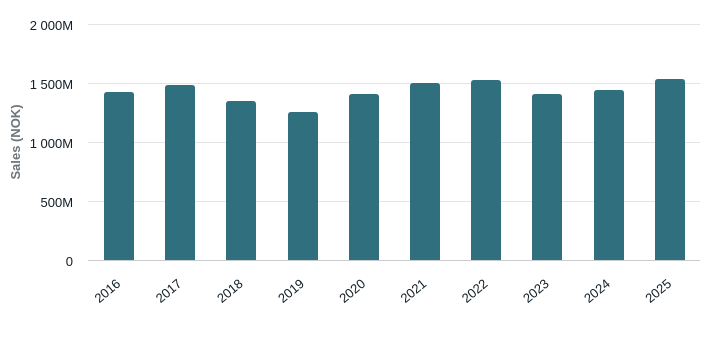
- Revenue Stability: Local sales revenue rebounded sharply after 2023, expanding by 2.4% in 2024 and 6.3% in 2025 to reach NOK 1.53 billion.
Economic Overview
Marker's broader corporate revenue trajectory over the past decade displays remarkable resilience, bouncing back from broader macroeconomic fluctuations. Corporate sales revenue stood at NOK 1.42 billion in 2016, experienced moderate dips in 2018–2019, and subsequently accelerated to peak historical levels.
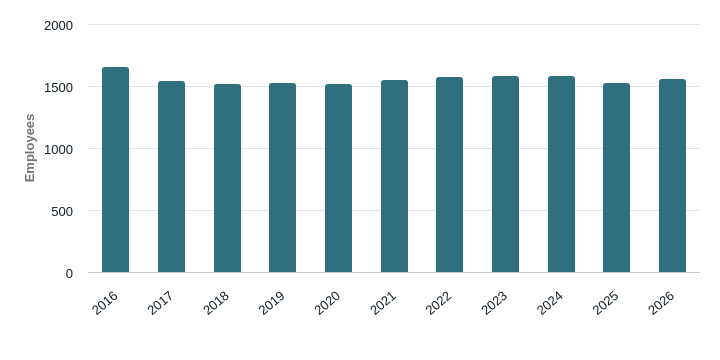
Employment levels have remained remarkably steady around 1,500 to 1,580 employees over the 2016–2026 period, indicating structural stability in the local workforce.
| Metric | 2016 | 2018 | 2020 | 2022 | 2024 | 2025 | 2026 (Est.) |
|---|---|---|---|---|---|---|---|
| Total Sales (NOK) | 1,423.4M | 1,347.8M | 1,402.7M | 1,521.3M | 1,443.2M | 1,533.5M | N/A |
| Sales Growth (YoY) | — | -9.0% | +12.1% | +1.6% | +2.4% | +6.3% | — |
| Total Employees | 1,657 | 1,519 | 1,519 | 1,569 | 1,578 | 1,525 | 1,555 |
| Employment YoY | — | -1.3% | -0.4% | +1.4% | +0.1% | -3.4% | +2.0% |
The strong corporate sales performance in 2025 (+6.3% year-over-year growth) underscores the capacity of local manufacturers and agricultural suppliers to pass through cost inflation while expanding market share in regional and international markets.
Industry Structure & Legal Forms
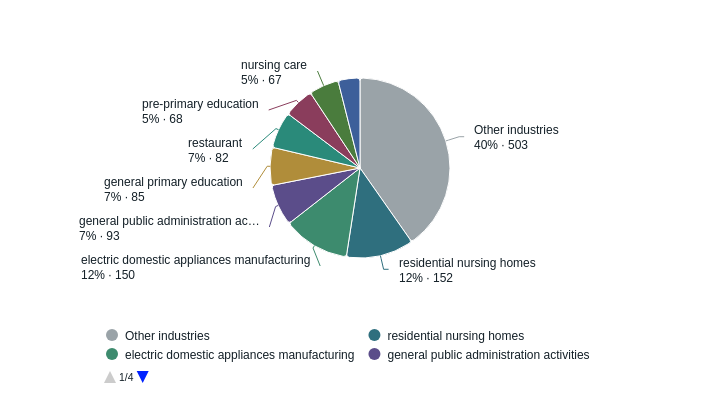
Marker's commercial landscape is dominated by high-value specialized manufacturing, agri-industrial operations, logistics, and local healthcare/public administration services.
Leading Industry Sectors
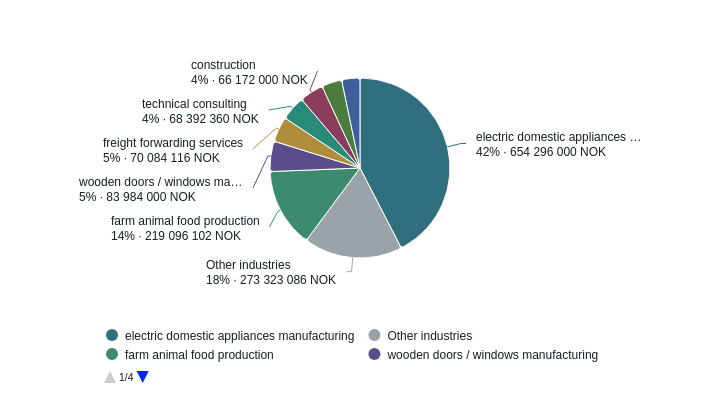
- Electric Domestic Appliances Manufacturing: Anchored by 2 entities employing 150 staff, generating NOK 667.4M in operating income with a strong EBITDA margin of 12% (NOK 86.3M EBITDA).
- Farm Animal Food Production: Represented by 1 major company generating NOK 219.1M in operating income with 34 employees, yielding an impressive NOK 7.3M operating income per employee.
- Wooden Doors & Windows Manufacturing: 1 specialized manufacturer generating NOK 84.0M in operating income across 48 employees.
- Logistics & Freight Services: Comprising freight forwarding (3 entities, 46 employees, NOK 70.6M revenue) and road freight transport (8 entities, 49 employees, NOK 33.7M revenue).
- Healthcare & Mental Health: Mental health hospitals (48 employees, NOK 23.9M income) and residential nursing facilities (152 employees across 3 entities).
- Construction & Technical Services: Combined construction and site preparation sectors employ over 70 workers, complemented by 7 technical consulting firms generating NOK 68.6M in operating income.
Organizational Breakdown
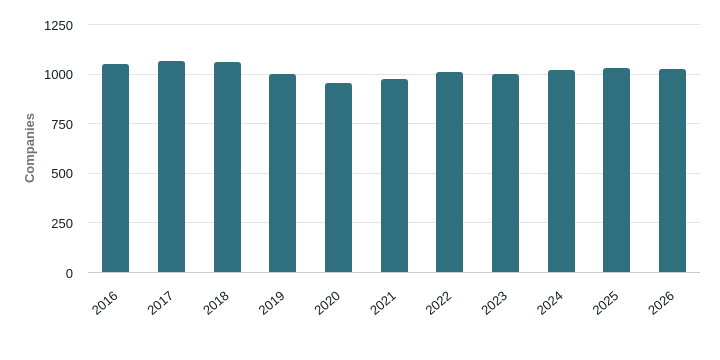
AS (Limited Companies): 81 companies | 837 employees | NOK 1,503.1M Sales
Komm (Municipal Entities): 26 entities | 542 employees
Enk (Sole Proprietorships): 28 entities | 65 employees
SA (Cooperatives): 3 entities | 43 employees | NOK 105.0M Sales
Private limited companies (AS) generate nearly all commercial income (NOK 1,503.1M operating income) with an overall operating margin of 5% and combined EBITDA of NOK 131.1M. Municipal organizational forms (KOMM) constitute the vast majority of local health, education, and administrative employment.
Business Geography
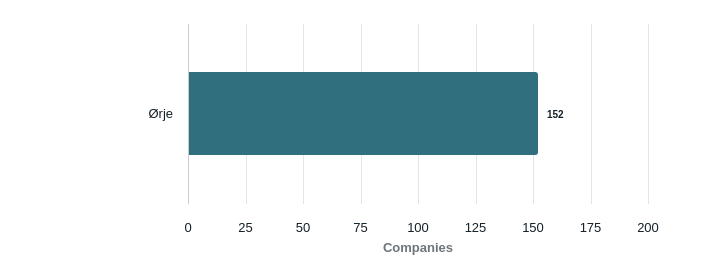
Commercial activity within Marker is heavily concentrated in its main administrative and urban center, Ørje.
Geographic Breakdown
| Place | Registered Entities | Total Employees | Operating Income (NOK) | Sales Revenue (NOK) | Operating Profit (NOK) |
|---|---|---|---|---|---|
| Ørje | 152 | 1,608 | 1,616.8M | 1,583.7M | 84.4M |
Because Ørje sits at the intersection of critical transit infrastructure (E18 and national road connections to Halden and Sweden), virtually all industrial zones—including Moseveien, Industriveien, Braarudveien, and Haldenveien—are situated in and around Ørje. This dense concentration allows for shared infrastructure, efficient freight access, and centralized municipal administration.
Largest Employers
Marker benefits from a diverse combination of robust private industrial leaders, regional logistics operations, and extensive public healthcare and educational facilities.
Major Local Employers & Companies
- Flexit AS (Moseveien 8, Ørje)
- Industry: Electric domestic appliances manufacturing
- Employees: 148
| - Operating Income: NOK 654.7M | EBITDA: NOK 77.9M (11% margin) |
|---|
- Marker Kommune Bo Og Servicesenter Sykehjem (Braarudveien 25, Ørje)
- Industry: Residential nursing homes
- Employees: 117
- Marker Kommune Marker Skole (Haldenveien 18, Ørje)
- Industry: General primary education
- Employees: 85
- Sluseporten AS (Storgata 14, Ørje)
- Industry: Restaurant & hospitality
- Employees: 68
- Operating Income: NOK 18.0M
- Marker Kommune Bo Og Servicesenter Hjemmetjenesten (Braarudveien 25, Ørje)
- Industry: Home nursing care
- Employees: 67
- Tolletaten Ørje (Ørje)
- Industry: Public administration / Customs authority
- Employees: 55
- Borger Ørje (Haldenveien 170, Ørje)
- Industry: Adult mental health facilities
- Employees: 48
- Operating Income: NOK 23.9M
- Løken Trevare A/S (Industriveien 6, Ørje)
- Industry: Wooden doors / windows manufacturing
- Employees: 48
| - Operating Income: NOK 84.0M | Growth: +14% |
|---|
- Marker Kommune Sentraladministrasjon (Storgata 60, Ørje)
- Industry: Municipal central administration
- Employees: 38
- Maersk Logistics & Services Norway AS Avd Ørje (Svenskeveien 589, Ørje)
- Industry: Freight forwarding services
- Employees: 37
| - Operating Income: NOK 47.4M | Growth: +20% |
|---|
- Østmøllene AS Avd Ørje (Haldenveien 71, Ørje)
- Industry: Farm animal food production
- Employees: 34
| - Operating Income: NOK 219.1M | Growth: +24% |
|---|
- Fjeldstad Butikkdrift AS (Braarudveien 7, Ørje)
- Industry: Grocery retail (REMA 1000 Ørje)
- Employees: 21
Business Dynamism & Insolvent Sectors
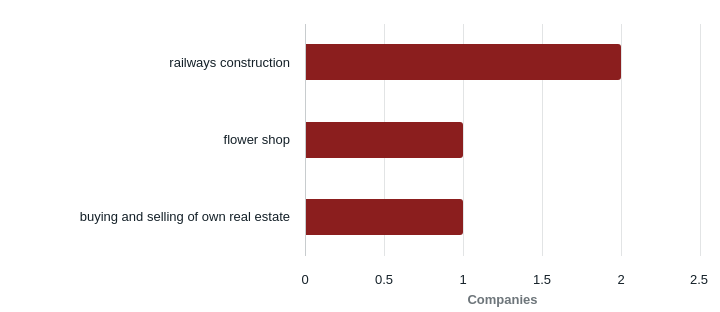
Business turnover in Marker is generally stable, though periodic sector-specific adjustments occur. An evaluation of local insolvency trends highlights vulnerabilities in specialized infrastructure sub-contracting and niche retail.
Insolvency Statistics by Sector
| Sector | Bankrupt Entities | Total Sales Impact (NOK) | Total Operating Profit (NOK) | Primary Causes / Context |
|---|---|---|---|---|
| Railways Construction | 2 | 74.1M | -1.0M | Contract volatility and thin margins (e.g., JPL Rail AS & Rail Norway AS) |
| Real Estate Holding | 1 | 3.4M | +3.3M | Asset restructurings (e.g., Jessesen Holding AS) |
| Retail Trade (Flowers) | 1 | 0.0M | 0.0M | Small-scale consumer shifts (Ørje Blomsterbutikk AS) |
Overall insolvency rates in Marker remain modest relative to total business density. The core industrial base—including HVAC manufacturing, timber products, and grain processing—maintains solid balance sheets, protecting the municipality from systemic economic shocks.
Opportunities for Founders
Marker presents clear targeted opportunities for founders who can leverage its cross-border infrastructure, strong industrial foundation, and stable resident population.
Strategic Business Nicthes
- Cross-Border Logistics & Customs Services: Capitalizing on E18 border transport, custom clearance presence, and storage facilities adjacent to Maersk Logistics and Tolletaten.
- Industrial Sub-Contracting & Maintenance: Supplying technical maintenance, automation consulting, and component fabrication to dominant local producers like Flexit AS and Løken Trevare A/S.
- Green Construction & Site Development: With technical consulting (NOK 68.6M revenue) and local construction expanding (+38% revenue growth in general construction), demand for sustainable building materials and specialized trade sub-contracting remains strong.
- Local Hospitality & Commercial Services: With high worker density in Ørje and steady tourism/transit traffic along the Halden Canal and E18, opportunities exist in specialized retail, food service, and trade services.
Founders interested in establishing a business or exploring commercial properties in Ørje can utilize SmartGrunder to analyze neighborhood business density, review local demographics, and evaluate industry competition.
Conclusion
Marker municipality represents a compelling model of a specialized border economy. Driven by market leaders such as Flexit AS and Østmøllene AS, alongside steady municipal and logistics employment, Marker offers robust corporate revenues exceeding NOK 1.53 billion.
For entrepreneurs, investors, and local leaders, Marker's key strength lies in its concentrated industrial hub in Ørje, excellent E18 logistics connectivity, and dependable local workforce. Continued focus on expanding technical services, border logistics, and industrial sub-contracting will ensure long-term economic dynamism across the municipality.