Municipality
Narvik Municipal Business Economy Analysis
An in-depth evaluation of economic performance, industry structure, geographic distribution, and startup potential in Narvik
Executive Summary
Narvik municipality serves as a strategic logistics, healthcare, educational, and industrial hub in Nordland county. With a strong presence in heavy transport, industrial manufacturing, specialized healthcare, and higher education, the municipality anchors commercial and public activities across the Ofoten region.
Key characteristics of the Narvik business ecosystem include:
- Logistics & Infrastructure Dominance: Key operations such as LKAB Norge AS Avd Transport and Bane NOR Narvik Infrastruktur Prosjekter reflect Narvik's historical and ongoing status as an international iron ore transport corridor and railway junction.
- Substantial Public & Institutional Sector: Health trusts (Universitetssykehuset Nord-Norge HF) and educational entities (UiT Campus Narvik) provide structural workforce stability.
- Industrial Powerhouses: Establishments like Heidelberg Materials Sement Norge AS Sementfabrikk Kjøpsvik demonstrate significant revenue generation and operating margins in industrial manufacturing.
- Geographic Micro-Clusters: While Narvik urban center concentrates the vast majority of companies and workforce, peripheral centers such as Bjerkvik, Ballangen, and Kjøpsvik contribute vital industrial and logistical strength.
Economic Overview
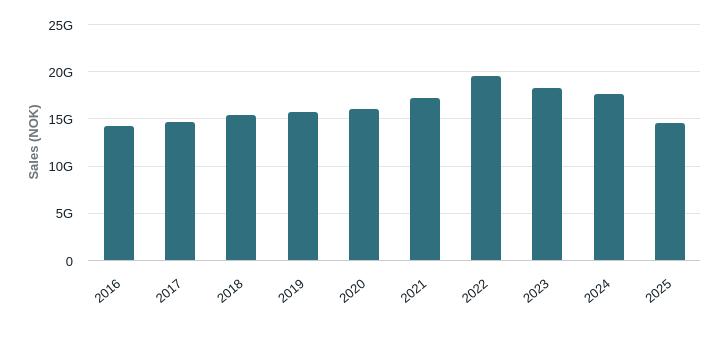
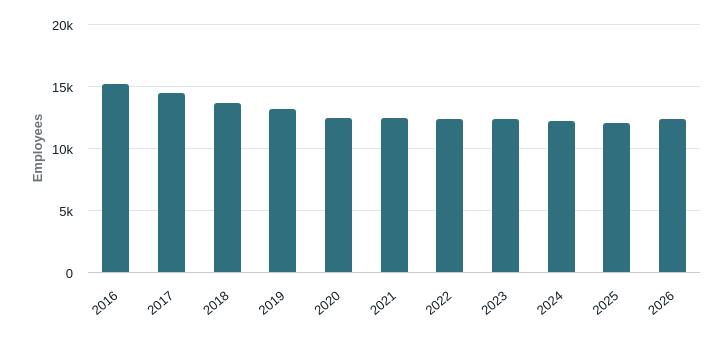
The overall turnover and workforce metrics in Narvik reflect both cyclical industrial adjustments and long-term economic shifts. Historically, company sales in Narvik grew steadily from NOK 14,170.4M in 2016 to a peak of NOK 19,523.9M in 2022, before experiencing contractions in recent reporting periods.
Historical Revenue & Workforce Trends
| Year | Total Sales Revenue (NOK) | Total Employees | YoY Sales Growth | YoY Employee Growth |
|---|---|---|---|---|
| 2016 | 14,170.4M | 15,188 | — | — |
| 2017 | 14,566.4M | 14,469 | +2.8% | -4.7% |
| 2018 | 15,410.8M | 13,643 | +5.8% | -5.7% |
| 2019 | 15,692.3M | 13,172 | +1.8% | -3.5% |
| 2020 | 16,004.4M | 12,408 | +2.0% | -5.8% |
| 2021 | 17,158.6M | 12,390 | +7.2% | -0.1% |
| 2022 | 19,523.9M | 12,362 | +13.8% | -0.2% |
| 2023 | 18,227.5M | 12,375 | -6.6% | +0.1% |
| 2024 | 17,559.3M | 12,161 | -3.7% | -1.7% |
| 2025 | 14,469.9M | 12,017 | -17.6% | -1.2% |
| 2026 | — | 12,369 | — | +2.9% |
Note: 2025 turnover figures and 2026 employment figures reflect project projections and partial reporting windows within the database context.
Industry Structure
Narvik's commercial composition features a blend of capital-intensive industrial enterprises, infrastructure logistics, healthcare, and local consumer services.
Commercial Industry Performance
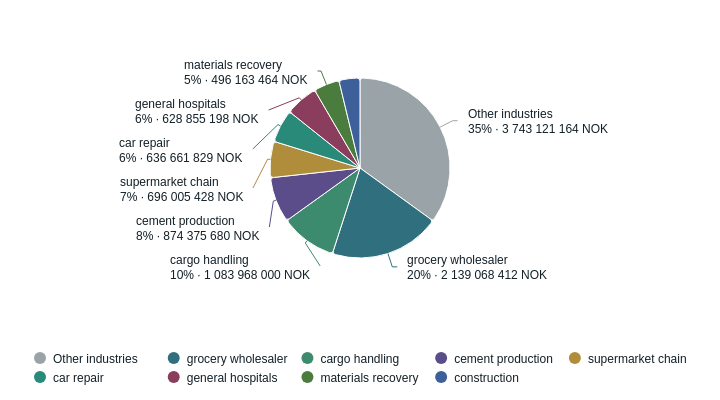
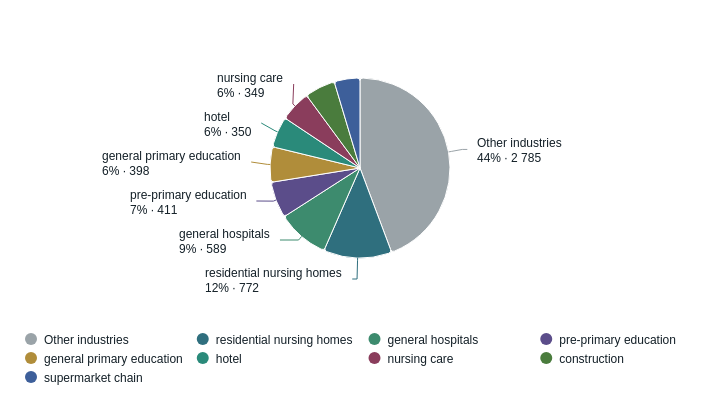
- Cargo Handling & Logistics: Led by LKAB Norge AS, cargo handling stands out as an extraordinarily efficient and profitable sector, generating NOK 1,088.4M operating income with an EBITDA margin of 28% and EBITDA per employee of NOK 1.7M.
- Construction & Civil Engineering: General construction (39 companies, 344 employees) generated NOK 410.8M operating income with an 8% EBITDA margin, whereas site preparation (26 companies, 211 employees) faced compressed profitability with an EBITDA margin of 3%.
- Retail & Trade: Supermarket chains (16 companies, 291 employees) generated NOK 709.4M operating income, while car repair services (19 companies, 183 employees) posted NOK 652.4M.
- Hospitality & Tourism: Hotels (11 companies, 350 employees) reported NOK 146.9M in operating income but faced profitability challenges (-8% EBITDA margin), impacted by heavy capital investments in tourism facilities such as Narvikfjellet AS.
Organisation Form Statistics
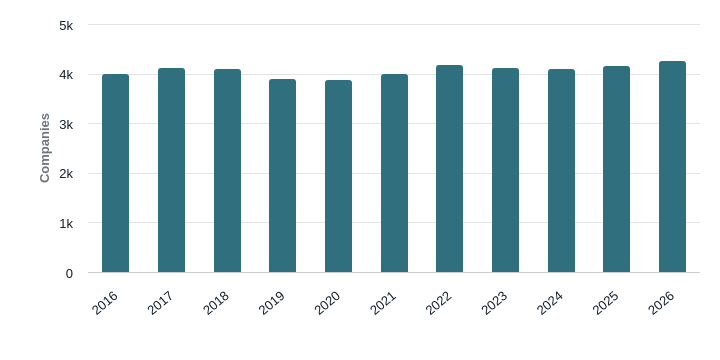
Limited liability companies (Aksjeselskap / AS) represent the primary engine of private enterprise in Narvik, generating NOK 14,660.5M in operating income across 661 companies employing 7,219 individuals. Public enterprise forms—including municipal entities (KOMM: 74 companies, 2,656 employees), state enterprises (SF: 5 companies, 162 employees, 29% EBITDA margin), and state health/special entities (SÆR: 17 companies, 973 employees)—provide foundational stability to local employment.
Business Geography
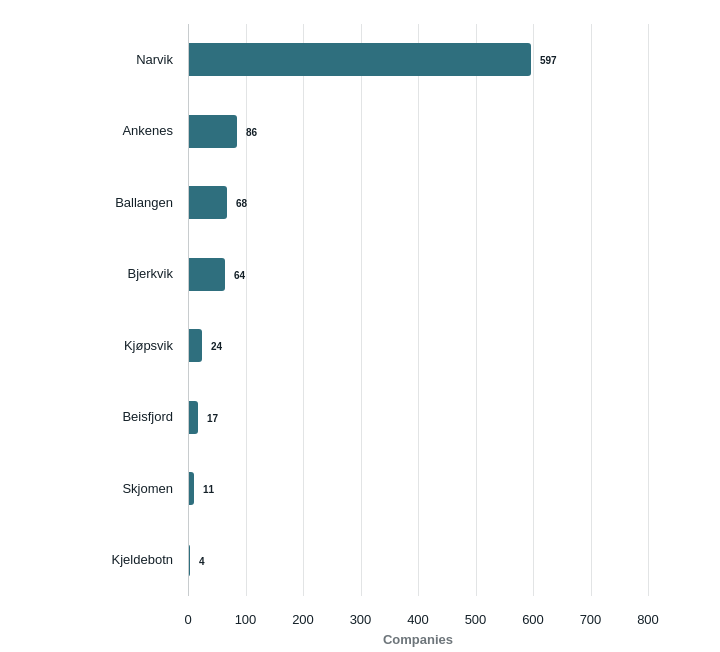
Commercial activity in Narvik municipality is spread across several distinct population centers, each maintaining a specialized role in the local economy.
Geographic Breakdown of Activity
| Location | Companies | Employees | Operating Income (NOK) | Operating Margin | EBITDA Margin |
|---|---|---|---|---|---|
| Narvik | 597 | 9,703 | 10,306.4M | 7% | 11% |
| Bjerkvik | 64 | 1,065 | 3,903.7M | 2% | 5% |
| Ballangen | 68 | 811 | 1,026.3M | 27% | 37% |
| Ankenes | 86 | 639 | 808.8M | 4% | 6% |
| Kjøpsvik | 24 | 365 | 1,107.0M | 19% | 24% |
| Beisfjord | 17 | 114 | 67.9M | 6% | 12% |
| Skjomen | 11 | 61 | 17.9M | 1% | 5% |
| Kjeldebotn | 4 | 13 | 11.3M | 1% | 4% |
Key Geographic Characteristics
- Narvik City: The administrative and commercial core, hosting over 80% of total municipal employment and driving consumer trade, professional services, health, and higher education.
- Bjerkvik: Acts as a vital transportation node north of Narvik urban center, accounting for NOK 3,903.7M in operating income.
- Ballangen: Demonstrates high profitability (37% EBITDA margin), driven by specialized local industrial and contractor activities.
- Kjøpsvik: Home to heavy industrial manufacturing, notably cement production, yielding an exceptional 24% EBITDA margin.
Largest Employers
The employer landscape in Narvik is anchored by major public sector institutions alongside key industrial and transportation enterprises.
Key Employers in Narvik
- Universitetssykehuset Nord-Norge HF Narvik Somatikk: 474 employees. Major healthcare provider generating NOK 552.4M operating income.
- Furumoen Sykehjem: 239 employees. Municipal residential nursing care facility.
- UiT Campus Narvik (Universitetet i Tromsø): 223 employees. Higher education and engineering research institution.
- Narvik Kommune Hjemmesykepleie Avd Sykehusveien: 211 employees. Home nursing care services.
- LKAB Norge AS Avd Transport: 206 employees. Iron ore railway transshipment and port terminal operations, generating NOK 1,088.4M operating income with an EBITDA of NOK 312.5M.
- Narvik Videregående Skole: 168 employees. Upper secondary education institution.
- Hålogaland Helse Og Omsorg AS Avd Narvik: 140 employees. Private nursing and rehabilitation services in Ballangen generating NOK 58.0M operating income.
- Ellas Minne Bo Og Rehabiliteringssenter: 131 employees. Municipal care facility located in Bjerkvik.
- Heidelberg Materials Sement Norge AS Sementfabrikk Kjøpsvik: 115 employees. Cement plant operating in Kjøpsvik with NOK 881.8M operating income and NOK 246.0M EBITDA.
- Bane NOR Narvik Infrastruktur Prosjekter: 105 employees. State railway infrastructure maintenance and project development.
- Narvikfjellet AS: 100 employees. Major regional alpine resort operator generating NOK 20.0M operating income.
Business Dynamism & Insolvent Operations
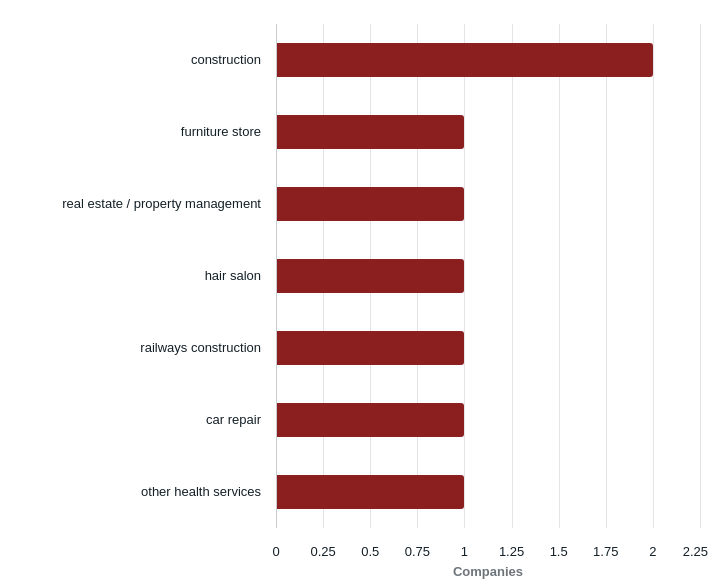
Business dynamic indicators demonstrate both opportunities and friction points in the Narvik business ecosystem. A total of 8 bankruptcies were recorded across key local industry sectors.
Analysis of Insolvencies by Sector
- Railways Construction: Rallarservice AS registered bankruptcy despite reported sales revenue of NOK 93.7M and EBITDA of NOK 8.6M, highlighting financial restructuring pressures or contractual liquidity timing issues common in large infrastructure subcontracting.
- Building Construction: 2 construction bankruptcies were recorded (including Bjerkvik Bygg AS and SW Bygg Narvik AS), with aggregate revenue down 90% and negative operating margins (-538%), reflecting tight conditions in real estate development.
- Retail & Furnishings: Overia Interiør AS in furniture retail recorded bankruptcy with NOK 2.3M sales and an EBITDA margin of -9%.
- Consumer Services & Care: Minor insolvencies occurred in car detailing (By1 Bilpleie AS, NOK 1.1M sales), hair salon services (Narvik Frisør AS), and specialized health care (Ofoten Fotklinikk AS).
overall insolvency statistics show that turnover declines were concentrated in consumer retail and sub-contracted construction, while core industrial and logistics activities remained resilient.
Opportunities for Founders
Narvik's positioning as a logistics, renewable energy, and industrial hub creates compelling openings for prospective founders and expanding companies.
Primary Growth Fields
- Industrial & Logistics Tech: Given the massive turnover in cargo handling (LKAB) and railway projects (Bane NOR), B2B suppliers focusing on predictive maintenance, sensor technology, heavy transport automation, and green logistics have immediate target clients.
- Engineering & Technical Consulting: With 32 existing companies generating NOK 179.4M in operating income and strong local research presence through UiT Campus Narvik, specialized engineering firms can hook into regional energy and building projects.
- Tourism Services & Supply Chain: Narvikfjellet AS and regional nature tourism continue to draw visitors. High-margin secondary services, gastronomy, and specialized outdoor experience providers can plug gaps in consumer hospitality.
- Sub-Contractor Specialized Construction: While general residential building faces headwinds, specialized civil engineering and electrical installation maintain solid profit margins (EBITDA margins of 10% and 4% respectively).
Founders evaluating site selection, commercial addresses, or industry intelligence across Narvik municipality can leverage SmartGrunder to explore available local market data and startup avenues.
Conclusion
Narvik municipality possesses a robust economic base characterized by high-yield logistics corridors, heavy industrial production, and a comprehensive public sector foundation. While recent revenue contractions reflect nationwide shifts in construction and retail, high profitability in logistics (28% EBITDA margin) and industrial manufacturing (24% EBITDA margin in Kjøpsvik) demonstrates core operational strength.
For entrepreneurs, decision-makers, and investors, Narvik offers a strategic gateway into Northern European supply chains, backed by higher education facilities and active infrastructure development. Capitalizing on industrial digital technology, specialized supplier services, and tourism expansion will be key to driving the next phase of economic growth in Narvik.