Municipality
Economic Landscape and Entrepreneurial Opportunities in Nissedal Municipality
An analytical breakdown of local revenue trends, industry mix, geographical hubs, and employment drivers in Nissedal.
Executive Summary
Nissedal municipality, located in Vestfold og Telemark county, exhibits a distinct regional economy characterized by a strong public sector baseline, high-margin hydropower generation, and localized commercial hubs around construction, trade, and tourism services.
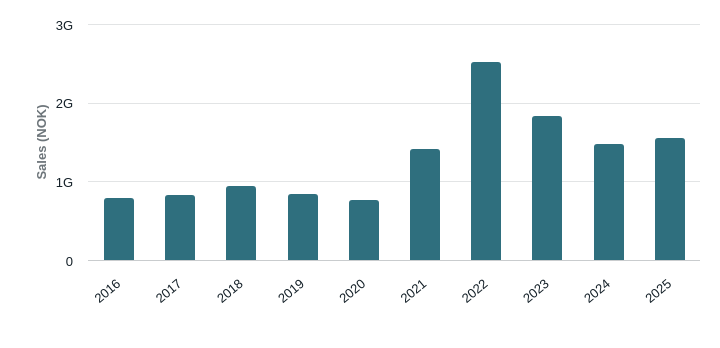
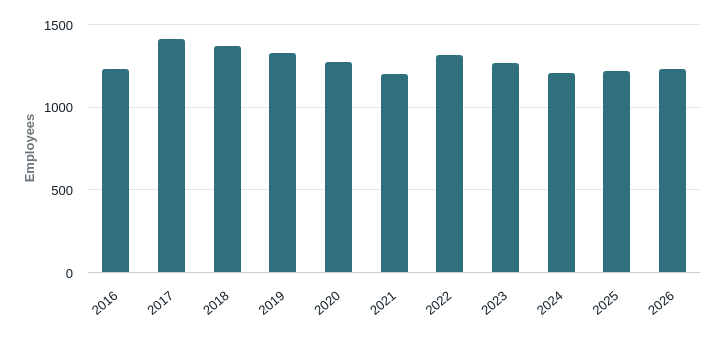
While municipal administration and public care facilities anchor local employment, corporate revenues are significantly influenced by energy production. Overall local business sales peaked in 2022 at NOK 2.52 billion before normalizing to approximately NOK 1.48 billion in 2024 and NOK 1.55 billion in 2025. Total workforce numbers have remained stable, fluctuating between 1,200 and 1,300 employees.
For potential founders and business decision-makers, Nissedal offers a stable, low-volatility environment concentrated around the primary commercial center of Treungen, with tailored opportunities in infrastructure support, hospitality, and specialized contracting services.
Economic Overview
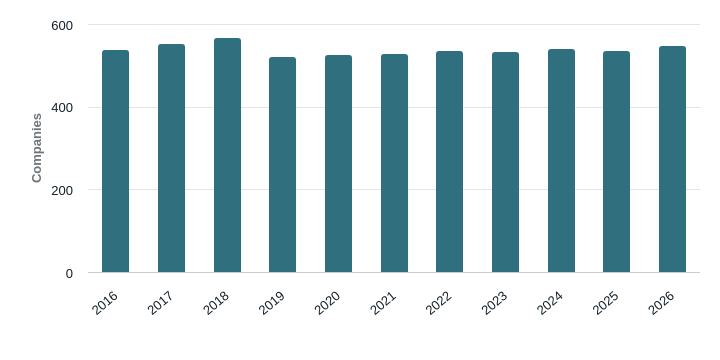
The macro-economic trajectory of Nissedal over recent years demonstrates a stable labor force coupled with fluctuating commercial turnover, primarily driven by energy market dynamics. Between 2016 and 2020, total corporate sales ranged between NOK 759.0M and NOK 934.7M before experiencing explosive growth in 2021 (+86.5%) and 2022 (+78.2%), driven by surges in energy generation values.
Employment figures have shown consistent resilience. After a high of 1,409 employees in 2017, workforce totals adjusted to around 1,200 in 2021 and 2024, with modest upward projections toward 1,230 employees by 2026.
| Year | Corporate Sales (NOK) | YoY Sales Change | Employees | YoY Employee Change |
|---|---|---|---|---|
| 2021 | 1,415.6M | +86.5% | 1,200 | -5.4% |
| 2022 | 2,522.4M | +78.2% | 1,312 | +9.3% |
| 2023 | 1,834.0M | -27.3% | 1,265 | -3.6% |
| 2024 | 1,476.9M | -19.5% | 1,202 | -5.0% |
| 2025 | 1,552.2M | +5.1% | 1,215 | +1.1% |
| 2026 | N/A | N/A | 1,230 | +1.2% |
The post-2022 normalization reflects stabilizing power prices, while underlying operational headcount across private and public sectors remains structurally solid.
Industry Structure & Legal Forms
The structural composition of Nissedal's economy splits distinctly between public infrastructure/welfare services and private commercial enterprises.
Primary Value Drivers
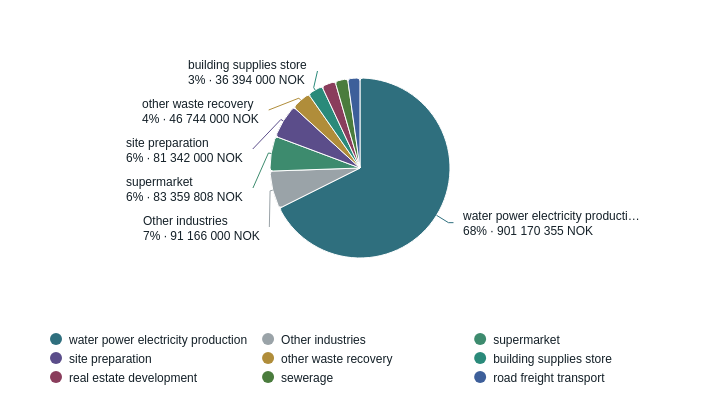
- Water Power Electricity Production: Though employing only 18 people across 2 registered companies, this industry is the primary revenue engine, generating NOK 915.0M in operating income with an operating margin of 54% and EBITDA margin of 59%.
- Supermarkets & Retail Trade: Generating NOK 86.3M across 3 companies and employing 56 people, food retail provides crucial everyday commerce.
- Construction & Infrastructure: Site preparation (5 companies, 45 employees, NOK 83.4M operating income) and sewerage services (1 company, 24 employees, NOK 30.6M operating income) form a key private industrial cluster.
- Building Supplies & Landscape Services: Supported by companies like Bygg Tre AS (25 employees) and Abt Anleggsgartner AS (20 employees, NOK 20.2M operating income).
Legal Forms Distribution
- AS (Limited Liability Companies): Represent 49 enterprises and 341 employees, accounting for NOK 1.28 billion in operating income and an overall EBITDA margin of 43%.
- KOMM & ORGL (Municipal & Public Entities): Account for the vast majority of local employment, with 1 municipal body (431 employees) and 23 associated municipal organizational units employing 421 workers.
- IKS (Inter-Municipal Companies): 1 enterprise employing 31 workers with NOK 55.6M in operating income.
- ENK (Sole Proprietorships): 10 active entities employing 27 workers.
Business Geography & Commercial Hubs
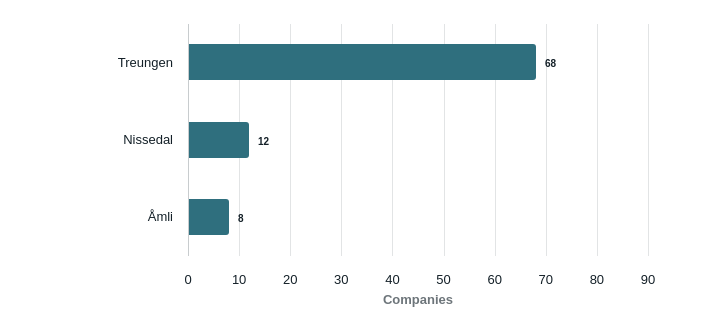
Economic activity within Nissedal municipality is highly concentrated in its main administrative and commercial center, Treungen, with secondary activity recorded across smaller local settlements.
| Location | Active Companies | Employees | Operating Income (NOK) | Operating Profit (NOK) |
|---|---|---|---|---|
| Treungen | 68 | 1,141 | 1,283.0M | 500.5M |
| Nissedal | 12 | 74 | 43.3M | 4.1M |
| Åmli (border area) | 8 | 67 | 44.5M | -215.0K |
Treungen serves as the central hub for trade, public administration, municipal care, and main commercial services, generating NOK 1.28 billion of the area's overall income. The broader Nissedal area supports localized operations including landscape services and specialized trade.
Largest Employers
Employment in Nissedal is led by the public sector, complemented by key private players in retail, waste management, construction, and hospitality.
Top Public Employers
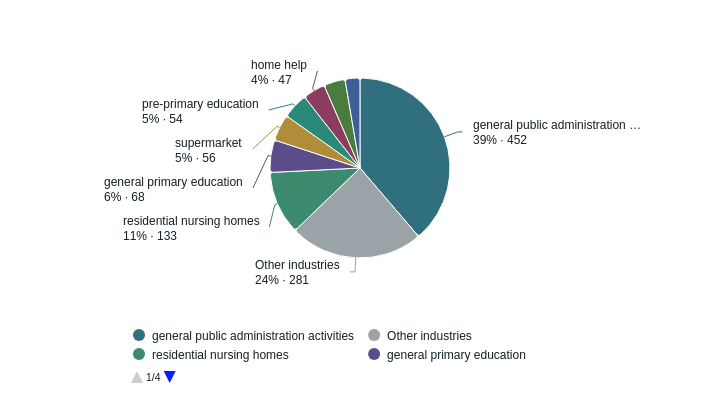
- Nissedal Kommune: 431 employees (General public administration activities)
- Nissedal Kommune Kaasa Bustader: 75 employees (Residential nursing homes)
- Nissedal Omsorgsenter: 58 employees (Residential nursing homes)
- Tveit Skule / Nissedal Ungdomsskule: 57 employees (General primary education)
- Nissedal Kommune Heimehjelp Og Heimesjukepleie: 47 employees (Home help)
- Treungen Barnehage: 25 employees (Pre-primary education)
Top Private & Inter-Municipal Employers
| 1. Jakob Tveit AS: 35 employees | Supermarket | Operating Income: NOK 41.8M |
|---|---|---|
| 2. Indre Agder Og Telemark Avfallsselskap IKS: 31 employees | Other waste recovery | Operating Income: NOK 55.6M |
| 3. Felle Maskin AS: 29 employees | Site preparation | |
| 4. Bygg Tre AS Avd Byggern Privat: 25 employees | Building supplies store | Operating Income: NOK 36.3M |
| 5. Kjell Asbjørn Solberg AS: 24 employees | Sewerage | Operating Income: NOK 30.6M |
| 6. Abt Anleggsgartner AS: 20 employees | Landscape service activities | Operating Income: NOK 20.2M |
| 7. Canvas Hotell AS: 16 employees | Hotel | Operating Income: NOK 10.1M |
Business Dynamism & Local Stability
Business dynamic metrics indicate a stable corporate environment with exceptionally low insolvency levels in Nissedal.
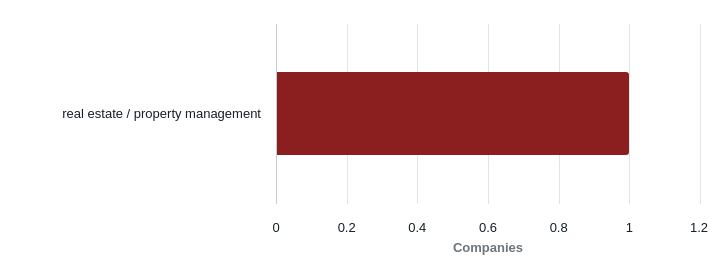
- Insolvency Rate: Bankruptcy statistics show only 1 recorded bankruptcy (Gautefall Hytteutleie AS, a property management firm with 0 reported revenue and employees).
- Revenue Stability: Core local industries such as grocery retail (Jakob Tveit AS, +3% growth), landscape service activities (Abt Anleggsgartner AS, +16% growth), and specialized hotels (Canvas Hotell AS, +13% growth) exhibit healthy top-line expansion.
- Market Adjustments: Certain cyclical segments like site preparation (-6% revenue growth) and waste recovery (-10% revenue growth) reflect wider economic recalibrations, yet overall corporate leverage remains manageable.
Opportunities for Founders
For new entrepreneurs and expanding businesses, Nissedal offers targeted opportunities rooted in local infrastructure, tourism support, and property services:
- Tourism & Hospitality Services: With assets like Canvas Hotell AS demonstrating double-digit revenue growth (+13%), there is room for boutique outdoor experiences, specialized catering, and seasonal tourist services.
- Craft & Construction Contracting: Strong activity in landscaping (Abt Anleggsgartner AS) and site preparation indicates ongoing demand for sub-contractors, equipment maintenance, and specialized skilled trades.
- Cabin & Property Maintenance: Given the presence of cabin areas around Gautefall and Treungen, property management, cleaning, and janitorial services present accessible entry points.
Founders evaluating specific commercial locations or exploring industry demands across Nissedal can utilize SmartGrunder to analyze local demographics, property zones, and registration requirements.
Conclusion
Nissedal municipality offers a grounded, resilient local market. Highly lucrative hydropower production generates significant regional wealth, while a massive municipal footprint ensures predictable employment and local purchasing power.
With commercial life focused squarely in Treungen, prospective founders benefit from a cohesive, manageable business community where targeted service, tourism, and trade ventures can establish strong local positioning.