Municipality
Oslo Municipal Economy: Economic Dynamics, Key Sectors, and Founder Opportunities
An in-depth data overview of Norway's capital economy for entrepreneurs, investors, and local leaders
Executive Summary
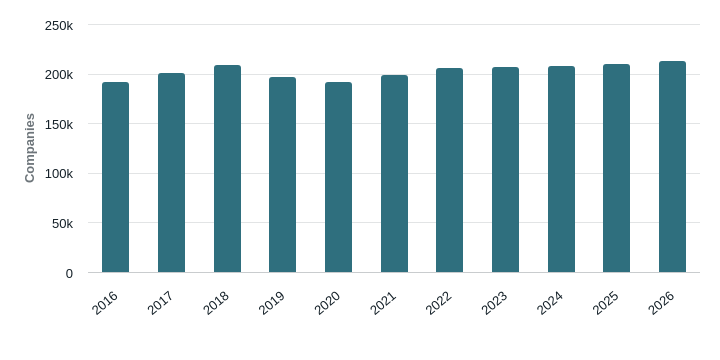
Oslo functions as the economic, financial, and administrative engine of Norway. As the nation's capital and largest economic center, the municipality hosts over 26,000 active enterprise registrations generating peak annual sales revenues exceeding NOK 1.85 trillion (2024) and employing over 650,000 workers. The city's economic structure is characterized by high-value professional services, a massive public and healthcare infrastructure, advanced information technology, and a dominant financial services sector.
For entrepreneurs and prospective business founders, Oslo offers an unparalleled talent pool, dense B2B market opportunities, and high purchasing power. However, it also demands capital efficiency due to competitive pressure and substantial operating overheads. Key findings from recent business registry data include:
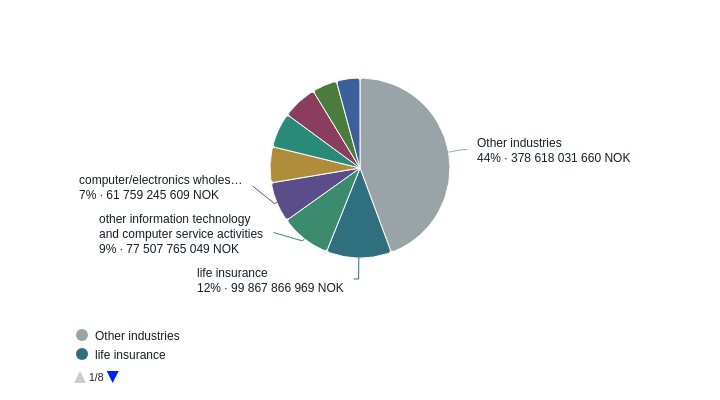
- Financial Leadership: Monetary intermediation generates over NOK 293.2 billion in operating income with an impressive 67% EBITDA margin.
- Tech Concentration: Over 1,800 firms operating in IT services and computer programming employ more than 33,000 technical specialists.
- Substantial Employer Base: Anchor employers include state institutions like Forsvaret (22,298 employees), healthcare heavyweights such as Oslo Universitetssykehus HF, financial institutions like DNB Bank ASA, and tech service giants like Sopra Steria AS.
- Active Business Dynamics: While corporate turnover remains strong, 542 bankruptcies have been recorded across retail, construction, and wholesale sectors, reflecting macroeconomic tightening.
Economic Overview & Historical Trajectory
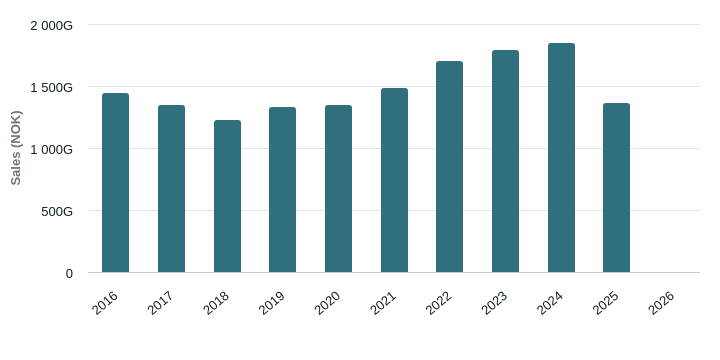
Oslo's economy experienced consistent expansion coming out of the early 2020s, accelerating through 2022–2024 before encountering broader macroeconomic stabilization. Between 2016 and 2024, annual enterprise sales revenues expanded from NOK 1.44 trillion to NOK 1.85 trillion, representing sustained long-term growth across commercial, financial, and service industries.
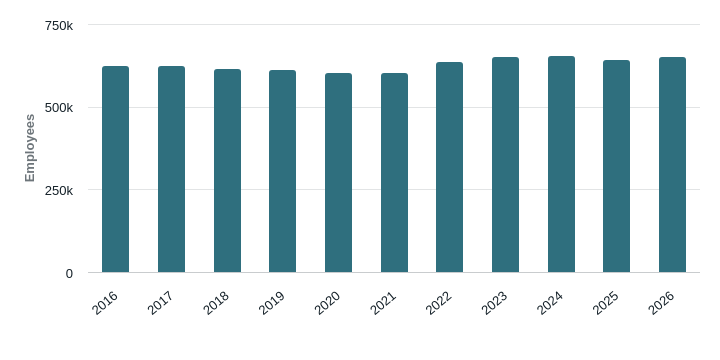
Total reported employment within the municipality followed a similar upward trend. After hovering around 600,000 to 623,000 employees between 2016 and 2021, employment surged by +5.8% in 2022 and reached a record high of 654,222 employees in 2024. Figures reported for 2025 (639,915 employees; NOK 1.36 trillion sales) and 2026 reflect partial annual filing schedules rather than structural contraction.
| Year | Total Sales Revenue (NOK) | Total Employees | YoY Sales Growth | YoY Employee Growth |
|---|---|---|---|---|
| 2016 | 1,442,180.2M | 623,109 | — | — |
| 2018 | 1,224,251.2M | 613,335 | -9.3% | -1.6% |
| 2020 | 1,346,864.5M | 601,138 | +1.2% | -1.6% |
| 2022 | 1,703,506.5M | 636,406 | +15.1% | +5.8% |
| 2023 | 1,789,597.1M | 651,376 | +5.1% | +2.4% |
| 2024 | 1,850,182.6M | 654,222 | +3.4% | +0.4% |
Note: Figures based on aggregated enterprise reporting for companies registered in Oslo.
Industry Structure & Enterprise Distribution
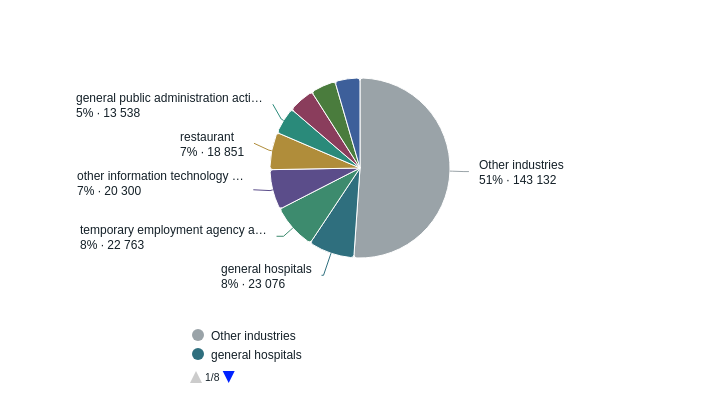
Oslo's industry profile is highly diversified, dominated by knowledge-intensive B2B services, public infrastructure, and heavy financial capital. The sector with the single largest financial weight is other monetary intermediation (banking and finance), generating NOK 293.3 billion in operating income across 61 companies, backed by total equity exceeding NOK 1.06 trillion.
Key enterprise sectors include:
- Information Technology: Tech consulting and computer programming account for 1,858 companies generating over NOK 112 billion in combined operating income and employing over 33,500 professionals.
- Healthcare & Social Work: General hospitals (30 companies, 23,076 employees) and home help services (35 companies, 12,066 employees) represent major public and private employment sectors.
- Technical & Business Consulting: Technical consulting (740 companies, 9,463 employees, NOK 29.5B revenue) and business management consultancy (1,285 companies, 6,831 employees, NOK 13.3B revenue) showcase Oslo's role as Norway's corporate advisory hub.
- Hospitality & Retail: Restaurants (917 companies, 18,851 employees) and supermarket chains (304 companies, 7,312 employees) maintain high local activity to serve the capital's population.
Corporate Legal Forms
Standard private limited liability companies (AS) dominate corporate structure, representing 21,793 enterprises and 413,476 employees, producing NOK 1.39 trillion in operating income. State-owned or municipal public entities (ORGL and SÆR) employ over 140,000 workers combined, underscoring the strong state presence in the capital city.
Business Geography & Spatial Activity
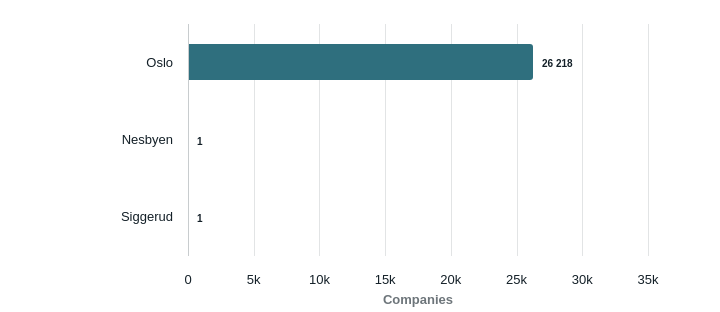
Business activity within Oslo municipality is overwhelmingly concentrated in urban Oslo itself, which encompasses the main central business district, major hospital campuses, research parks, and corporate hubs.
| Location / Sub-area | Active Companies | Reported Employees | Operating Income (NOK) | Sales Revenue (NOK) |
|---|---|---|---|---|
| Oslo | 26,218 | 637,417 | 2,222,449.4M | 1,570,414.1M |
| Nesbyen | 1 | 7 | 18.2M | 18.2M |
| Siggerud | 1 | 7 | 1.6M | 1.5M |
Note: Minor non-local listings like Nesbyen and Siggerud represent administrative branch filings tied to Oslo-registered org units.
Largest Employers & Anchor Institutions
Oslo hosts Norway's primary government directorates, national health trusts, major financial institutions, and corporate headquarters. These anchor organizations provide baseline employment stability and sustain high regional demand for sub-contracted services.
Key major employers active in the municipality include:
- Forsvaret (Norwegian Armed Forces - Akershus festning): 22,298 employees in national defense administration.
- Oslo Universitetssykehus HF (Ullevål Somatikk): 5,607 employees; NOK 7,448.9M operating income.
- Oslo Universitetssykehus HF (Rikshospitalet Somatikk): 4,559 employees; NOK 5,888.2M operating income.
- DNB Bank ASA (Bjørvika): 4,544 employees; NOK 48,547.3M operating income.
- Oslo Universitetssykehus HF (Forskningsveien Adm): 3,335 employees; NOK 4,859.5M operating income.
- Mio BPA AS: 3,100 employees in personal care services; NOK 467.0M operating income.
- Norsk Rikskringkasting AS (NRK Marienlyst): 2,855 employees in media and broadcasting; NOK 4,972.8M operating income.
- OsloMet Storbyuniversitetet (Pilestredet): 2,765 employees in higher education.
- Sopra Steria AS (Biskop Gunnerus' gate): 2,551 employees in IT consulting; NOK 4,564.8M operating income.
- Color Line Crew AS: 2,368 employees in maritime transport; NOK 1,212.4M operating income.
- Human Care AS: 2,281 employees; NOK 604.2M operating income.
- Adecco Norge AS: 1,936 employees in staffing services; NOK 460.3M operating income.
Business Dynamism & Market Insolvencies
Oslo maintains a dynamic startup and scale-up environment, supported by a high concentration of venture capital, incubators, and professional service suppliers. However, macro headwinds including interest rate pressures and shifting consumer spending have driven increased insolvency risks in capital-intensive and retail-dependent sectors.
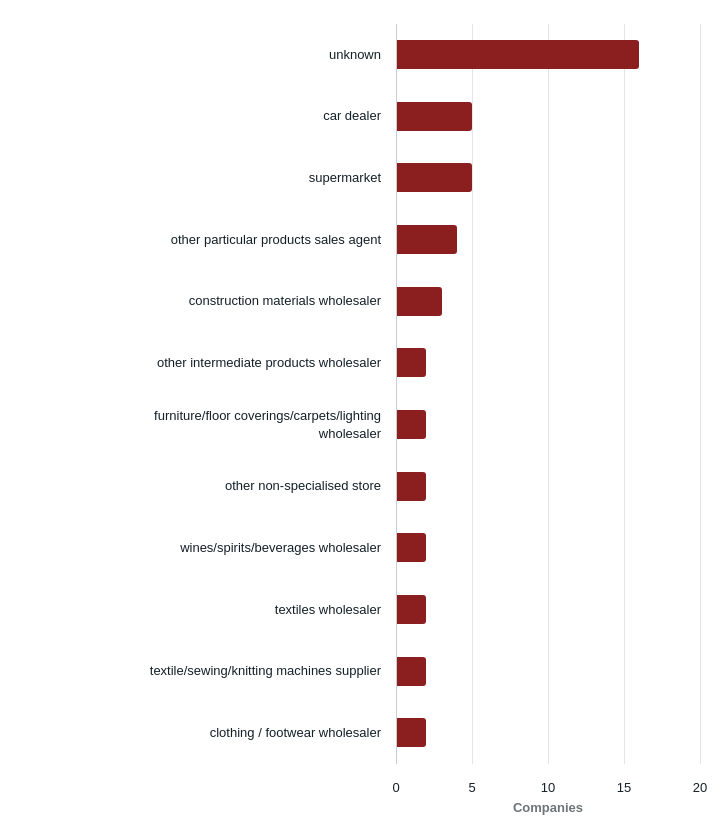
A total of 542 bankruptcies have been registered across the municipality in the recent reporting period. Key sectors impacted by insolvencies include:
- Retail & Supermarkets: 5 supermarket filings representing NOK 156.2M in sales revenue, alongside audio store chains and boutique specialty retail.
- Wholesale & Trade: Wholesale entities in construction materials (NOK 46.9M sales), non-specialised goods (NOK 48.3M sales), and clothing experienced distress.
- Automotive Trade: 5 car dealerships representing NOK 92.0M in sales revenue filed for bankruptcy.
- Tech & Innovation Startups: Individual venture-backed ventures such as 3d Innovation Nordic AS (NOK 48.3M sales, EBITDA NOK -22.2M) suffered liquidity shortfalls.
- Construction & Contracting: Commercial trade sub-contractors such as Aktiv Bygg Oslo AS (NOK 8.4M sales) and 4 Bygg AS (NOK 11.4M sales) faced insolvencies as construction volumes slowed.
Opportunities for Founders & Market Entry
Oslo's dense enterprise environment provides lucrative entry points for founders capable of offering high-value B2B software, specialized technical consultancy, or modern care services.
Primary Growth Clusters
- Enterprise Software & AI Integration: With over 20,000 IT specialists working at firms like Sopra Steria and hundreds of mid-sized consultancies, B2B software tooling that drives efficiency for professional services finds ready buyers.
- HealthTech & Eldercare Support: Given the massive scale of Oslo Universitetssykehus and home-care providers like Mio BPA and Human Care, specialized logistics, medical tech, and staffing platforms have immediate client access.
- Green Urban Logistics & Construction Tech: Ongoing urban restructuring creates continuous demand for clean-tech construction logistics and green infrastructure consulting.
- Niche Consumer & Hospitality Experiences: Despite retail insolvencies, Oslo's high average wage base supports premium food and hospitality models that leverage operational efficiency.
Founders evaluating physical commercial spaces, industry density, or local competitive clustering across Oslo's districts can utilize tools like SmartGrunder to analyze real-time address and sector datasets before making key location decisions.
Conclusion & Strategic Outlook
Oslo remains Norway's supreme commercial power hub, backed by NOK 1.85 trillion in corporate sales revenue and a workforce of over 650,000 professionals. The municipality's resilience rests on its strong dual pillars: a stable, massive public sector and high-margin private financial and technology ecosystems.
While macroeconomic pressures have increased bankruptcy rates among retail, construction, and venture-funded firms, the fundamental market drivers—unmatched talent density, high consumer liquidity, and close proximity to capital—make Oslo the premier destination for ambitious founders in the Nordic region.