Municipality
Economic Landscape and Business Opportunities in Røst Municipality
An in-depth statistical analysis of industry dynamics, major employers, and entrepreneurial potential in Lofoten's southernmost island community.
Executive Summary
Røst is a highly specialized island municipality in Nordland county, renowned for its intense concentration of seafood production, high per-employee revenue output, and strategic maritime location at the southern tip of Lofoten. With a total local corporate operating income of NOK 748.5M and a commercial workforce of nearly 500 employees, the island economy demonstrates remarkable industrial output relative to its population size.
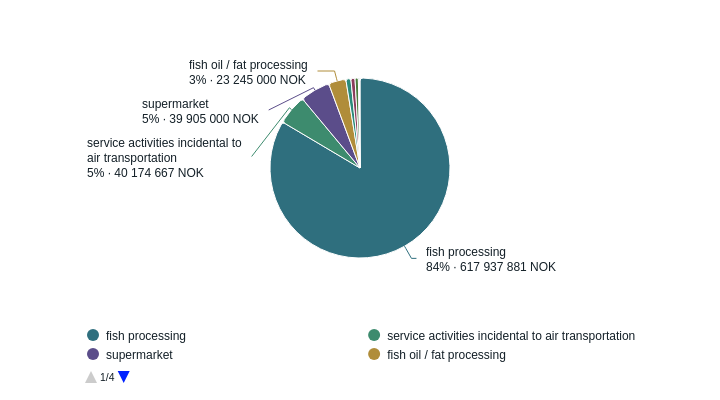
The commercial foundation of Røst relies heavily on marine industries, specifically fish processing, which accounts for NOK 623.4M (over 83%) of all corporate revenues in the municipality. Public administration, healthcare, and education form the primary employment anchor for public sector workers, while high-margin niche industries such as air transport services and specialized marine byproduct processing contribute significantly to overall value creation.
For prospective founders, investors, and local decision-makers, Røst offers a focused, high-productivity environment. Key opportunities lie in high-value seafood processing technologies, eco-tourism and specialized hospitality, local infrastructure services, and circular economy initiatives that build upon the municipality's strong raw material base.
Economic Overview
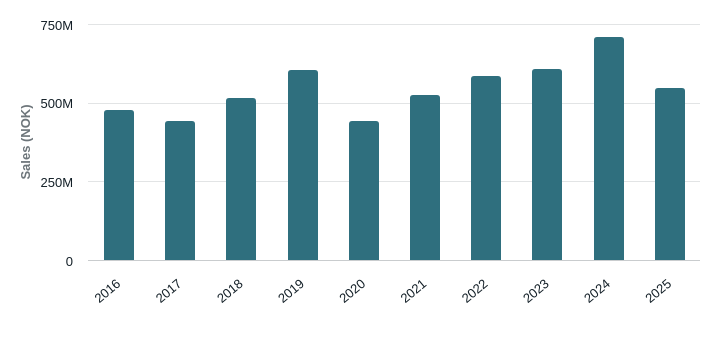
The commercial turnover of Røst fluctuates in rhythm with annual fish quotas, seasonal cod fisheries, and global seafood demand. Business turnover rose steadily from NOK 476.1M in 2016 to reach a peak of NOK 708.5M in 2024, demonstrating strong compound growth despite cyclical dips.
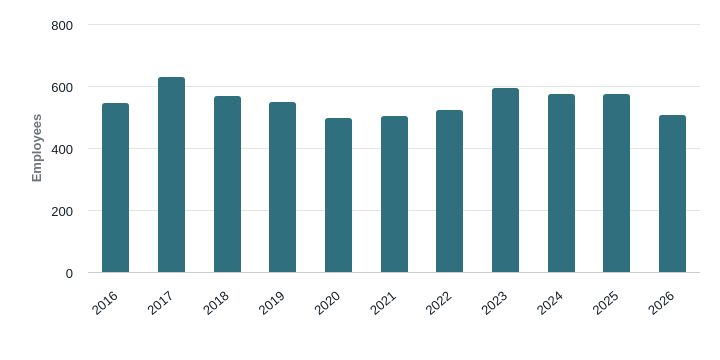
In 2025, commercial sales scaled back to NOK 546.9M (-22.8% year-over-year growth), mirroring broader quota adjustments in North Norwegian fisheries. Total employment across local entities has maintained relative stability over the past decade, peaking at 629 employees in 2017 and averaging between 500 and 590 workers in recent years.
| Year | Total Commercial Sales (NOK) | YoY Sales Change | Registered Employees | YoY Employee Change |
|---|---|---|---|---|
| 2020 | 441.8M | -26.6% | 496 | -9.8% |
| 2021 | 525.2M | +18.9% | 504 | +1.6% |
| 2022 | 585.3M | +11.4% | 521 | +3.4% |
| 2023 | 606.4M | +3.6% | 592 | +13.6% |
| 2024 | 708.5M | +16.8% | 573 | -3.2% |
| 2025 | 546.9M | -22.8% | 573 | +0.0% |
| 2026 | N/A | N/A | 506 | -11.7% |
Overall productivity in the private sector remains exceptionally high. Registered joint-stock companies (AS) in Røst generate an average operating income of NOK 3.9M per employee, driven largely by capital-intensive fish processing infrastructure and highly efficient export logistics.
Industry Structure
Røst's commercial structure is dominated by the seafood sector, supplemented by essential local trade, transport, and municipal services. A close analysis of industry statistics reveals the dominance of seafood alongside notable high-performing niches.
Key Industry Breakdown
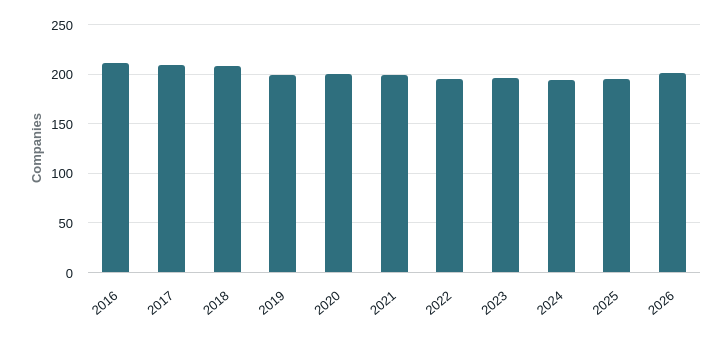
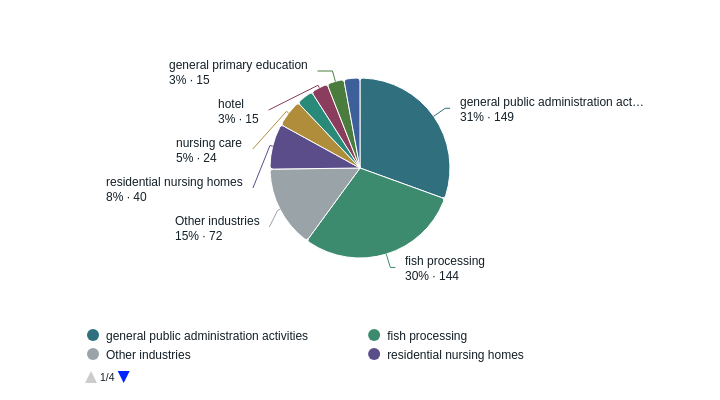
- Fish Processing: 7 registered companies employ 144 workers, producing NOK 623.4M in operating income and an EBITDA of NOK 47.7M (7% EBITDA margin). Operating income per employee in fish processing reaches an impressive NOK 4.6M.
- Fish Oil & Fat Processing: A specialized sector with 1 active company generating NOK 24.2M in revenue and 4 employees, yielding an excellent 27% EBITDA margin and NOK 6.1M in operating income per employee.
- Air Transportation Support: Avinor and related services generate NOK 40.5M across 14 employees, maintaining a strong 35% EBITDA margin and delivering critical air connectivity for both residents and seafood logistics.
- Retail & Trade: Lilleglea As operates the island's primary supermarket sector (15 employees, NOK 40.3M operating income, 6% EBITDA margin).
- Hospitality & Accommodation: Hotels and short-stay accommodation comprise 3 active companies employing 16 staff members. Short-stay cabin operations demonstrate high profitability with an EBITDA margin of 28%.
- Public & Social Services: Municipal administration (Røst Kommune), nursing care, primary education, and emergency services collectively anchor over 270 public sector positions.
Corporate Structure Mix
| Legal Form | Company Count | Total Employees | Total Operating Income | Total Operating Profit |
|---|---|---|---|---|
| AS (Joint-Stock Company) | 18 | 204 | NOK 747.1M | NOK 51.9M |
| ORGL (Organizational Units) | 16 | 142 | NOK 0.0M | NOK 0.0M |
| KOMM (Municipality) | 1 | 139 | NOK 0.0M | NOK 0.0M |
| FLI (Associations/Other) | 1 | 4 | NOK 1.4M | NOK 61.3K |
Business Geography
Røst municipality operates as a compact island archipelago where commercial and public infrastructure is concentrated in the main island hub surrounding the harbor and airport.
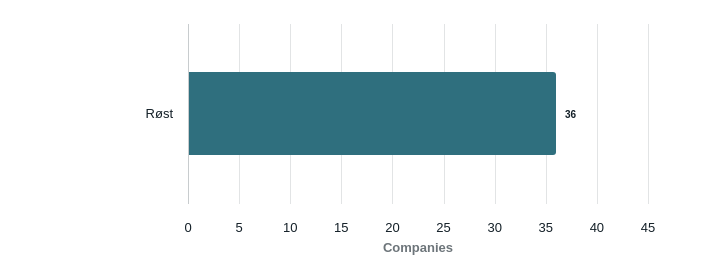
All 36 registered commercial entities in the local statistical reporting are situated within the primary Røst cluster. The spatial economy revolves around two main lifelines:
- The Maritime & Harbor Zone: Home to fish processing plants, quay facilities, and marine engineering services. Key industrial sites along Tyvsøyveien and Gleaveien house processing operations including Røst Sjømat As, John Greger As, and As Glea.
- Logistics & Infrastructure Corridors: Røst Airport (Røst Lufthavn) provides essential daily aviation connections operated by Avinor, ensuring rapid transit for passenger traffic, technical consultants, and high-value cargo.
Largest Employers
Employment in Røst is balanced between the municipal public sector and prominent seafood processing firms. Below are the key employers active within the municipality based on reported data:
| Employer Name | Sector | Employee Count | Operating Income (NOK) | Revenue Growth |
|---|---|---|---|---|
| Røst Kommune | General Public Administration | 139 | N/A | 0% |
| Glea Salmon As | Fish Processing | 40 | N/A (Founded 2024) | 0% |
| Røst Helsesenter Avd Sykehjem | Residential Nursing Home | 40 | N/A | 0% |
| John Greger As | Fish Processing | 37 | 143.4M | -12% |
| Røst Kommune Hjemmebaserte Tjenester | Home-Based Care Services | 24 | N/A | 0% |
| Røst Sjømat As | Fish Processing | 23 | 168.5M | +2% |
| As Glea | Fish Processing | 20 | 88.6M | +14% |
| Lilleglea As | Supermarket | 15 | 40.3M | +4% |
| Røst Barne Og Ungdomsskole | Primary Education | 15 | N/A | 0% |
| A Johansen As | Fish Processing | 12 | 52.0M | +52% |
| Røst Bryggehotell As | Hotel / Accommodation | 11 | 6.3M | +17% |
| Avinor As Avd Røst Lufthavn | Air Transport Support | 9 | 37.4M | +14% |
| Røst Fiskeindustri As | Fish Processing | 8 | 22.9M | +30% |
Private sector firms demonstrate robust financial scale. For instance, Røst Sjømat As recorded NOK 168.5M in revenue and NOK 14.9M in operating profit, while fast-growing processors such as A Johansen As surged by 52% in annual revenue.
Business Dynamism
Røst exhibits a business environment characterized by long-term structural stability alongside focused corporate renewal. Establishments range from long-standing institutions like As Glea (founded in 1936) to recent corporate launches such as Glea Salmon As (incorporated in May 2024, already registering 40 employees).
Corporate financial health across private businesses is anchored by substantial equity reserves. The joint-stock companies in Røst maintain a combined total equity of NOK 328.6M against total debt of NOK 308.9M, representing a healthy balance sheet profile for an island economy heavily dependent on capital equipment.
No formal bankruptcies were recorded in the provided statistical monitoring window, highlighting the resilience of local processors and service providers through cyclical shifts in fish catches and market pricing.
Opportunities for Founders
Røst presents targeted business opportunities for entrepreneurs who understand rural island mechanics, marine supply chains, and specialized tourism. Key potential areas include:
- Marine Side-Stream & Byproduct Processing: With over 600 million NOK generated in raw fish processing, opportunities exist in secondary processing, bio-marine extraction, and specialized fish meal/oil production (demonstrated by existing 27% EBITDA margins in local oil processing).
- Eco-Tourism & High-End Tourism Services: The unique bird cliffs and remote island aesthetic of Røst create strong demand for experiential travel. Tourism accommodation currently achieves high operating profitability, particularly short-stay lodging (28% EBITDA margin).
- Craft Trade & Technical Services: High infrastructure maintenance demands for processing plants, utilities (fluids utility construction shows a 26% EBITDA margin), and maritime vessels require technical contractors and specialized engineering.
- Green Energy & Waste Management: Small-scale renewable energy systems, electrification of harbor facilities, and sustainable logistics solutions.
Founders exploring potential incorporation, real estate, or industry dynamics in Røst can leverage SmartGrunder to analyze local market statistics, evaluate industry demographics, and map out strategic business locations.
Conclusion
Røst represents a robust, highly specialized coastal economy in Nordland. Driven by a powerhouse seafood sector generating nearly NOK 750M in revenue, the island combines exceptional employee productivity with steady municipal employment.
For entrepreneurs, investors, and local planning authorities, Røst offers a stable foundation backed by strong equity, modern transportation links via airport and ferry, and untapped potential in marine innovation, specialized trades, and sustainable island tourism.