Municipality
Economic Landscape and Business Opportunities in Tinn Municipality
An in-depth statistical analysis for entrepreneurs, investors, and local decision-makers
Executive Summary
Tinn municipality, located in the county of Vestfold og Telemark, presents a distinct economic profile defined by high-value industrial heritage, renewable energy production, and a thriving hospitality and tourism sector. Centered around the historic industrial town of Rjukan, Tinn blends heavy industry with modern commercial activities and growing land-based aquaculture and tourism ventures.
Key takeaways from the local commercial dataset include:
- High Capital & Revenue Concentration: Tinn registered a peak revenue exceeding NOK 6.8 billion in 2022, heavily driven by renewable energy production through Hydro Energi AS and industrial gas manufacturing via Nippon Gases Norge AS.
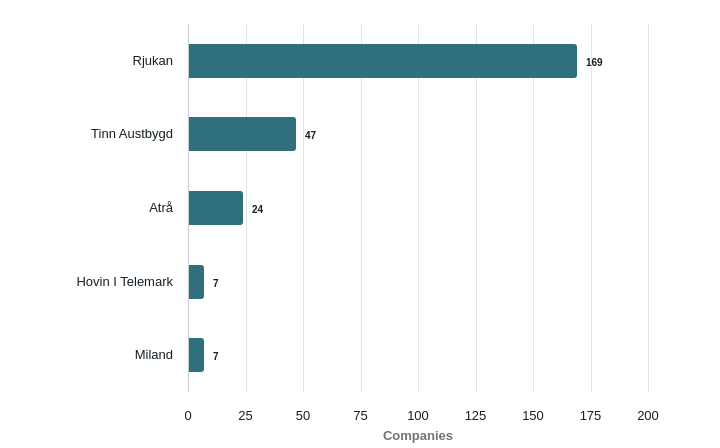
- Geographic Focus: Rjukan represents the core commercial engine, housing 169 registered businesses generating over NOK 5.28 billion in operating income and employing nearly 2,400 people.
- Diverse Enterprise Base: Heavy industry is complemented by specialized civil engineering and site preparation (e.g., Håkanes Maskin A/S, Brødrene Alseth A/S) and year-round alpine and mountain tourism centered around Gaustablikk.
- Entrepreneurial Outlook: While total employment figures have seen consolidation, high revenue per employee in energy and tech sectors highlights strong productivity and capital availability for emerging businesses.
Economic Overview
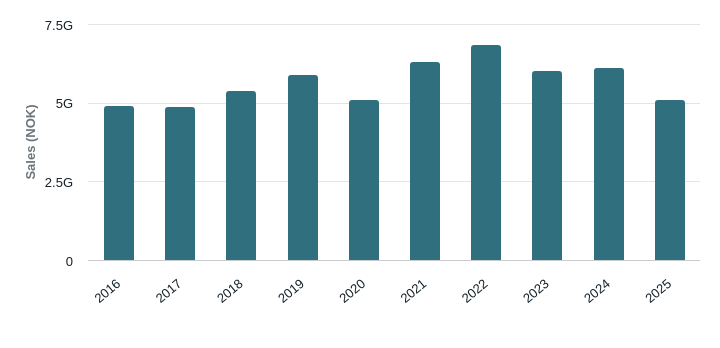
Tinn's economic trajectories over the past decade reveal significant fluctuations driven by global energy prices, industrial cycles, and tourism shifts. Total corporate sales expanded from NOK 4.90 billion in 2016 to a high of NOK 6.82 billion in 2022, before moderating to NOK 6.02 billion in 2023 and NOK 6.10 billion in 2024.
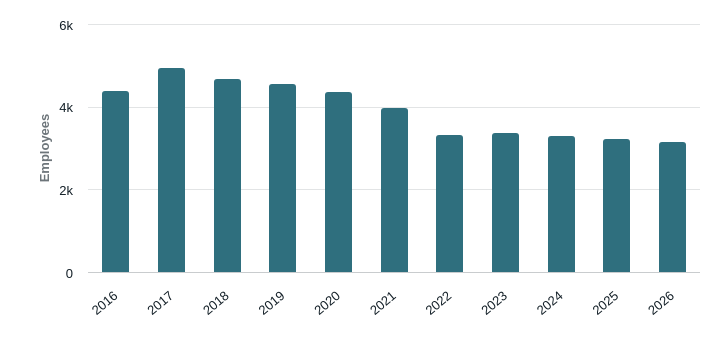
Overall workforce figures show a trend toward higher automation and efficiency. Total workforce numbers contracted from 4,944 employees in 2017 to approximately 3,279 in 2024, with projections stabilizing around 3,150 to 3,200 employees.
| Year | Corporate Sales (NOK) | Sales YoY Change | Total Workforce | Workforce YoY Change |
|---|---|---|---|---|
| 2016 | 4,902.8M | — | 4,382 | — |
| 2017 | 4,856.1M | -1.0% | 4,944 | +12.8% |
| 2018 | 5,355.4M | +10.3% | 4,663 | -5.7% |
| 2019 | 5,877.7M | +9.8% | 4,542 | -2.6% |
| 2020 | 5,094.8M | -13.3% | 4,361 | -4.0% |
| 2021 | 6,276.8M | +23.2% | 3,972 | -8.9% |
| 2022 | 6,823.7M | +8.7% | 3,316 | -16.5% |
| 2023 | 6,015.3M | -11.8% | 3,360 | +1.3% |
| 2024 | 6,101.8M | +1.4% | 3,279 | -2.4% |
| 2025 | 5,077.2M | -16.8% | 3,218 | -1.9% |
Note: 2025 and 2026 data reflect current accounting submissions and statistical projections.
Industry Structure
The industry mix in Tinn is characterized by extreme productivity in renewable energy alongside labor-intensive sectors in contracting, healthcare, and tourism services.
Primary Value Drivers
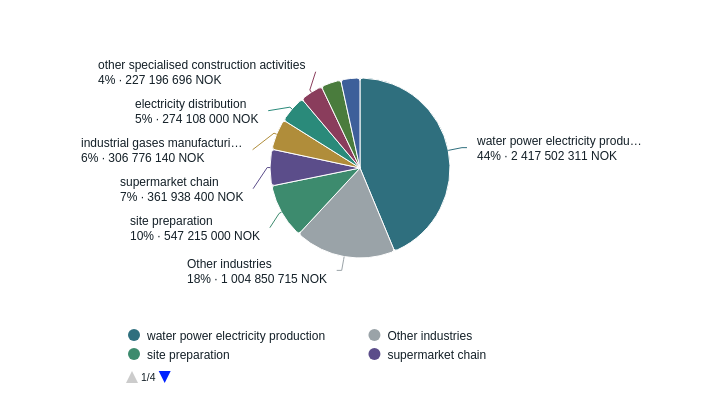
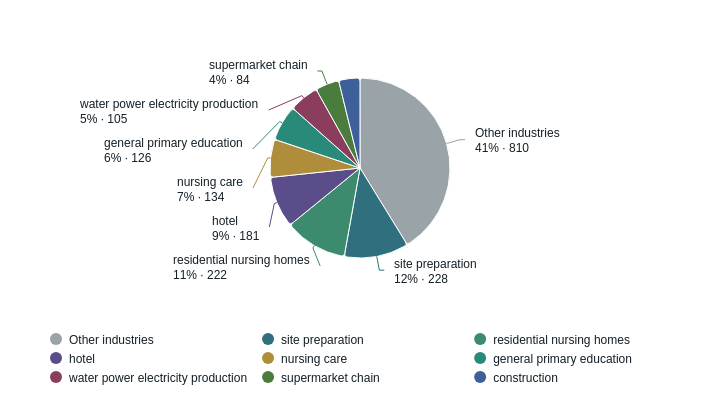
- Water Power Electricity Production: Generating NOK 2.42 billion in operating income across 3 companies with 105 employees, operating profit margins reach 30%, yielding an extraordinary operating income per employee of NOK 26.5 million.
- Site Preparation & Construction: Led by 13 specialized site preparation firms employing 228 workers with revenues of NOK 555.7 million, alongside 10 general construction firms employing 75 workers.
- Industrial Manufacturing & Maintenance: Industrial gas production (Nippon Gases Norge AS) generates NOK 308.1 million with a 31% EBITDA margin, supported by industrial machinery repair (Bilfinger Norway AS) and fluid power manufacturing.
- Tourism & Accommodation: Hotels (181 employees across 5 companies, NOK 215.9 million operating income) and camping sites form the backbone of local hospitality.
| Industry Sector | Companies | Employees | Operating Income (NOK) | EBITDA Margin | Operating Margin |
|---|---|---|---|---|---|
| Water Power Electricity | 3 | 105 | 2,417.5M | 30% | 30% |
| Site Preparation | 13 | 228 | 555.7M | 6% | 2% |
| Supermarkets | 4 | 84 | 378.7M | 4% | 2% |
| Industrial Gases Manufacturing | 1 | 54 | 308.1M | 31% | 23% |
| Electricity Distribution | 2 | 33 | 277.0M | 20% | 13% |
| Hotels & Lodging | 5 | 181 | 215.9M | -10% | -20% |
| Construction | 10 | 75 | 189.6M | 10% | 9% |
| Machinery Repairing | 3 | 53 | 94.1M | 8% | 5% |
Legal Forms and Structure
Private limited companies (Aksjeselskap / AS) generate the vast majority of economic output in Tinn, accounting for 176 companies, 1,874 private employees, and NOK 6.02 billion in operating income. Municipal organizations (KOMM) employ 940 people across 44 entities in primary education, elderly care, and civic services.
Business Geography
Commercial activity in Tinn is concentrated along the Vestfjorddalen valley, with Rjukan acting as the primary urban center, complemented by surrounding agricultural and industrial hubs.
| Urban Center / Area | Companies | Workforce | Operating Income (NOK) | Sales Revenue (NOK) | Key Industry Focus |
|---|---|---|---|---|---|
| Rjukan | 169 | 2,388 | 5,288.6M | 5,102.7M | Hydro Power, Manufacturing, Tourism, Civic Services |
| Miland | 7 | 138 | 364.2M | 362.0M | Civil Engineering, Heavy Equipment |
| Tinn Austbygd | 47 | 388 | 257.6M | 245.3M | Healthcare, Local Trade, Small Manufacturing |
| Atrå | 24 | 217 | 255.5M | 251.4M | Contracting, Education, Agriculture Services |
| Hovin I Telemark | 7 | 27 | 10.8M | 10.5M | Local Contracting & Services |
- Rjukan: Generates over 90% of all commercial operating income in the municipality. It hosts Hydroparken, central administrative functions, cultural institutions, and major processing facilities.
- Miland: Exhibits high revenue density per company (NOK 52.0M average), driven by major contractors like Håkanes Maskin A/S.
- Tinn Austbygd & Atrå: Serve as key residential and service clusters hosting regional schools, health centers (Tinn Helsetun), and specialized local contractors like Brødrene Alseth A/S.
Largest Employers
Tinn boasts a mix of commercial champions, industrial giants, and essential public sector organizations.
Key Commercial Champions
- Gaustablikk Høyfjellshotell (138 employees): The largest tourism enterprise in Tinn, producing NOK 207.1M in operating income. The hotel is currently undergoing capital investments to expand year-round mountain resort services.
- Håkanes Maskin A/S (121 employees): Based in Miland, this major site preparation and earthmoving contractor generates NOK 318.5M in operating income.
- Hydro Energi AS Telemark (74 employees): The financial power house of the municipality, producing NOK 2.42 billion in revenue with an EBITDA of NOK 745.3M.
- Hima Seafood Management AS Avd Rjukan (61 employees): A land-based aquaculture facility situated in Hydroparken, representing Tinn's emerging green tech bio-economy sector.
- Nippon Gases Norge AS Avd Rjukan (54 employees): A high-margin industrial gas producer with NOK 308.1M in operating income and NOK 97.9M EBITDA.
- Norsk Industriarbeidermuseum (51 employees): Managing Vemork and local UNESCO heritage attractions, registering NOK 74.4M in operating income.
- Brødrene Alseth A/S (49 employees): A contractor in Atrå generating NOK 159.4M in revenue with strong profitability (NOK 13.2M operating profit).
- Bilfinger Norway AS Avd Rjukan (49 employees): Providing technical maintenance and industrial engineering support inside Hydroparken.
Public Sector Employers
Public institutions play a critical role in local stability. Key organizations include Rjukan Alders Og Sykehjem (110 employees), Tinn Helsetun (79 employees), Tinn Kommune Hjemmetjenesten (Districts 1 & 2 combining 134 employees), Brannvesenet i Tinn (47 employees), and primary schools in Rjukan and Atrå (77 combined employees).
Business Dynamism and Risk Profile
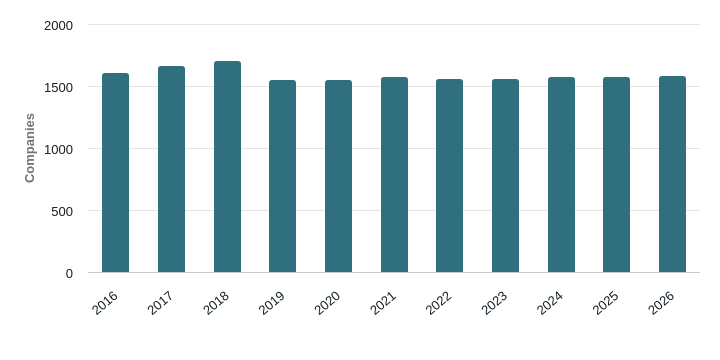
Tinn exhibits a resilient, low-volatility enterprise environment. Insolvency figures remain low relative to the overall registered business count of nearly 1,600 entities.
Recent Insolvency Analysis
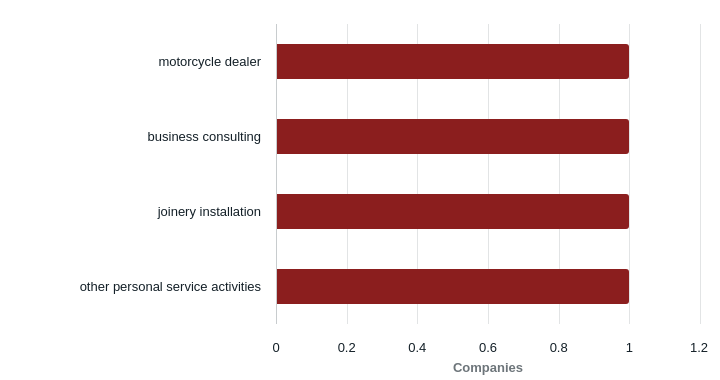
Recent bankruptcies reported in the municipality involved four small enterprise entities with minimal combined payroll impact:
- Bedriftsvakta AS (Rjukan): Business consulting (Sales: NOK 2.1M, EBITDA: NOK 302.0K, 0 reported employees).
- Pote Hundesalong AS (Rjukan): Pet care services (Sales: NOK 273.0K, EBITDA: NOK 91.0K, 0 reported employees).
- Powersport AS (Atrå): Motorcycle and powersport retail (Sales: NOK 0, 0 reported employees).
- Mestercamp AS (Rjukan): Joinery and camping installation (Sales: NOK 0, 0 reported employees).
Overall, insolvency rates in Tinn are low, pointing to a stable commercial environment. However, hospitality and retail segments face ongoing margin pressures due to seasonality and rising labor costs.
Opportunities for Founders
For prospective entrepreneurs and expanding companies, Tinn offers competitive industrial infrastructure, reliable green power, and a active tourism ecosystem.
Promising Sectors for New Ventures
- Green Industrial Suppliers & B2B Services: With facilities like Hima Seafood and Hydro Energi active in Rjukan, sub-contractors in electrical engineering, automation, equipment maintenance, and logistics have immediate client access.
- Year-Round Tourism & Outdoor Leisure: Building on Gaustablikk's mountain infrastructure, ventures in specialized activity guiding, equipment rental, eco-lodging, and food services can capture high-spending visitors.
- Craft Trades & Sustainable Construction: High construction activity and resort development create strong demand for carpentry, electrical installation, plumbing, and energy retrofitting.
- Digital & Professional Services: Low facility costs and high-quality digital networks make Rjukan attractive for tech consultants, remote specialists, and niche marketing agencies.
Founders looking to evaluate business locations, property options, and sector demand in Tinn can utilize tools like SmartGrunder to explore commercial addresses and industry statistics across the municipality.
Conclusion and Strategic Outlook
Tinn municipality combines industrial legacy with new growth sectors in green manufacturing and modern tourism. While workforce totals have consolidated over recent years, capital productivity remains exceptionally high, backed by renewable hydropower and specialized contracting champions.
For municipal decision-makers and incoming business founders, the priority lies in fostering housing availability, expanding skilled workforce attraction, and supporting industrial innovation in places like Hydroparken. With its robust infrastructure and distinct market identity, Tinn provides a highly capable platform for sustainable business growth.