Municipality
Economic Overview and Business Opportunities in Vega Municipality
An analytical study of industry dynamics, commercial hubs, and market potential in Vega, Nordland
Executive Summary
Vega municipality, located in Nordland county, presents a distinct island economy anchored by a strong public service sector, active marine and agricultural industries, and a growing heritage-based tourism profile. Renowned for its UNESCO World Heritage status, Vega balances essential municipal infrastructure with targeted private enterprise across retail, fish processing, aquaculture, and nature-based hospitality.
The commercial landscape shows high profitability in specialized activity operators, car repair, and island-based commercial ventures. While total registered sales and employee counts reflect broader macroeconomic fluctuations and restructuring across regional labor pools, private limited companies (AS) generate over NOK 150.9M in operating income. For prospective founders and local decision-makers, Vega offers targeted opportunities in sustainable tourism, value-added seafood processing, niche local services, and agricultural support.
Economic Overview
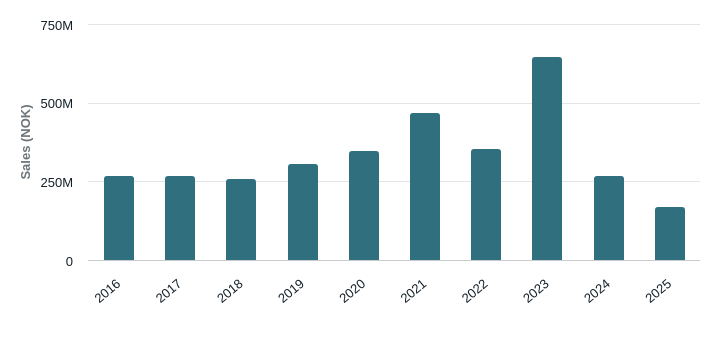
Vega's macroeconomic indicators reflect an economy influenced by seasonal industry cycles, local public administration, and fluctuating corporate revenues in primary production and seafood handling. Total corporate sales peaked in 2023 at NOK 644.1M, following strong gains in 2020–2021, before realigning to NOK 267.8M in 2024 and NOK 168.6M in 2025.
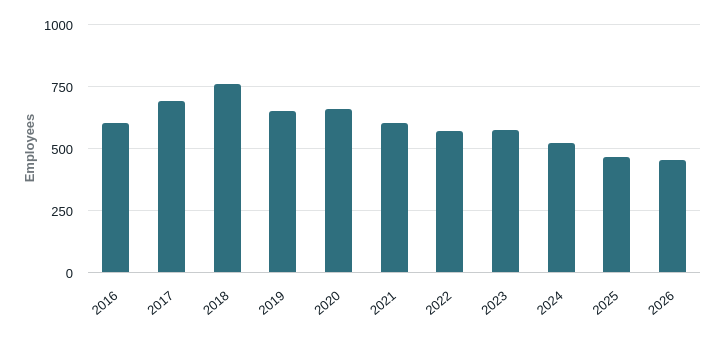
Workforce metrics have adjusted over the past decade, moving from a high of 758 registered employees in 2018 to 519 in 2024 and 452 in 2026. This trend highlights both demographic dynamics common to island municipalities in Northern Norway and productivity gains within specific commercial operations.
| Year | Corporate Sales (NOK) | YoY Sales Change | Registered Employees | YoY Employee Change |
|---|---|---|---|---|
| 2016 | 267.0M | - | 600 | - |
| 2017 | 267.1M | +0.0% | 688 | +14.7% |
| 2018 | 255.9M | -4.2% | 758 | +10.2% |
| 2019 | 303.6M | +18.7% | 650 | -14.2% |
| 2020 | 347.3M | +14.4% | 656 | +0.9% |
| 2021 | 467.7M | +34.7% | 601 | -8.4% |
| 2022 | 352.1M | -24.7% | 567 | -5.7% |
| 2023 | 644.1M | +82.9% | 571 | +0.7% |
| 2024 | 267.8M | -58.4% | 519 | -9.1% |
| 2025 | 168.6M | -37.1% | 464 | -10.6% |
| 2026 | - | - | 452 | -2.6% |
Industry Structure
The organizational landscape of Vega is dominated by two primary pillars: public municipal operations (KOMM) providing essential health, welfare, and educational infrastructure, and private limited companies (AS) driving commercial trade and primary processing.
Legal Form Mix
- Kommune (KOMM): 8 organizations employing 220 staff members across care services, administration, and schooling.
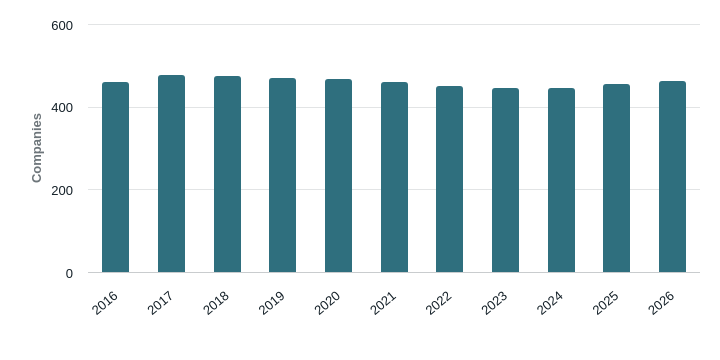
- Aksjeselskap (AS): 21 companies with 210 employees, generating NOK 150.9M in operating income, NOK 11.2M in EBITDA, and an overall operating profit margin of 4%.
- Samvirke (SA): 2 cooperative units with 32 employees, generating NOK 6.3M in operating income, mainly supporting agriculture and retail distribution.
- General Partnership (DA) & Sole Proprietorship (ENK): 6 registered entities providing specialized agricultural, livestock, and local services.
Key Sector Highlights
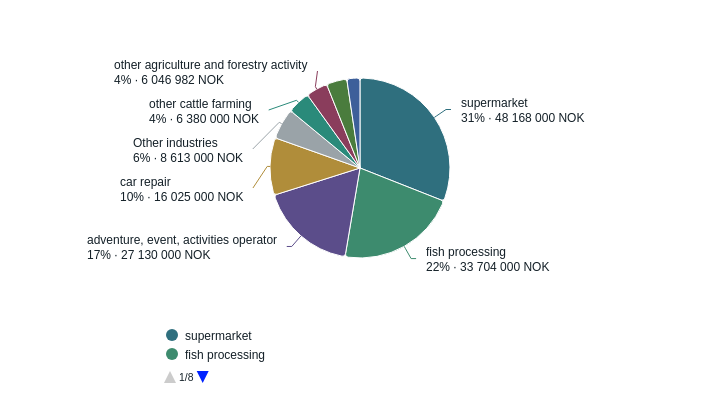
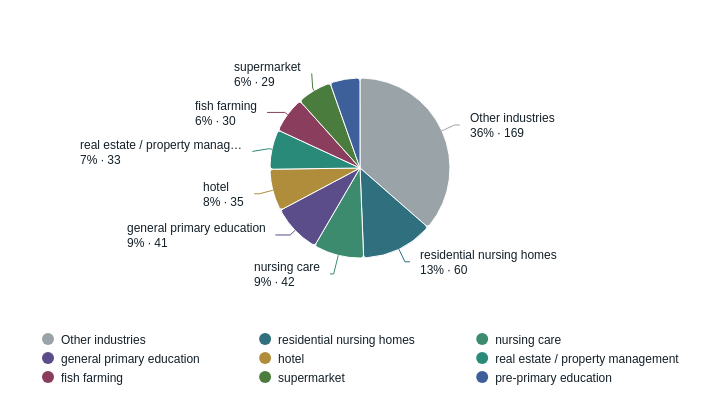
- Seafood & Aquaculture: Fish processing (led by Vega Delikatesser AS with NOK 33.7M operating income) and fish farming (Vega Sjøfarm Drift AS) form the industrial core of private employment.
- Retail Trade: Supermarkets remain vital revenue drivers, generating NOK 48.5M operating income with 29 employees (Spar Vega).
- Tourism & Experience Economy: Adventure and activity operators demonstrate high financial yield, generating NOK 27.2M operating income with an EBITDA margin of 16% (NOK 542.3K EBITDA per employee). Cultural attraction operators like Vega Verdensarvsenter AS (NOK 6.8M operating income) and local lodging establishments support the island's World Heritage visitor flow.
- Technical & Local Services: Car repair services generate NOK 16.1M in operating income with a 16% EBITDA margin, while site preparation and agricultural cooperatives maintain crucial local operational support.
Business Geography
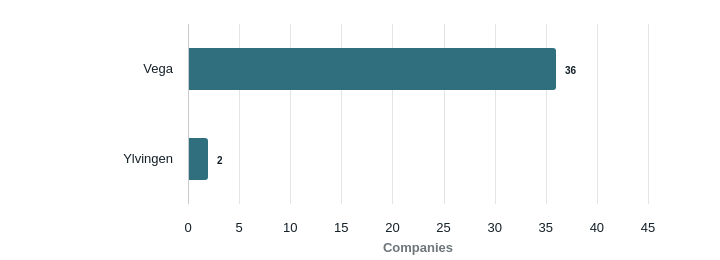
Commercial activity across Vega municipality is concentrated in two primary geographical areas: the main island hub of Vega (including Gladstad, Åsveien, and Igerøy) and the neighboring island of Ylvingen.
| Location | Active Companies | Employees | Operating Income (NOK) | Sales Revenue (NOK) | Operating Margin | EBITDA Margin |
|---|---|---|---|---|---|---|
| Vega | 36 | 462 | 137.8M | 128.0M | 3% | 6% |
| Ylvingen | 2 | 9 | 27.7M | 27.5M | 8% | 16% |
Geographic Characteristics
- Vega (Main Island): Functions as the administrative, educational, and primary commercial center. It hosts Gladstad (municipal offices, nursing care, property management), Igerøy (seafood processing), and key local retail outlets. Total gross profit for companies headquartered on Vega reaches NOK 102.2M.
- Ylvingen: Displays exceptional capital and workforce efficiency, registering NOK 27.7M in operating income across 2 operating entities. Driven by specialized adventure tourism and marine operations, Ylvingen achieves an operating margin of 8% and operating income per employee of NOK 3.1M.
Largest Employers
Employment in Vega is distributed between public welfare administration and private commercial companies focused on hospitality, retail, food processing, and marine aquaculture.
Major Public Employers
- Vega Syke Og Aldershjem (Gladstad) — 60 employees (Residential nursing care)
- Vega Kommune Hjemmebaserte Tjenester (Gladstad) — 42 employees (Home-based nursing care)
- Vega Barne Og Ungdomsskole (Åsveien) — 41 employees (Primary and secondary education)
- Vega Barnehage (Åsveien) — 25 employees (Pre-primary education)
- Vega Kommune Sentraladministrasjon (Gladstad) — 22 employees (Public administration)
- Vega Kommune Teknisk Avdeling (Gladstad) — 16 employees (Technical municipal services)
Major Private & Commercial Employers
- Vega Havhotell AS (Viksåsveien) — 35 employees (Hotel and hospitality)
- Vega Sjøfarm Drift AS — 30 employees (Fish farming and aquaculture)
- Spar Vega (Rørøyveien) — 29 employees; Operating Income: NOK 48.5M (Supermarket retail)
- Helgeland Landbrukstjenester SA Avd Vega — 23 employees; Operating Income: NOK 6.3M (Agricultural services co-op)
- Vega Delikatesser AS (Igerøy) — 21 employees; Operating Income: NOK 33.7M (Fish processing)
- Vega Media AS (Gladstad) — 21 employees; Operating Income: NOK 4.1M (Real estate and property management)
- Ravnfloget Base Camp Vega AS (Sundsvollveien) — 13 employees (Camping and outdoor tourism)
- Vega Verdensarvsenter AS (Ærfuglveien) — 11 employees; Operating Income: NOK 6.8M (Visitor center and heritage operations)
Business Dynamism
Vega's commercial business community displays notable stability within its established core enterprises. There are no active corporate bankruptcies recorded in the context data set, pointing to conservative financial management and structural resilience among active local firms.
Private limited companies (AS) maintain a healthy total equity position of NOK 33.4M against total debt of NOK 49.1M, yielding a stable average leverage balance. Profitability varies significantly by industry: specialized outdoor activity operators and automotive repair services achieve robust EBITDA margins (16%), whereas traditional retail and visitor centers operate on slimmer margins (2% to 3%), reflecting high fixed overhead costs.
While corporate headcount figures have streamlined in recent years, revenue performance in specialized niches—such as 29% growth on Ylvingen and 9% growth in retail and fish processing—demonstrates that well-positioned island businesses continue to capture value.
Opportunities for Founders
Entrepreneurial opportunities in Vega align closely with its natural assets, UNESCO heritage status, and localized island demand. Key growth vectors for founders include:
- Sustainable Tourism & Activity Operations: Building on the high profitability of activity operators (16% EBITDA margin), opportunities exist for niche outdoor experiences, guided eco-tours, seasonal lodging, and premium food concepts catering to World Heritage visitors.
- Seafood & Value-Added Food Processing: Given Vega's strong primary production base (evidenced by Vega Delikatesser AS and local cattle farming), entrepreneurs can develop artisan food brands, specialized marine processing, or farm-to-table culinary ventures.
- Technical, Business & Maintenance Services: With ongoing demand for property management, site preparation, and vehicle maintenance, small-scale founders can establish technical service firms serving both resident households and holiday homeowners.
- Island Logistics & Green Solutions: Specialized transportation, localized supply chain services, and renewable energy installation represent potential growth niches as island communities focus on sustainability.
Founders interested in establishing a business can use SmartGrunder to explore address distributions, organizational structures, and industry niches across Vega municipality.
Conclusion
Vega municipality presents a resilient island economy defined by stable public sector institutions, established aquaculture and seafood processing, and strong potential in high-value tourism. While overall employee numbers reflect regional consolidation trends, high operating income per worker in specialized sectors highlights underlying economic strength.
For entrepreneurs and investors, Vega offers a supportive environment with proven commercial demand in retail, maritime operations, and heritage-based visitor services. By leveraging the municipality's unique World Heritage profile and strong local infrastructure, new businesses can build sustainable ventures aligned with Vega's long-term economic development.