Municipality
Vestvågøy Economic Analysis: Regional Hub of Lofoten
An in-depth analysis of industry structure, employment growth, geography, and enterprise dynamics in Vestvågøy municipality.
Executive Summary
Vestvågøy occupies a central economic and geographical role in the Lofoten archipelago. Functioning as a regional commercial, administrative, and logistical hub, the municipality hosts a diverse business ecosystem anchored by export-oriented seafood processing, high-margin aquaculture, public administration, healthcare, and tourism services.
Key highlights from local financial data include:
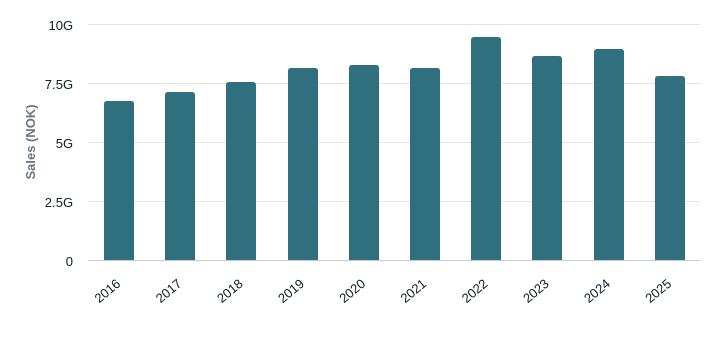
- Substantial Commercial Turnover: Corporate sales revenue reached NOK 8,929.9M in 2024, following a historical peak of NOK 9,461.0M in 2022.
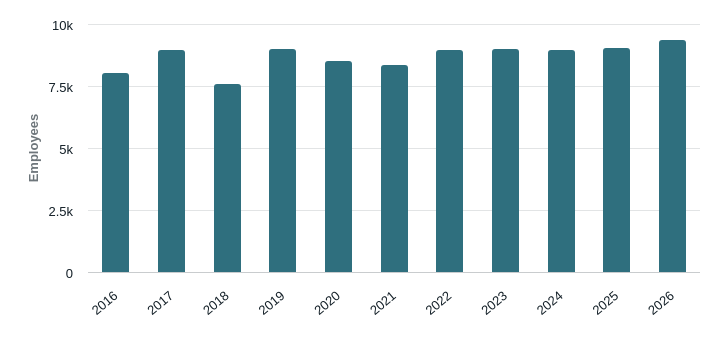
- Workforce Dynamics: Total employment in the municipality stands at approximately 9,000 employees, with projections pointing toward 9,373 employees by 2026.
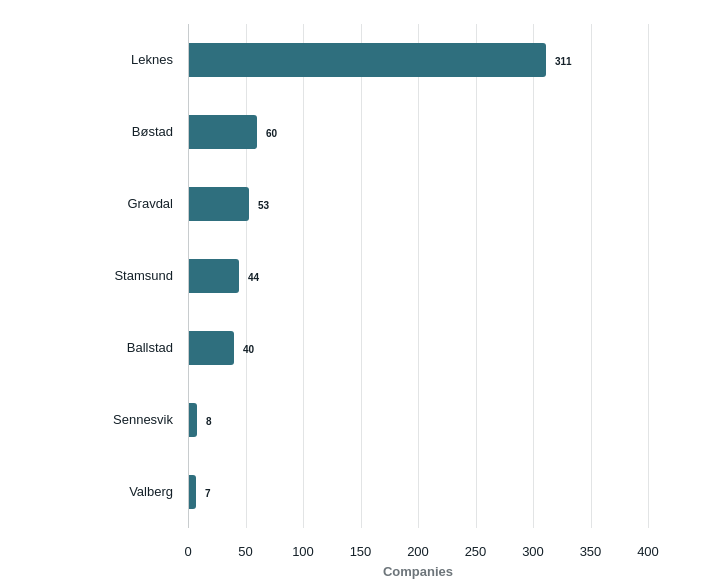
- Urban Concentration: Leknes acts as the primary economic center, generating NOK 5,526.1M in sales revenue across 311 companies, followed by Stamsund as an industrial seafood heavy-weight with NOK 1,597.7M in sales.
- Strong Seafood Dominance: Combined fish farming and processing generate over NOK 2.5B in direct annual sales revenue, representing the primary private wealth engine in the region.
Economic Overview
Vestvågøy's economy has demonstrated strong growth over the past decade, driven by high global market demand for seafood and expanding tourism infrastructure across Lofoten. Between 2016 and 2022, corporate sales in the municipality expanded from NOK 6,748.2M to a peak of NOK 9,461.0M.
Annual Sales Revenue Trends
| Year | Corporate Sales (NOK) | YoY Growth |
|---|---|---|
| 2016 | 6,748.2M | - |
| 2017 | 7,107.6M | +5.3% |
| 2018 | 7,523.1M | +5.8% |
| 2019 | 8,128.9M | +8.1% |
| 2020 | 8,249.4M | +1.5% |
| 2021 | 8,131.3M | -1.4% |
| 2022 | 9,461.0M | +16.4% |
| 2023 | 8,663.8M | -8.4% |
| 2024 | 8,929.9M | +3.1% |
| 2025 | 7,776.5M | -12.9% |
Employment Trajectory
Employment levels in Vestvågøy have maintained a consistent upward trajectory. After dipping to 7,580 in 2018, workforce figures recovered rapidly to 8,991 in 2019 and stabilized near 9,000 throughout 2022–2025, with projected expansion to 9,373 employees by 2026.
Organisational structure data shows that limited liability companies (Aksjeselskap / AS) generate the vast majority of economic activity, accounting for 394 companies, 4,508 private sector employees, and NOK 8,361.4M in reported sales revenue with an overall EBITDA margin of 11%.
Industry Structure
The industrial base of Vestvågøy is characterized by a high degree of diversification compared to smaller neighbouring island municipalities. It combines primary seafood production with regional public institutions and commercial trade.
Key Sector Breakdown
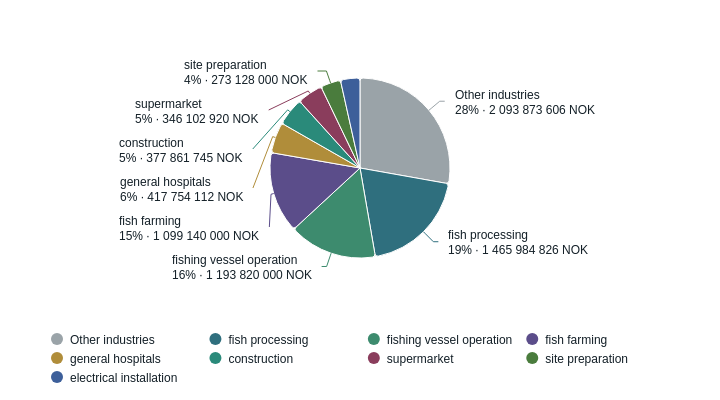
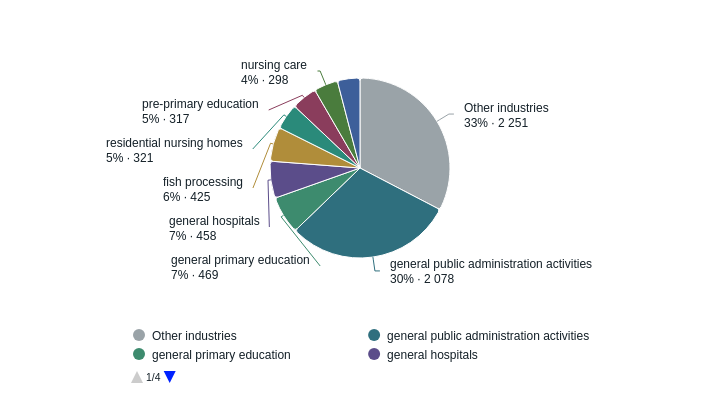
- Seafood & Aquaculture: Fish processing encompasses 13 companies employing 425 people and producing NOK 1,466.0M in sales revenue. Fish farming represents an exceptionally profitable industry, with 4 companies employing 139 people, generating NOK 1,099.1M in sales revenue and an operating profit of NOK 191.6M (EBITDA margin of 19%).
- Healthcare & Public Administration: General public administration activities employ 2,078 people across public municipal entities. Hospital healthcare at Gravdal (Nordlandssykehuset HF) accounts for 458 employees and NOK 417.8M in operating income.
- Construction & Technical Services: Construction (27 companies, 222 employees, NOK 377.9M sales), site preparation (12 companies, 223 employees, NOK 273.1M sales), and electrical installation (10 companies, 166 employees, NOK 262.7M sales) provide essential technical services to real estate and infrastructure projects.
- Trade & Retail: Supermarket chains and local retail stores maintain strong revenue bases. Supermarkets generate NOK 346.1M across 7 companies, while building supply stores generate NOK 139.3M across 4 entities.
- Hospitality & Culture: Hotel operations (5 companies, 128 employees, NOK 72.2M sales), camping facilities (8 companies, 117 employees, NOK 34.7M sales), and social history museum operations (Museum Nord, 279 employees, NOK 97.9M sales) support the regional tourism economy.
Business Geography
Economic activity within Vestvågøy is distributed across several key geographical settlements, each serving specific functional roles in the local economy.
| Location | Companies | Employees | Sales Revenue (NOK) | Operating Profit (NOK) | Key Role |
|---|---|---|---|---|---|
| Leknes | 311 | 6,893 | 5,526.1M | 400.4M | Commercial, retail & administrative hub |
| Stamsund | 44 | 487 | 1,597.7M | 222.1M | Seafood processing & industrial harbor |
| Gravdal | 53 | 1,146 | 876.3M | 28.9M | Regional health & nursing hub |
| Bøstad | 60 | 792 | 559.1M | 33.9M | Heritage museum, contracting & agriculture |
| Ballstad | 40 | 394 | 431.9M | 16.9M | Fisheries, maritime services & tourism |
| Sennesvik | 8 | 86 | 381.2M | 47.2M | Specialized marine & industrial activity |
| Valberg | 7 | 25 | 6.1M | 380.0K | Agriculture & local services |
Leknes serves as the primary regional center for retail, professional services, transportation, and governance, generating over 60% of total municipal sales. Stamsund stands out for its high operational capital intensity, generating NOK 5.2M in operating income per employee due to large-scale seafood export processing.
Largest Employers
Vestvågøy hosts major public and private sector employers that provide economic stability and employment for the central Lofoten area.
Major Public Employers
- Vestvågøy Kommune: The municipal administration is the single largest employer, managing 1,975 employees across public administration, education, and eldercare services (including specialised units like Hverdagsmestring with 298 employees, Lekneshagen Bofellesskap with 201 employees, and Miljøtjenesten with 185 employees).
- Nordlandssykehuset HF Somatikk Gravdal: The main regional hospital at Gravdal employs 356 health professionals, generating NOK 326.4M in sales revenue.
- Educational Institutions: Leknes Skole employs 171 staff in primary education, while Vest Lofoten Videregående Skole employs 132 staff in secondary and vocational training.
Major Private Enterprises
- Lofotprodukt AS (Avd Leknes): A premier fish processing operator employing 180 workforce members, generating NOK 825.6M in sales revenue and NOK 38.5M in EBITDA.
- Lofoten Sjøprodukter AS: Located in the Leknes area, this aquaculture company employs 74 people, generating NOK 780.4M in sales revenue and NOK 166.2M in EBITDA.
- Lerøy Norway Seafoods AS (Avd Stamsund): Major seafood processing facility in Stamsund employing 89 people with sales revenue of NOK 205.2M.
- Museum Nord Næringsdrift AS: Culturally significant museum operator based in Bøstad, employing 267 people with sales revenue of NOK 84.6M.
- Thore Magnussen Og Sønn AS: Prominent site preparation contractor based in Bøstad, employing 78 staff with sales revenue of NOK 155.9M.
Business Dynamism & Insolvency Trends
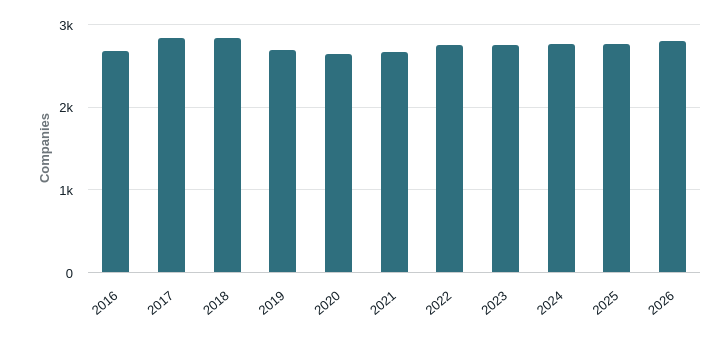
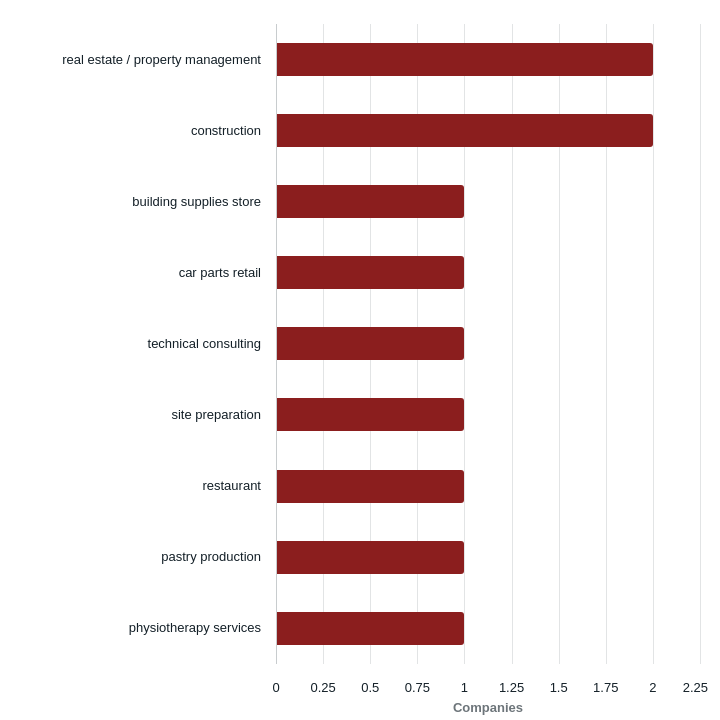
Business dynamic data indicates an active entrepreneurship market balanced by typical operational challenges in seasonal and capital-intensive sectors. A total of 11 bankruptcies were recorded in the area's sample data, demonstrating the competitive realities facing local entrepreneurs.
Industry Breakdown of Insolvent Entities
- Site Preparation & Construction: Voie Grunnarbeid AS (sales of NOK 19.6M, EBITDA NOK 3.3M prior to filing) and Bygg Og Eiendomsutvikling Nord Norge AS (sales of NOK 7.2M) represent notable insolvencies in the heavy earthmoving and construction segment, reflecting cyclical cost pressure.
- Hospitality & Retail: Lofoten Mat Og Vin AS in Leknes (sales of NOK 10.6M, EBITDA NOK -873.0K) and Lofoten Interiør AS (sales of NOK 4.3M) highlight operational margin pressures in seasonal dining and specialized retail.
- Professional & Personal Services: Smaller entities such as Proma Consult AS (NOK 1.7M sales), Advokat 365 Holding AS, and Vestvågøy/Flakstad Vaktmester Service AS illustrate turnover challenges in small service ventures.
Overall insolvency rates remain moderate relative to the total municipal base of over 2,800 registered corporate entities, indicating a resilient macroeconomic foundation.
Opportunities for Founders
Vestvågøy's position as the commercial heart of Lofoten offers attractive entry points for founders, particularly those offering business-to-business (B2B) services, tech-enabled logistics, and year-round tourism concepts.
Prime Growth Areas
- Marine Technology & Supply Chain Services: With over NOK 2.5B in regional seafood revenue, opportunities exist for specialized maintenance, automated processing equipment, cold-chain logistics, and sustainable bio-waste utilization.
- Year-Round Tourism & Experience Design: While summer tourism is well-established, expanding shoulder-season hospitality, specialized outdoor adventure equipment rental, and sustainable visitor management tools meet clear market demand.
- Commercial Services & Sub-Contracting: Electrical, plumbing, IT infrastructure, and technical consulting firms find steady demand from both private construction developments and ongoing public infrastructure projects.
Founders evaluating commercial locations, industry densities, or physical addresses across Leknes, Stamsund, or Gravdal can use SmartGrunder's analytical tools to explore market data and validate new business ideas.
Conclusion
Vestvågøy stands out as an economic anchor in Nordland, balancing stable public sector employment with high-performing private industries in seafood processing, aquaculture, construction, and tourism.
With corporate sales approaching NOK 9B annually and a projected workforce expanding toward 9,373 employees by 2026, the municipality offers an established, high-capacity commercial environment. Entrepreneurs and investors entering Vestvågøy benefit from robust infrastructure in Leknes, high marine sector productivity in Stamsund, and strong regional demand across the entire Lofoten region.